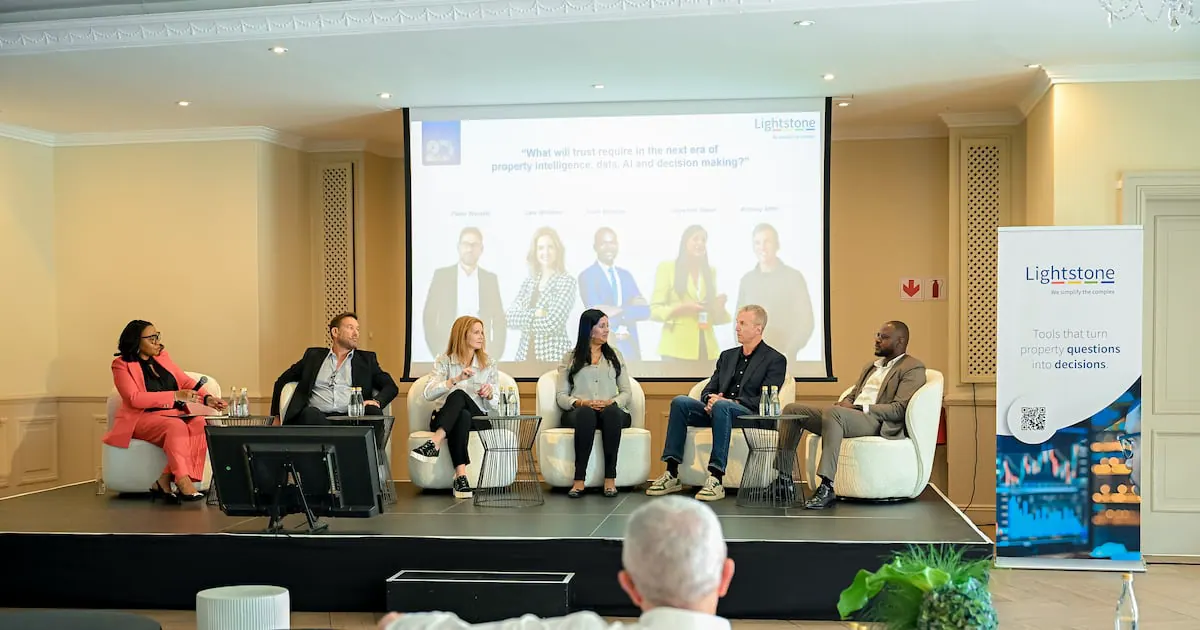
Property insights firm Lightstone is targeting the formalization of an estimated 60% of property ownership records that remain outside the deeds system over the next 20 years. This initiative aims to bring millions of homeowners and their assets into the formal property and financial markets. Using aerial and satellite imagery, as well as building footprints tracked year over year, Lightstone plans to build property intelligence on the informal market from scratch.
The formal deeds system currently covers about 2-million subsidized residential properties in South Africa. However, an estimated 1.3-billion square meters of properties are outside the deed's registry. Lightstone's strategy involves using technology to bridge the data gap, which is also a significant financing gap. Homeowners without formal recognition of their property often cannot use it as security for credit, forcing them to rely on more expensive personal loans.
Elsie Rateiwa, head of Lightstone's financial services commercial team, believes that better information on ownership and property values could allow lenders to treat these homes differently. With accurate property data, banks could lend against these properties at a much lower rate. This, in turn, could lead to borrowing costs in the affordable market moving closer to normal mortgage rates over time.
Lightstone's automated valuation model (AVM), launched with Absa in 2006, has been successful in reducing uncertainty in lending. The AVM now saves banks about R250m a year in valuation fees and has proven its value during times of economic stress, such as the global financial crisis and the Covid-19 pandemic.
Lightstone co-founder Anthony Miller, now CEO of Simply Financial Services, revealed that the company began by trying to solve a practical problem in the emerging equity-release mortgage market. Miller saw an opportunity in automated valuations, which quickly gained traction with Absa becoming a client within 12 months. Lightstone effectively created a "credit bureau for property" by turning transaction data into intelligence that could inform financial decisions.
The quality of imagery available will be critical to the accuracy of Lightstone's informal-property project. Larger municipalities such as Johannesburg and Tshwane are more likely to have detailed flyover imagery, while smaller municipalities may rely on lower-resolution satellite imagery. As satellite technology improves, Lightstone will be able to extend its work into smaller towns and areas where detailed municipal imagery is unavailable.
Lightstone's strategy extends its broader push to use property data to reduce uncertainty in lending. The company's chief analytics officer, Paul-Roux de Kock, said the informal-property project was one of several strategic bets for the company and could unlock value for the wider property industry. The technology could also support Lightstone's expansion into markets such as Botswana, Namibia, Kenya, and Uganda.
Key points
- Lightstone aims to formalize 60% of South Africa's informal property ownership records over 20 years.
- The company's automated valuation model (AVM) saves banks about R250m a year in valuation fees.
- Lightstone's technology could support its expansion into markets such as Botswana, Namibia, Kenya, and Uganda.