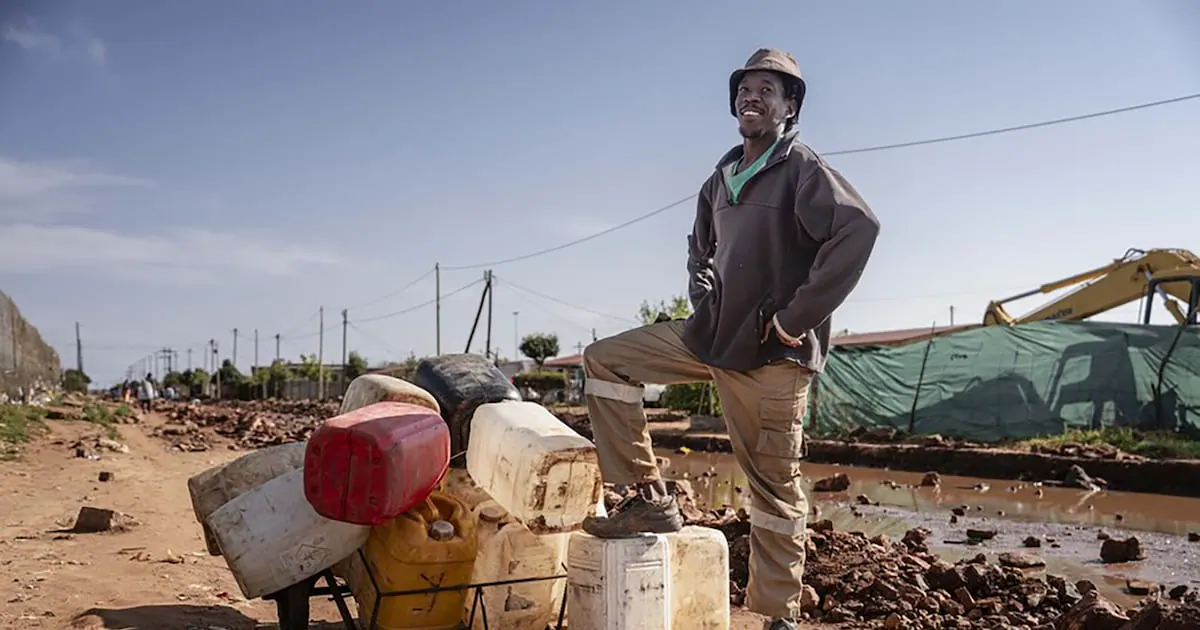
In the Boikhutso township near Lichtenburg, North West, residents are struggling to access basic services like water and electricity. Unemployed resident Kabelo Molefe collects water for elderly and disabled people in areas that have never had running water, hauling heavy loads through ankle-deep mud on unusable dirt roads. This scene is a common sight in the municipality, which has a population of approximately 164,000 people.
The SA Human Rights Commission (SAHRC) and the auditor-general (AG) have consistently flagged a declining quality of life for Ditsobotla residents. A 2025 investigative report by the SAHRC found that the municipality was failing to provide basic services, violating residents' rights to human dignity. The AG's May 2026 briefing to parliament revealed that the municipality met only 31% of its service delivery targets, a figure that could not be verified.
Residents have complained about inconsistent water supply, with outages attributed to supply deficits, ageing pipe networks, and chronic lack of repairs and maintenance. According to the municipality's 2024/25 annual report, water demand is 20-million litres daily, but the average supply is only 10-million litres. As a result, "rationing" is practised across the municipality, with residents saying there is little to no communication about water rationing.
The impact of the water challenges ripples through daily life, with residents like Latia Masae having to pay roughly R25 every two to three days for people to collect water. With a monthly old-age grant of roughly R2,400, Masae said she cannot afford what she and her family need for food, as most of her money goes towards securing water. She also does not have a toilet on her stand, despite being promised one over 10 years ago.
The electricity distribution network has also received no capital investment or substantive maintenance for over three decades. Substation transformers are overloaded, and underground cables have been in service for over 40 years. The municipal electricity department operates at only 20% of its required personnel capacity, with the AG flagging that the target of maintaining 30 electricity transformers in 2024/25 was not achieved.
The municipality's financial turmoil is evident in its inability to pay its debts, taking an average of 3,188 days (nearly nine years) for creditors to be paid. The annual report noted that unauthorised, irregular, fruitless, and wasteful expenditure consumed 77% of its total operating budget. This has led to halted projects, delayed salary payments, and ripple-effects on service delivery.
In September 2025, the cabinet placed the municipality under national intervention, citing persistent governance failures, financial mismanagement, and service delivery collapse. A national financial recovery plan has been put in place, with a team set up to investigate corruption and maladministration.
Key points
- The municipality's financial mismanagement and service delivery collapse led to national intervention in September 2025.
- Residents face daily challenges due to lack of basic services like water, electricity, and sanitation.
- The municipality's inability to pay its debts is a clear indicator of its financial turmoil.