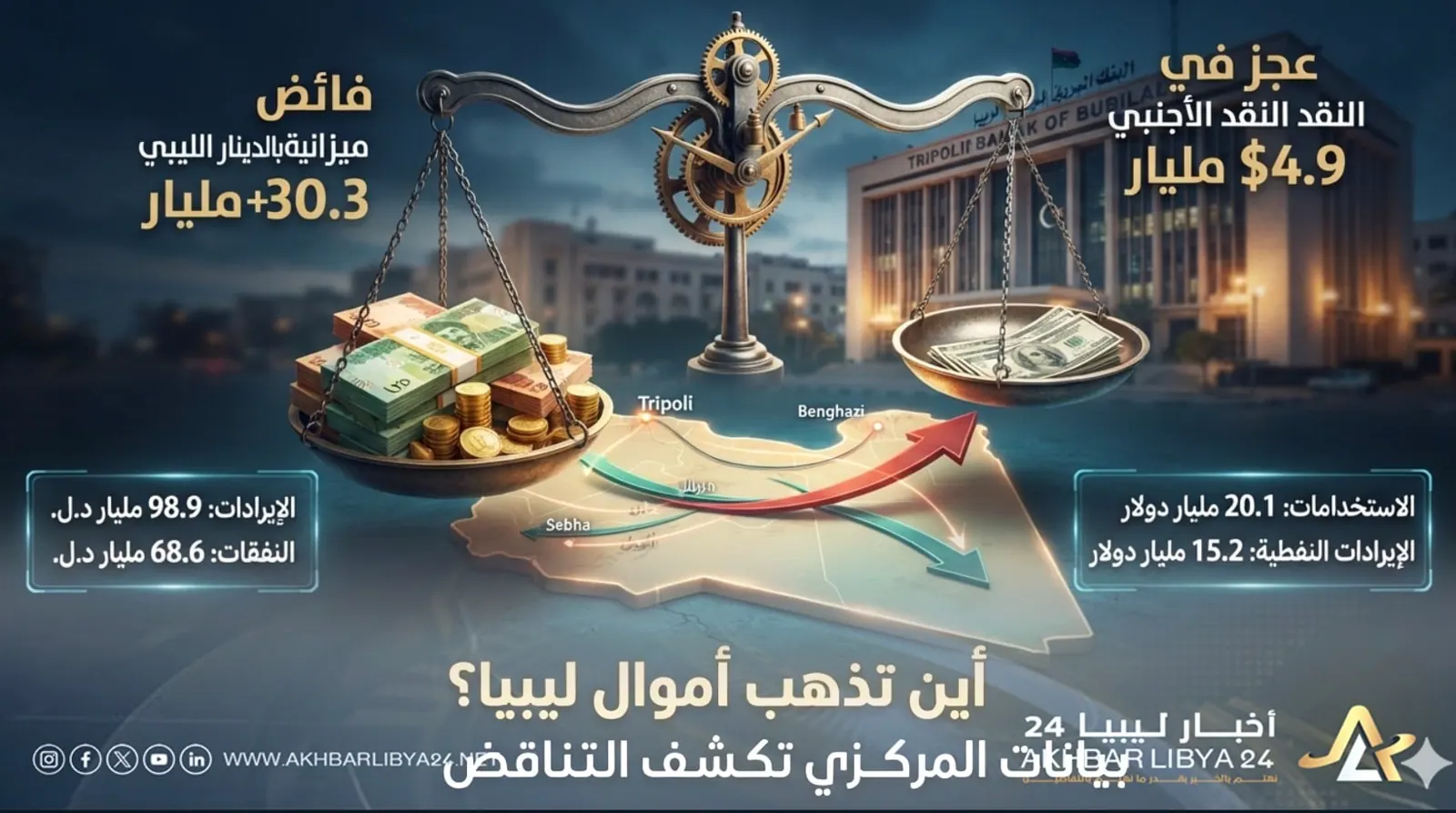
The decline in value of the Libyan dinar has led to a surge in demand for the US dollar, as citizens seek to protect their savings. According to Ali al-Sharif, a shift has occurred in the nature of demand for the dollar, with many Libyans purchasing it not for import financing or buying goods and services, but rather to maintain the value of their savings. This trend has resulted in the dollar being used as a commodity for speculative purposes and as a hedge against the devaluation of the dinar.
The increased demand for the dollar from holders of local liquidity, unrelated to import or consumption needs, can put additional pressure on the exchange rate. This has raised concerns about the impact on the value of the dinar. Al-Sharif noted that the dollar has become a safe haven for Libyans looking to protect their savings from the decline in value of the local currency. As a result, the demand for dollars has increased, leading to a rise in the use of the foreign currency for purposes other than trade.
The demand for dollars is expected to decrease if the exchange rate stabilizes and the reasons for the decline in the dinar's value are addressed. Al-Sharif stated that a stable exchange rate would reduce the incentive for holding dollars as a safe haven or using them for speculative purposes. This is because the need to protect savings from the decline in value of the local currency would become less pressing if the market stabilizes.
The behavior of Libyans in the currency market is closely linked to their expectations about the future exchange rate. If citizens expect the dinar to continue declining in value, they are more likely to purchase dollars, while a stable exchange rate would likely reduce this demand. This highlights the complex dynamics at play in the Libyan currency market, where factors such as speculation and hedging play a significant role.
The trend of Libyans converting their savings into dollars has significant implications for the economy. It can lead to a shortage of foreign currency, making it more difficult for businesses to import goods and services. Additionally, it can exacerbate inflation, as the increased demand for dollars drives up the exchange rate and increases the cost of imports.
The Libyan economy has faced significant challenges in recent years, including a decline in oil production and a subsequent decrease in government revenue. The decline in value of the dinar has further complicated the economic situation, leading to increased uncertainty and instability. In this context, the shift towards the dollar as a safe haven is likely to continue, at least in the short term.
The situation highlights the need for economic stability and reform in Libya. A stable exchange rate and a functioning economy are essential for restoring confidence in the dinar and reducing the demand for foreign currency. The government and central bank will need to work together to address the underlying causes of the dinar's decline and implement policies to promote economic stability and growth.
Key points
- The decline in value of the Libyan dinar has led to a surge in demand for the US dollar as a safe haven.
- The increased demand for dollars is putting pressure on the exchange rate and exacerbating inflation.
- A stable exchange rate and economic reform are necessary to restore confidence in the dinar and reduce the demand for foreign currency.