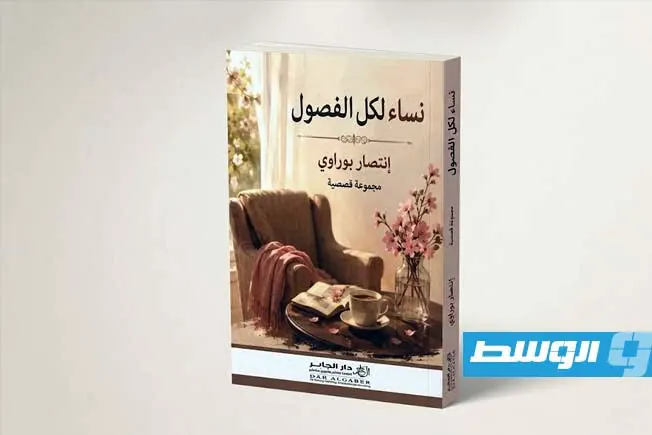
Libyan writer Anasthar Aborawi is set to publish her second collection of short stories, "Women of All Seasons," through Dar Al-Jaber for Printing, Publishing, and Distribution. This new work continues her exploration of human experience and life transformations through storytelling. The collection features stories written over various periods, all converging on the presence and diverse experiences of women. Aborawi revisits the tales of women whose lives have been impacted by change, tracing their paths through different stages of life and the transformations, setbacks, and quests for identity and justice they encounter.
The title "Women of All Seasons" draws inspiration from the four seasons, reflecting the changes and phases of life. Aborawi uses the metaphor of the seasons to depict the journey of women through life's challenges and experiences. From the "sweltering summer" of youth to the "delicate spring" leaves that fall in the "autumn of truth," and finally to women facing their reality with the determination of "winter rains" in search of lost justice. This literary work marks Aborawi's second foray into short story writing, following her presence in Libya's cultural and literary scene through her contributions to various cultural platforms.
Aborawi has been involved in Libya's cultural scene through her writing and publications in several cultural outlets, including "The Four Seasons" magazine. Her published works include articles and readings on Libyan literature and writing. Notably, she has conducted a study on "The Autobiography in Libyan Literature" and written about the traveler Francis Lyon and his writings on Libya. Her upcoming collection, "Women of All Seasons," adds to her literary experience with stories that center on women, exploring their lives, transformations, and human inquiries.
The publication of "Women of All Seasons" is anticipated to contribute to Aborawi's literary career, offering a compilation of stories that place women at the narrative's core. By delving into the specifics of their lives, transformations, and questions, Aborawi aims to provide a deeper understanding of women's experiences. This work is expected to resonate with readers interested in Libyan literature and the cultural narratives of women.
Aborawi's decision to explore themes of womanhood and life's transformations through the lens of the four seasons indicates her creative approach to storytelling. By employing the seasons as a metaphor, she crafts a relatable and engaging narrative that invites readers to reflect on the universal experiences of women across different stages of life. This literary technique not only enriches the storytelling but also underscores the interconnectedness of women's experiences across time and circumstance.
The cultural significance of "Women of All Seasons" lies in its contribution to Libyan literature, particularly in the realm of short story writing. Aborawi's work adds to the growing body of literature that explores themes of identity, transformation, and the human condition, specifically from a Libyan perspective. Her writing serves as a testament to the richness and diversity of Libyan cultural narratives, offering insights into the lives and experiences of women within the Libyan context.
As "Women of All Seasons" prepares for release, it is expected to spark interest among readers of Libyan literature and those interested in narratives about women's experiences. The book promises to be a significant addition to Aborawi's literary portfolio and a valuable contribution to the cultural and literary landscape of Libya. With its themes of transformation, identity, and resilience, "Women of All Seasons" is poised to resonate with a wide audience, both within Libya and beyond.
Key points
- Libyan writer Anasthar Aborawi to publish her second collection of short stories, "Women of All Seasons."
- The collection explores the lives and experiences of women through the metaphor of the four seasons.
- This work continues Aborawi's engagement with themes of human experience and transformation in Libyan literature.