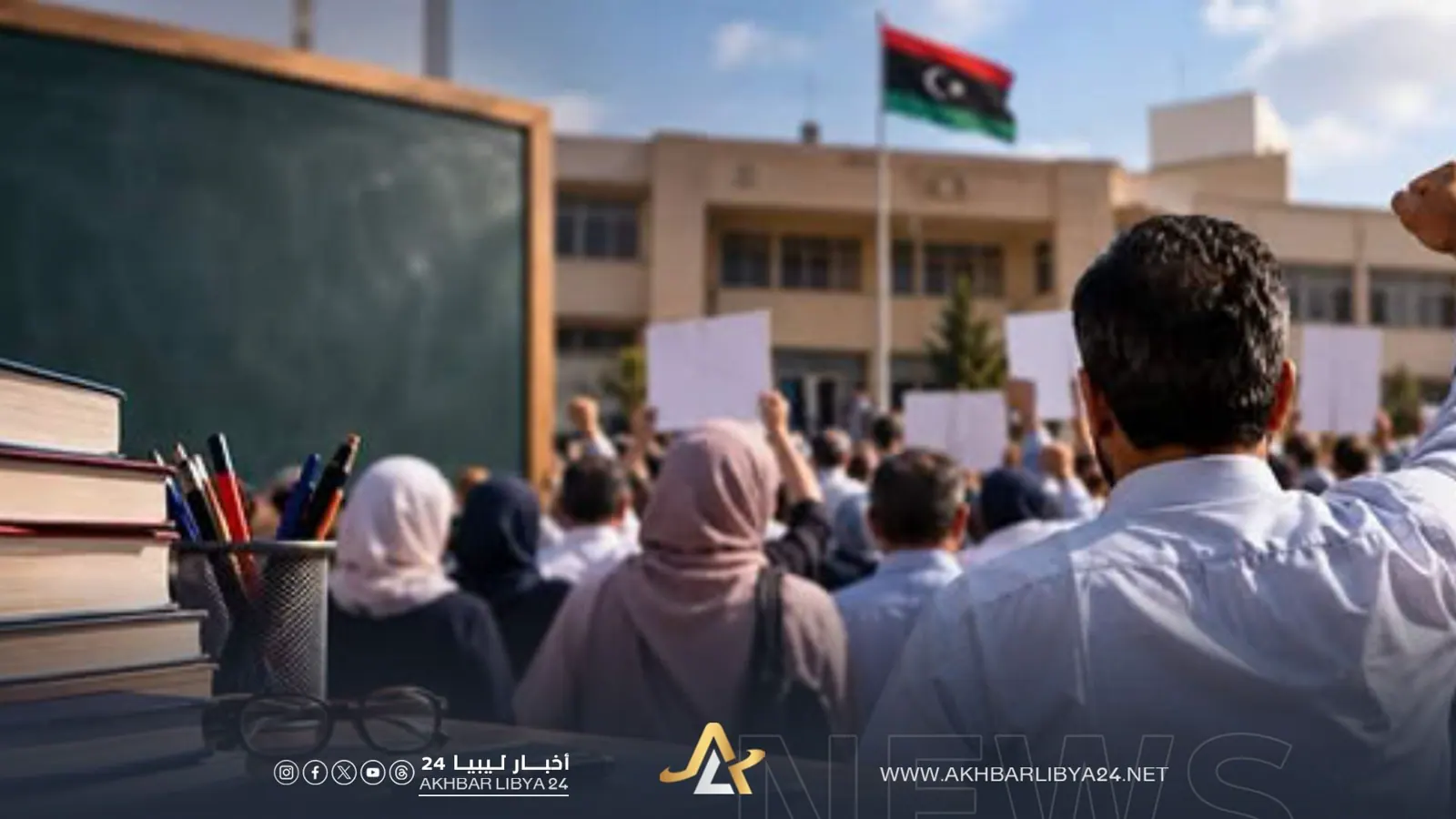
Libyan teachers' movement leader Ashraf Al-Hadi stated that the implementation of financial differences and health insurance for education sector workers will not be sufficient to end the ongoing sit-in. He emphasized that teachers' demands go beyond just these two issues and require comprehensive and sustainable solutions. Al-Hadi made these remarks in response to the government's recent efforts to address some of the teachers' concerns.
According to Al-Hadi, the government's decision to implement financial differences and health insurance is only a starting point and not a final solution to the problem. He stressed that teachers are committed to pursuing the rest of their demands, which include improving their job and financial conditions and ensuring their rights are protected within the existing frameworks. The teachers' demands are varied and complex, reflecting their concerns about their welfare and working conditions.
The demands of the Libyan teachers, as outlined by Al-Hadi, include the adoption of a unified salary scale, the issuance of a law to protect teachers, and the payment of allowances to teachers and administrators. Additionally, the teachers are seeking to address the issue of delayed salaries for contract workers. These demands represent a broader set of concerns about the education sector and the welfare of its employees.
Al-Hadi emphasized that addressing each demand separately will not lead to a resolution of the sit-in, as all the demands need to be addressed comprehensively. He noted that the teachers' movement is committed to finding a solution that balances the rights of teachers with the needs of students. The sit-in has been ongoing for some time, with teachers seeking a more sustainable and equitable solution to their concerns.
Regarding the continuation of the academic year, Al-Hadi stressed that students' right to education is protected and that teachers are not opposed to students. He emphasized that the demands of the teachers are not aimed at disrupting the education process or depriving students of their right to study. The teachers' movement is seeking a solution that prioritizes the interests of both teachers and students.
Al-Hadi also noted that reopening schools by administrative decision alone will not address the root of the problem unless it is accompanied by practical solutions to the teachers' demands. He emphasized that addressing the causes of the crisis within the education sector is essential to ensuring the stability of the education process. The teachers' movement is seeking a more fundamental resolution to the issues affecting the sector.
The Libyan teachers' movement leader concluded by emphasizing that the goal of the movement is not to disrupt the education process but to achieve a fair and sustainable solution that addresses the concerns of teachers and ensures they receive their rights. He stressed that the stability of the education process is linked to improving the conditions of teachers, who are a crucial element in the continuation of education.
Key points
- The Libyan teachers' movement has a set of demands that go beyond financial differences and health insurance, including a unified salary scale and a law to protect teachers.
- The teachers' movement is seeking a comprehensive solution to the crisis, rather than piecemeal measures that address only some of the concerns.
- The stability of the education process in Libya is closely tied to the welfare and working conditions of teachers, who are essential to the continuation of education.