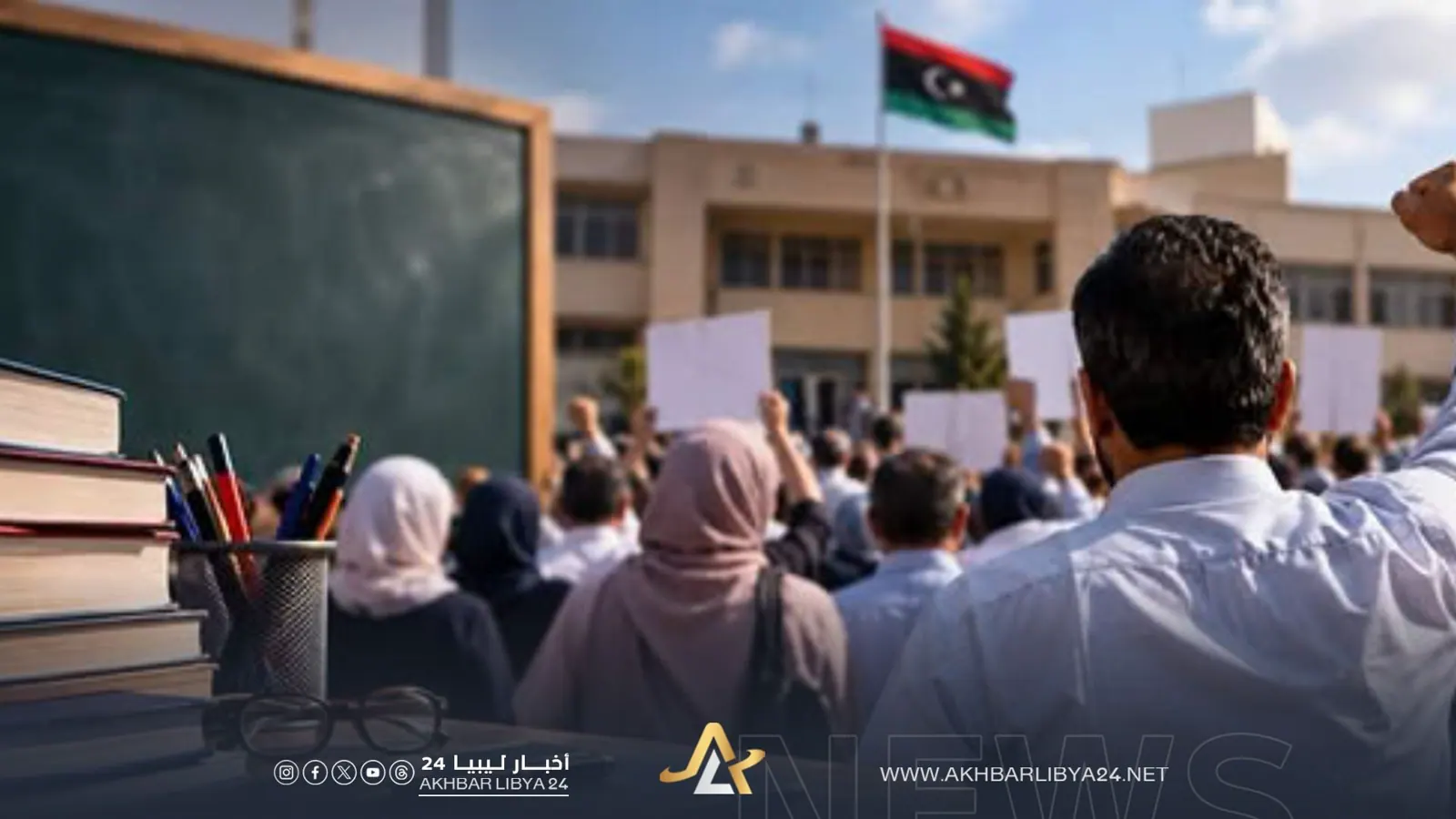
In Libya, teachers and educators have renewed their protests in several areas, demanding better salaries and living conditions. These demonstrations occurred just hours after Libya's internal security agency and Tripoli's security department issued warnings about the consequences of continued strikes and closures of educational institutions. Protesters chanted slogans, including "Sit-in, sit-in, teachers are not humiliated." The protests took place in the capital, Tripoli, and the city of Ajilat.
The protests saw participation from various educational institutions, including monitoring centers in Al-Khums, Qasr Al-Akhiyar, and Qasr Bin Ghashir. These centers confirmed that the strike would continue until their demands are met. In a video statement, teachers from Ajilat announced their rejection of the outcomes of a statement issued by the temporary National Unity Government and the General Syndicate of Libyan Teachers. They emphasized their commitment to the rights of teachers and workers in the education sector.
The teachers from Ajilat stressed that their rights are not favors but legitimate entitlements, including the settlement of financial differences, payment of distinction allowances, salary increases, and provision of due allowances to administrators. They also called for health insurance and the issuance of a law to protect teachers. The teachers vowed to continue their strike until all their demands are fully met.
On the eve of the protests, Tripoli's security department warned of organizing demonstrations and sit-ins without prior notification 48 hours in advance. They stated that violators could face imprisonment for a period not exceeding six months. Meanwhile, the Internal Security Device, affiliated with the temporary National Unity Government, cautioned against taking legal and security measures against those responsible for closing educational institutions or disrupting studies.
The Internal Security Device emphasized that it would not stand idly by in the face of such practices. These developments occur amidst an ongoing dispute between concerned parties and teachers over sector demands and mechanisms to end the strike. Fears are growing about the impact of continued school closures on students and pupils, while protesters insist on the necessity of meeting their demands before resuming the educational process.
The protests and strikes by Libyan teachers have entered a critical phase, with no immediate resolution in sight. The teachers' demands are centered around improving their working conditions and benefits, which they claim are essential for the proper functioning of the education system. The situation remains tense, with both sides showing no signs of backing down.
The international community is watching the developments in Libya with concern, as the country's education system is crucial to its future development. The Libyan government must find a solution to the crisis to prevent further disruptions to the education sector and ensure that students can continue their studies without interruption. The teachers' protests have highlighted the need for a comprehensive reform of the education sector.
Key points
- Libyan teachers are protesting for better salaries and working conditions.
- The protests have continued despite security warnings from the authorities.
- The situation remains tense with no immediate resolution in sight.