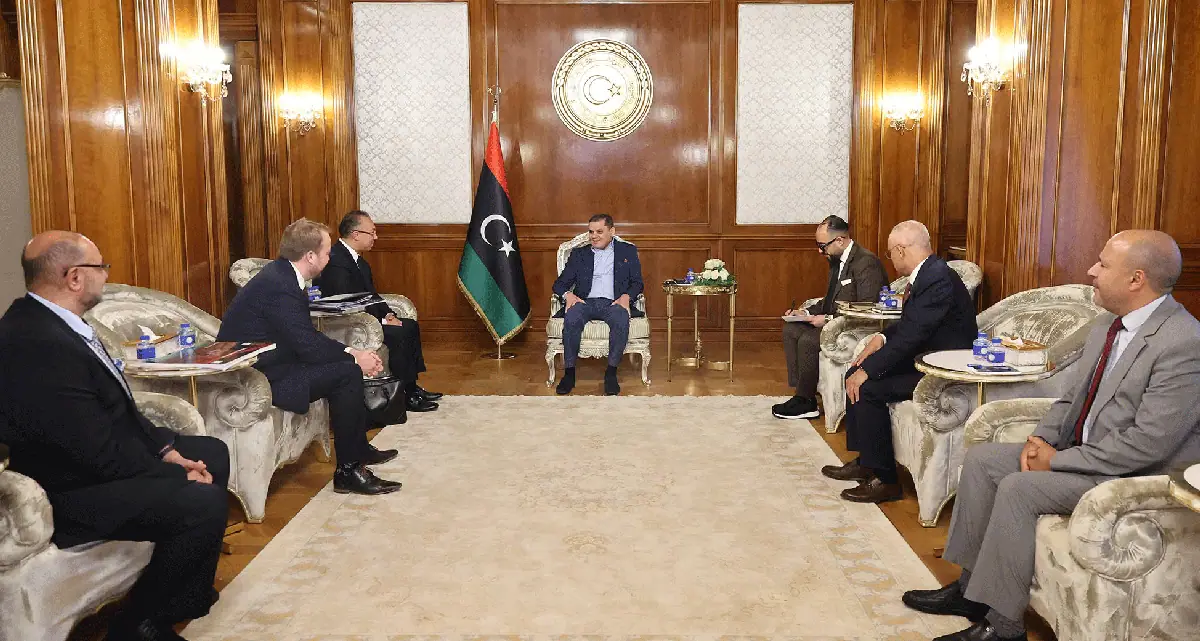
On November 24, 2026, Libyan Prime Minister Abdul Hamid Dbeiba received a consortium of consulting firms and expert houses responsible for launching the executive phase of the national plan to address the existing urban situation in the Greater Tripoli area. The meeting was attended by Mustafa Al-Manai, head of the executive team for presidential initiatives and strategic projects. The consortium, comprising GCC, DAR, EY, WOOLPERT, and MERRETT, presented the technical and methodological framework of the plan.
The plan aims to develop a comprehensive urban plan for Greater Tripoli, addressing the existing urban situation and regulating population growth and urban expansion. The plan also seeks to identify the city's needs for housing, infrastructure, facilities, and services, in line with a sustainable planning vision that meets future development requirements. The prime minister emphasized the importance of preparing a planning vision based on precise scientific studies.
The consulting firms reviewed the stages of preparing the plan, its implementation mechanisms, and the studies and visions related to addressing urban imbalances, organizing urban expansion, and developing infrastructure and services. The plan is expected to provide a sustainable and organized solution to the urban challenges facing Tripoli. The prime minister's meeting with the consortium reflects the government's commitment to addressing these challenges.
The national urban plan for Tripoli is a strategic project aimed at improving the quality of life and services in the city. The plan's implementation will require coordination between various government agencies and stakeholders. The prime minister's emphasis on the need for a planning vision based on scientific studies ensures that the plan is grounded in reality and meets the city's needs.
The consortium of consulting firms brings together expertise from various fields to develop a comprehensive plan for Tripoli. The plan's success will depend on the effective implementation of its recommendations and the coordination of various stakeholders. The Libyan government's investment in this project reflects its commitment to sustainable development and improving the quality of life for its citizens.
The urban plan for Tripoli is expected to have a positive impact on the city's development and growth. The plan's focus on sustainability and organization will help address the city's urban challenges and provide a framework for future development. The prime minister's review of the plan reflects the government's commitment to ensuring that the plan meets the city's needs and is implemented effectively.
The Libyan government's efforts to develop a national urban plan for Tripoli demonstrate its commitment to addressing the city's urban challenges and promoting sustainable development. The plan's success will depend on the effective coordination of various stakeholders and the implementation of its recommendations. The prime minister's emphasis on the need for a planning vision based on scientific studies ensures that the plan is grounded in reality and meets the city's needs.
Key points
- The Libyan Prime Minister reviewed the national urban plan for Tripoli to address urban challenges and promote sustainable development.