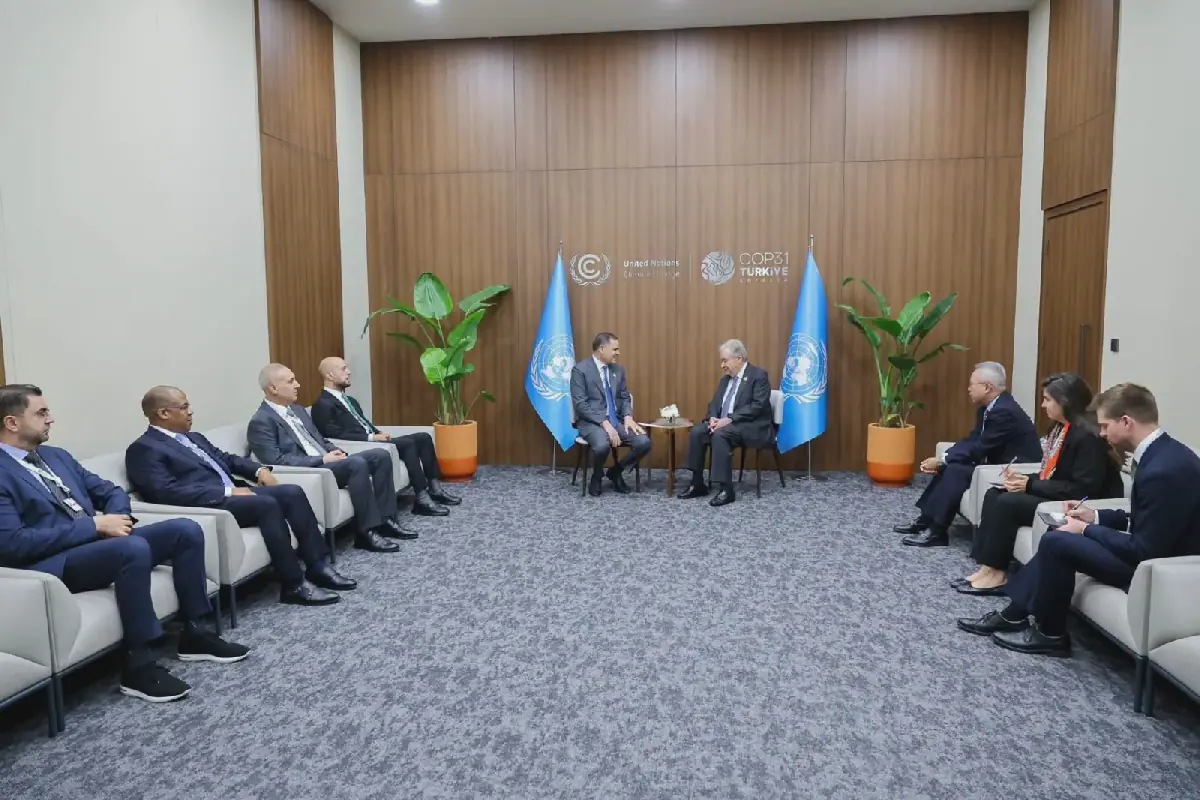
Libyan Prime Minister Abdul Hamid Dbeibah recently met with United Nations Secretary-General António Guterres to discuss the country's ongoing political situation. During their meeting, Dbeibah highlighted the significance of the 4+4 agreement as a crucial step towards promoting consensus among Libyan parties and supporting efforts to end the country's political division. The agreement is seen as a key component in achieving stability in Libya.
The 4+4 agreement aims to bring together various Libyan parties to work towards a comprehensive solution. Dbeibah emphasized the need to build on the understandings reached within this framework, which could help bridge the gaps between different viewpoints and provide a common ground for moving forward. This, in turn, could pave the way for a political process that enjoys the acceptance of all Libyan parties.
The meeting between Dbeibah and Guterres also touched on the efforts of the United Nations Support Mission in Libya (UNSMIL) and its role in supporting stability and facilitating dialogue among political parties. The two leaders discussed ways to enhance cooperation and coordination with the international organization regarding the country's upcoming political phase.
Dbeibah reiterated his government's support for UNSMIL and its willingness to continue cooperating with the mission to ensure its success. He also praised the efforts of UN Special Envoy to Libya Hanna Tetteh for facilitating dialogue and bringing different Libyan parties together. Tetteh's work has been instrumental in pushing the political process forward.
Despite the efforts to promote consensus, Libya's political crisis persists, with challenges related to unifying institutions and differing views on electoral arrangements. While the 4+4 agreement has generated some optimism, it still faces reservations and objections from certain political parties. The success of the agreement depends on the ability to broaden the circle of consensus and ensure the participation of various institutions and stakeholders.
The international community, particularly the UN, continues to play a significant role in supporting Libya's transition. The UN's efforts aim to help the country overcome its current challenges and move towards stability and elections. Libya's future depends on its ability to translate understandings into concrete steps that bring an end to the transitional phases and usher in a new era of political and institutional stability.
Ultimately, the Libyan people are eagerly awaiting a peaceful resolution to the country's protracted crisis. With the right approach and commitment from all parties, Libya can overcome its current hurdles and build a brighter future. The 4+4 agreement represents a crucial step in this direction, and its success will depend on the continued engagement and cooperation of all stakeholders.
Key points
- Libyan Prime Minister Abdul Hamid Dbeibah emphasizes the importance of the 4+4 agreement in promoting consensus among Libyan parties.