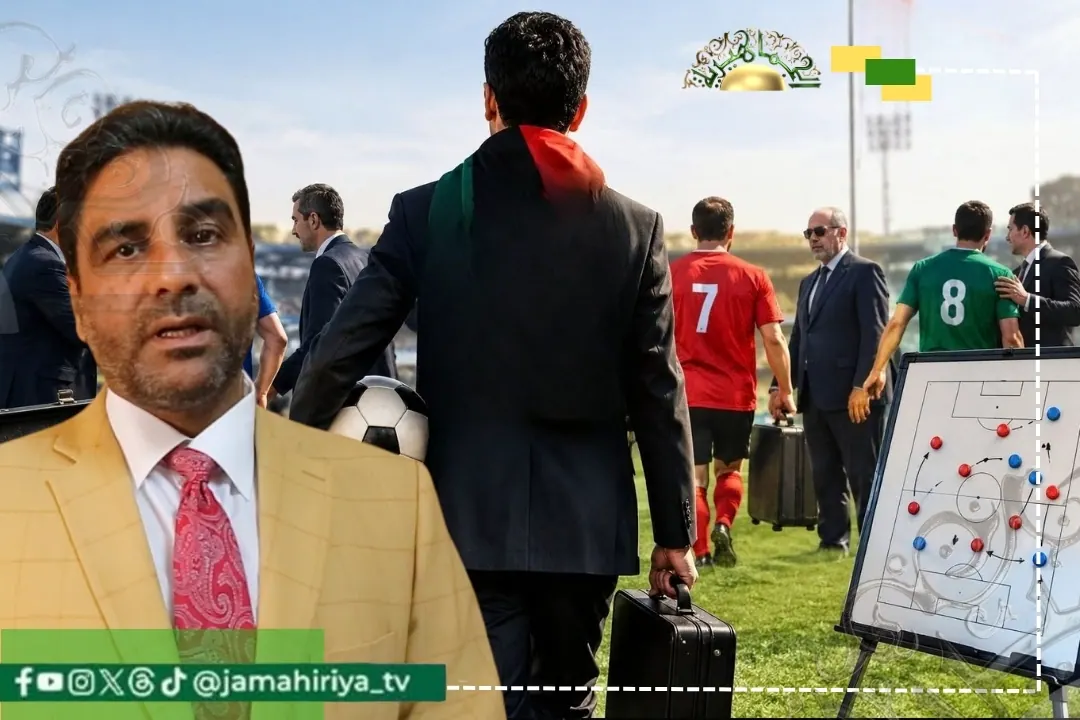
Libyan politician Abdel Salam Naseya has drawn a striking parallel between the country's volatile political landscape and the transfer market in football. In a recent post on Facebook, Naseya noted that just as football teams strengthen their squads, political factions in Libya are constantly seeking to bolster their ranks. This has led to a fluid situation where politicians move from one side to another, often taking on different roles in the process.
Naseya's comments come at a time of significant turmoil in Libyan politics. The country's factions have been vying for influence, with shifting alliances and interests driving the complex web of relationships. According to Naseya, some politicians have been known to attack a particular faction, only to later join forces with them. This has raised questions about the nature of these alliances and whether they are driven by ideology or personal gain.
The fluid nature of Libyan politics has led Naseya to suggest that the country's struggle is not primarily driven by ideological differences, but rather by competing interests and a desire for influence. He argues that if Libyan politicians were driven by fixed ideological commitments, such rapid shifts in allegiance would be more difficult to explain. Instead, Naseya believes that the pursuit of power and resources is the primary motivator for many politicians.
Naseya's critique of Libyan politics centers on the notion that the country's transition has been hindered by the lack of clear rules and a defined endgame. He argues that the constant flux of politicians and alliances has created a situation where the country's institutions are formed and reformed without a clear sense of direction. This has led to a situation where politicians are more focused on securing power and influence than on working towards a common goal.
The consequences of this state of affairs are far-reaching, according to Naseya. He believes that the country's failure to establish a stable and functional government has allowed the political scene to become a "market" where politicians and factions can buy and sell influence. This has created an environment where short-term gains are prioritized over long-term stability and progress.
Naseya's comments have sparked a wider debate about the state of Libyan politics. Many have expressed concern about the country's inability to establish a stable and effective government, and the impact this has had on the lives of ordinary Libyans. As the country continues to navigate its complex transition, Naseya's critique serves as a reminder of the need for clear rules, a defined endgame, and a commitment to working towards a common goal.
The situation in Libya remains complex and fluid, with many challenges still to be overcome. As Naseya noted, the country's politicians and factions must work together to establish a stable and functional government, and to prioritize the needs of the Libyan people. Only then can the country begin to move forward, and to build a brighter future for all its citizens.
Key points
- Abdel Salam Naseya criticizes Libyan politics, likening it to a "transfer market" driven by competing interests and a desire for influence.
- Naseya argues that the country's transition has been hindered by the lack of clear rules and a defined endgame.
- The situation in Libya remains complex and fluid, with many challenges still to be overcome.