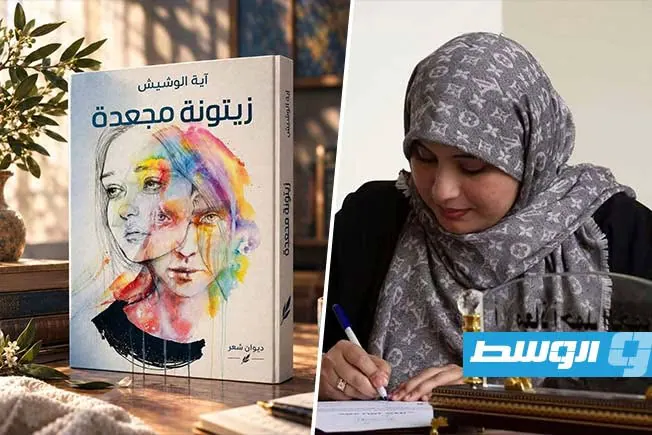
Libyan poet Ayah Al-Washish has released a new poetry collection titled "Zaytuna Maj'ada," which translates to "A Wrinkled Olive Tree." The collection has been garnering attention for its unique perspective on love, war, and identity. According to a review by writer Omar Abd al-Da'im, the collection is a powerful expression of resilience and hope in the face of adversity. Al-Washish's poetry is characterized by its accessibility and emotional depth.
The collection "Zaytuna Maj'ada" is not just a reflection of Al-Washish's personal experiences but also an exploration of the human condition. Her poetry delves into the complexities of love, war, and identity, offering a nuanced portrayal of life in Libya. Through her writing, Al-Washish aims to capture the essence of her country's history and culture. Her use of imagery and symbolism adds depth and richness to her poetry, making it relatable to readers from diverse backgrounds.
One of the distinctive features of Al-Washish's poetry is its use of free verse and prose poetry. This style allows her to experiment with language and form, creating a unique sound that is both personal and universal. Her poetry often begins with a small detail, which then expands into a larger narrative or reflection. This approach creates a sense of intimacy and immediacy, drawing the reader into the world of the poem.
The themes of love, war, and identity are woven throughout the collection. Al-Washish writes about the human cost of conflict and the impact it has on individuals and communities. Her poetry also explores the complexities of love and relationships, offering a nuanced portrayal of the human experience. Through her writing, Al-Washish aims to create a sense of connection and understanding between people.
Al-Washish's use of imagery and symbolism is a key element of her poetry. She often uses natural imagery, such as the olive tree, to represent resilience and hope. Her poetry also explores the tension between tradition and modernity, reflecting the complexities of life in Libya. By drawing on her cultural heritage, Al-Washish creates a unique and powerful voice that is both local and universal.
The collection "Zaytuna Maj'ada" has been praised for its honesty and emotional depth. Al-Washish's poetry is characterized by its accessibility and relatability, making it appealing to readers from diverse backgrounds. Her writing is a testament to the power of poetry to capture the human experience and to create a sense of connection and understanding between people.
Al-Washish's poetry collection "Zaytuna Maj'ada" is a significant contribution to contemporary Libyan literature. Her unique voice and perspective offer a fresh insight into the country's history, culture, and people. The collection is a must-read for anyone interested in contemporary poetry and Libyan culture.
Key points
- The collection "Zaytuna Maj'ada" explores themes of love, war, and identity.
- Al-Washish's poetry is characterized by its accessibility and emotional depth.
- The collection is a significant contribution to contemporary Libyan literature.