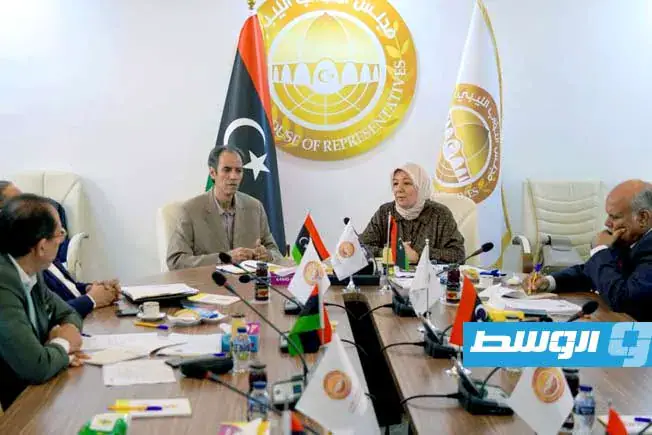
A Libyan parliamentary committee met on Sunday, November 15, 2026, to discuss the country's cybercrime law and potential loopholes. The committee, formed by a decision of the House of Representatives' president, aims to study and review laws related to communications and digital space. The meeting, chaired by Representative Asma Al-Khujah, included experts from various institutions, including the judiciary and academia.
The committee heard opinions and observations from representatives of judicial and academic institutions on the cybercrime law. This law was approved by the House of Representatives on October 26, 2021, but its issuance was delayed until October 2, 2022. The law has faced criticism from human rights organizations, including Human Rights Watch, which called for its repeal due to concerns over freedom of expression and privacy.
Human Rights Watch argued that the law violates the rights to freedom of expression, privacy, and association. Four UN experts expressed concerns that the law could have a significant impact on the enjoyment of the right to freedom of opinion and expression, as well as the right to privacy. The organization's representative, Hanan Salah, emphasized that Libyans' right to freedom of expression on the internet and offline should not be compromised in the name of combating cybercrime.
The parliamentary committee's discussion aims to address concerns and potential loopholes in the law. The committee's members, including Representative Omar Abdulnabi, engaged with experts to gather insights and recommendations. The meeting also included representatives from the Communications and Digital Space sector, the Criminal Investigation Department, and the Public Prosecutor's Office.
The review of the cybercrime law is a crucial step in ensuring that it aligns with international human rights standards. The Libyan government has faced criticism for its handling of human rights, particularly in the context of freedom of expression and assembly. The parliamentary committee's efforts to address concerns and improve the law demonstrate a willingness to engage with critics and experts.
The discussion also highlights the challenges of balancing cybersecurity with human rights. The rapid evolution of technology has created new opportunities for cybercrime, and governments must develop effective laws to address these threats. However, these laws must also protect human rights and individual freedoms.
The Libyan parliamentary committee's review of the cybercrime law is ongoing, and it is unclear what changes will be made. However, the committee's engagement with experts and critics is a positive step towards ensuring that the law is fair, effective, and respects human rights. The outcome of this review will have significant implications for the protection of human rights and individual freedoms in Libya.
Key points
- The Libyan parliamentary committee's discussion aims to address concerns and potential loopholes in the country's cybercrime law.
Reporting sources
- Wasat TV · Wasat TV