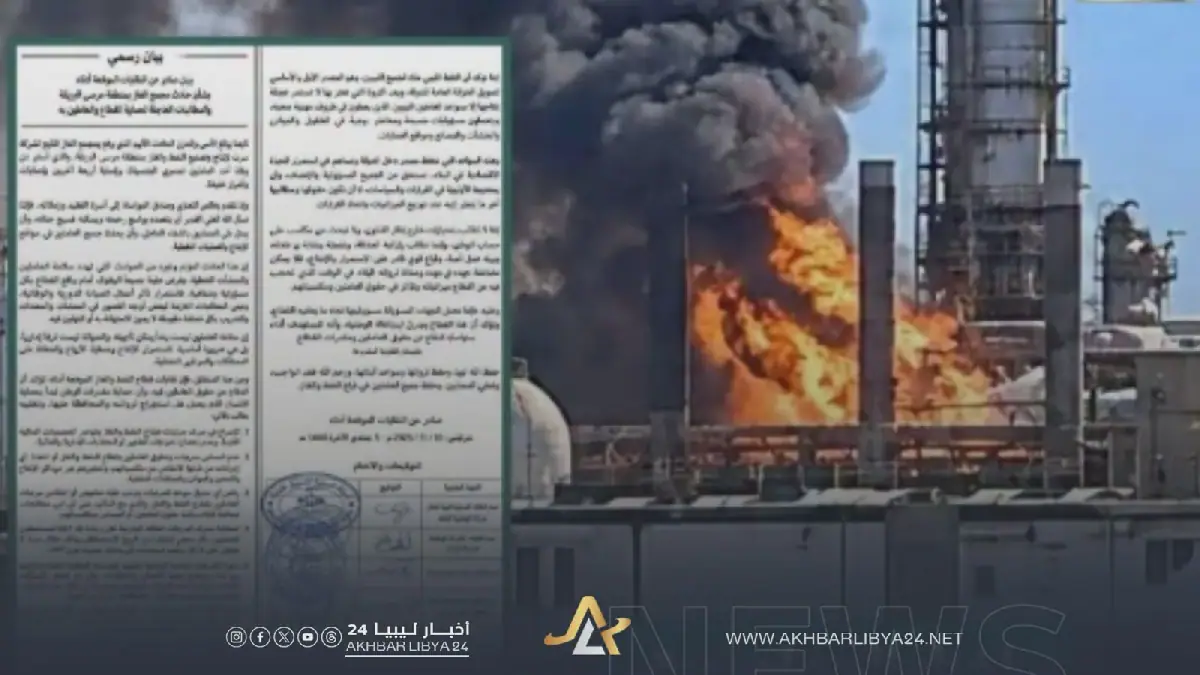
Four Libyan oil unions have reopened discussions on the state of the country's oil and gas sector following a recent accident at the Marsi al-Brega gas complex, operated by the Sirte Oil Production and Manufacturing Company. The unions are demanding that necessary budgets be provided for the operation, maintenance, and development of oil facilities, as well as protecting workers' financial and job rights. They stress that safeguarding employees and their safety is a responsibility that cannot be postponed.
The unions attribute the recurrence of accidents and delays in routine and preventive maintenance to the delayed release of budgets and insufficient financial allocations. They warn that continued delays in providing spare parts and equipment, as well as irregular maintenance programs, could exacerbate operational risks, threatening workers' safety and the continuity of production in one of Libya's most vital economic sectors.
The unions have called on responsible authorities to expedite the release of oil and gas sector budgets, providing necessary allocations for operation, maintenance, and development, away from delays and administrative and financial disputes. These disputes, they argue, negatively impact facility readiness and their ability to perform tasks. The unions emphasize the importance of preserving workers' salaries, rights, and benefits, rejecting any measures that might undermine their financial situations or compromise the sector's technical and professional specificity.
In the financial and job sphere, the unions reiterated their rejection of a unified salary scale that could lead to wage reductions or compromise employees' benefits. They assert that addressing financial imbalances should not come at the expense of sector workers' rights. Additionally, the unions renewed their demand for the payment of 67% salary increases owed to workers, retroactively effective from 2014, calling for an end to delays and partial payments that have prolonged this issue.
Following the Marsi al-Brega gas complex accident, the unions urged prioritization of safety, maintenance, and occupational prevention measures. This includes implementing continuous maintenance programs, providing necessary spare parts, equipment, and protective gear, and reviewing the readiness of oil facilities. They also demand accountability for those found responsible for neglecting worker and facility protection, ensuring that such incidents are not repeated and enhancing commitment to safety standards within production and operation sites.
The unions highlighted that their demands extend beyond financial rights, emphasizing the need for a safe working environment and ensuring the oil and gas sector's ability to sustain production. They argue that protecting the national economy cannot be achieved by sacrificing workers' rights or jeopardizing their safety. This stance underscores the challenges facing Libya's oil sector, including maintenance and development needs, delayed financial allocations, and issues related to salaries and benefits.
Ultimately, the Libyan oil unions' position emphasizes that protecting workers is a prerequisite for continued production and preservation of the country's oil wealth. Their demands reflect broader concerns about sector sustainability, worker safety, and the need for transparent accountability in the management of Libya's critical oil and gas resources.
Key points
- The unions demand expedited budget allocations for maintenance and development to prevent further accidents and ensure worker safety.
- They call for accountability for those responsible for safety negligence and advocate for continuous maintenance programs.
- The unions stress the importance of preserving workers' financial and job rights, including payment of owed salary increases.