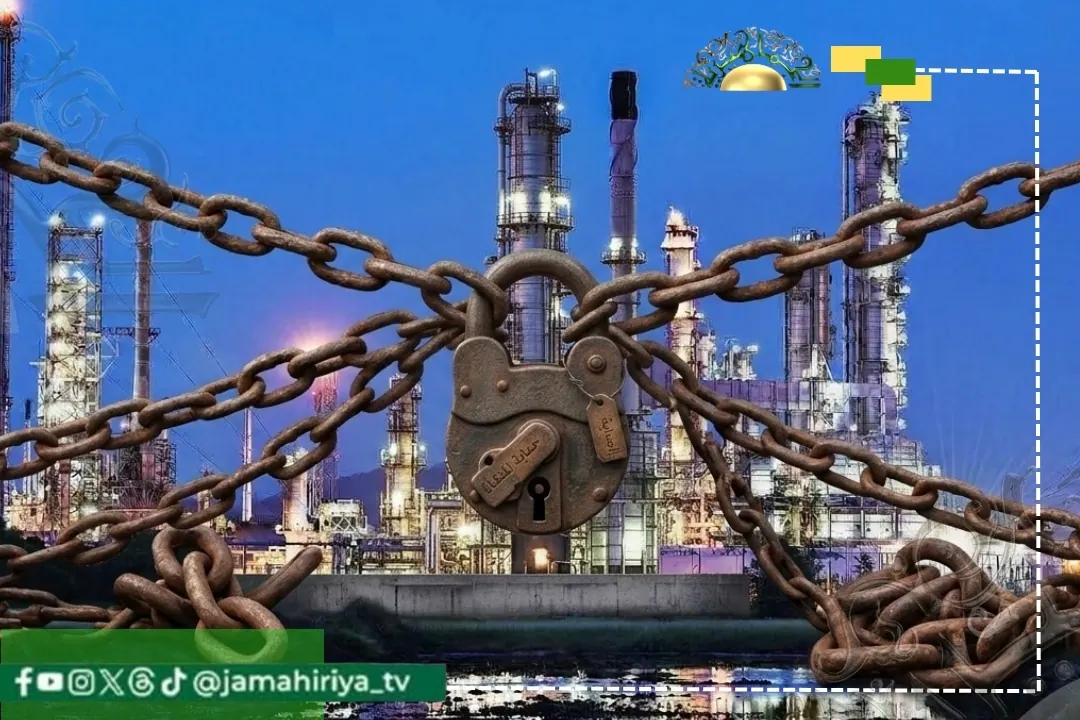
Libyan oil expert Ahmed Mohamed has stated that declaring force majeure does not automatically exempt the National Oil Corporation from its contractual obligations. According to Mohamed, force majeure is a contractual mechanism that requires examination of the contract and governing law to determine its impact. He made these comments in a statement reported by the Emirati news site Ermt News on September 28, 2026.
Mohamed emphasized that the actual closure of oil fields or pipelines does not necessarily mean that all consequences of non-delivery are automatically waived. He warned that treating force majeure as an automatic solution to the problem of failing to deliver contracted quantities could lead to greater legal and commercial complications. This is particularly concerning if such closures become a recurring phenomenon rather than an exceptional occurrence.
The situation in Libya is further complicated by the nature of oil field closures and the multiple parties that may be involved. Mohamed noted that if a closure is the result of an independent armed action unrelated to the National Oil Corporation, the argument for force majeure may be clearer. However, if the closure is linked to a government, security, or oil facility guard entity, a legal debate may arise over whether the event is truly beyond the corporation's control.
The issue of responsibility for such actions may also involve the state or affiliated entities. Mohamed's comments come amid repeated declarations of force majeure due to factional demands or suspected smuggling. These actions have been imposing increasing pressure on oil production and exports, threatening the regularity of fuel supplies in the domestic market.
Recently, the National Oil Corporation announced the reopening of a pipeline that had been closed by an armed group for several days, leading to a declaration of force majeure. The corporation estimated the cost of this closure at approximately $95 million. The repeated closures of oil fields, transportation lines, and facilities have significant economic implications for Libya.
The oil sector is vital to Libya's economy, and disruptions to production and exports have far-reaching consequences. The National Oil Corporation plays a critical role in managing the country's oil resources, and its ability to maintain production and meet contractual obligations is essential. Mohamed's comments highlight the need for a nuanced understanding of force majeure and its implications for contractual obligations.
The Libyan government and international community have been working to stabilize the country's oil production and ensure the regularity of fuel supplies. However, the persistence of closures and declarations of force majeure underscores the challenges facing the sector. The issue remains a pressing concern for Libya's economy and the global energy market.
Key points
- Force majeure is not an automatic excuse for failing to meet contractual obligations.
- The situation in Libya is complicated by the nature of oil field closures and multiple parties involved.
- Repeated closures and declarations of force majeure have significant economic implications for Libya.