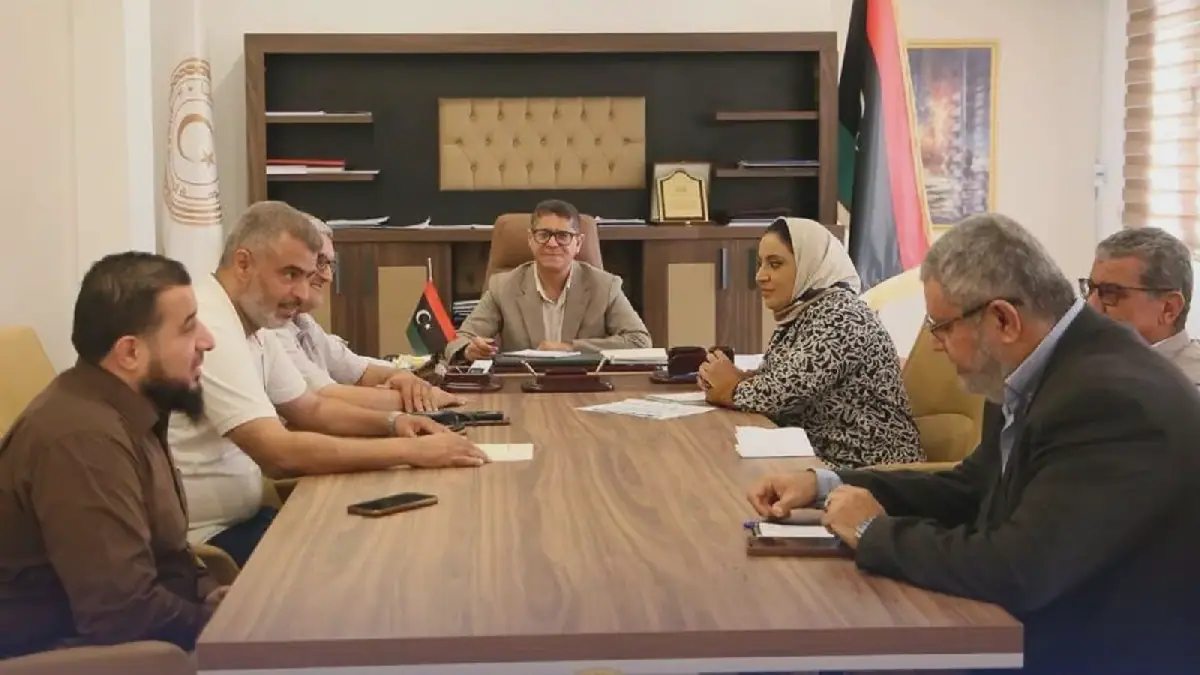
On November 2, 2026, Jamal Abu Qurein, Minister of State for Displaced Persons and Human Rights in Libya, held a meeting with the Director of Human Resources Management at the Ministry of Local Governance and heads of committees for displaced persons from various regions. The purpose of the meeting was to establish a joint working mechanism to address the situations of displaced and internally displaced persons.
During the meeting, Abu Qurein and the attendees discussed ways to facilitate the transactions and procedures of the civil registry for displaced persons. They emphasized the importance of ensuring that administrative requirements, particularly the "displacement affidavit," do not become obstacles that prevent citizens from enjoying their basic rights. These rights include the registration of births and the issuance of identification documents.
The participants also explored mechanisms to enhance coordination between committees and relevant authorities. This coordination aims to identify priorities for protecting the most vulnerable groups, including widows, divorced women, and people with disabilities. The approach will be based on clear criteria that ensure equal opportunities and prevent discrimination.
According to Abu Qurein, the outcomes of this meeting will directly contribute to the formulation and preparation of Libya's national report on the situation of displaced and internally displaced persons. This report will be based on field observations, evaluations of existing policies and procedures, and recommendations for durable and sustainable solutions.
The Ministry of State for Displaced Persons and Human Rights reiterated that the rights of displaced and internally displaced persons are fundamental rights. These rights should not be held hostage by administrative complexities or restrictions that are not based on the law. The Ministry emphasized the need for all procedures to be grounded in legal principles that protect human dignity.
The meeting's discussions also underscored the importance of ensuring that displaced persons are able to exercise their rights without facing undue administrative hurdles. This includes the right to access essential services and to have their personal documentation, such as identification cards and birth certificates, processed efficiently.
The Libyan government, through the Ministry of State for Displaced Persons and Human Rights, is working to address the challenges faced by displaced and internally displaced persons. By focusing on the development of clear and effective policies, the government aims to provide durable solutions to these individuals and to support their reintegration into Libyan society.
Key points
- The rights of displaced and internally displaced persons in Libya are fundamental and should not be compromised by administrative complexities.
- The Libyan government is working to facilitate the transactions and procedures of the civil registry for displaced persons.
- A national report on the situation of displaced and internally displaced persons in Libya is being prepared based on field observations and evaluations of existing policies.