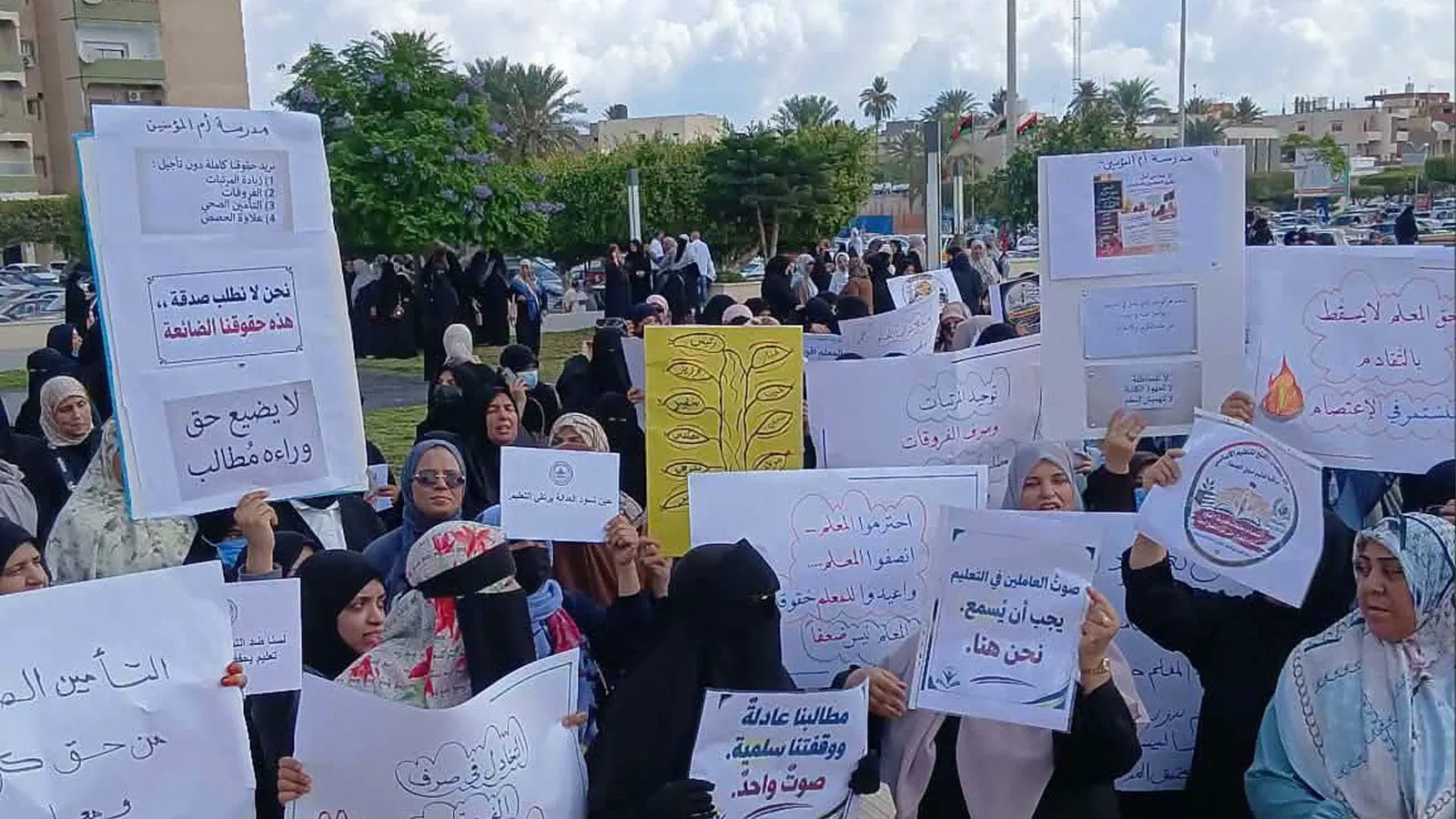
The Libyan government has emphasized the importance of resuming the educational process, with all students returning to their classrooms. A meeting of high-ranking officials, including ministers and local government representatives, highlighted that the right to education is a national priority that cannot be postponed further. The meeting also acknowledged the need to address teachers' demands and improve their working conditions fairly.
The meeting, which included ministers of finance, local government, education, health, youth, culture, and industry, as well as the secretary general of the cabinet and other officials, praised the Libyan Teachers' Union for lifting its sit-in protest. The move was seen as a demonstration of national responsibility and a prioritization of the public interest.
The government has called on all teachers and education supervisors to resume work starting from Sunday, following the resumption of classes in some areas on Wednesday. Officials have expressed concern that continued school closures would exacerbate the negative impact on students and their families.
The government has reiterated its support for efforts to reform the salary system and introduce a unified salary scale that promotes social justice and fairness among state employees. This move aims to address long-standing grievances and ensure a more equitable distribution of resources.
However, the government has also warned that it will take legal action against those who fail to comply with the directive to return to work. Officials have urged parents to cooperate in ensuring that schools reopen promptly, stressing that the education sector's stability is crucial for the country's future.
According to Libya Al Ahrar TV, the government has emphasized that it will not tolerate further disruptions to the educational process. The authorities have called on all stakeholders to prioritize the interests of students and work towards a swift resolution to the crisis.
The situation highlights the challenges facing Libya's education sector, which has been impacted by various factors, including protests and demands for better working conditions. The government's efforts to address these concerns while maintaining the stability of the education system will be crucial in the coming days.
Key points
- The Libyan government has urged teachers to resume work, warning of legal action against those who fail to comply.
- The government aims to reform the salary system and introduce a unified salary scale to promote social justice and fairness.
- The education sector has been impacted by protests and demands for better working conditions, highlighting the need for a swift resolution to the crisis.