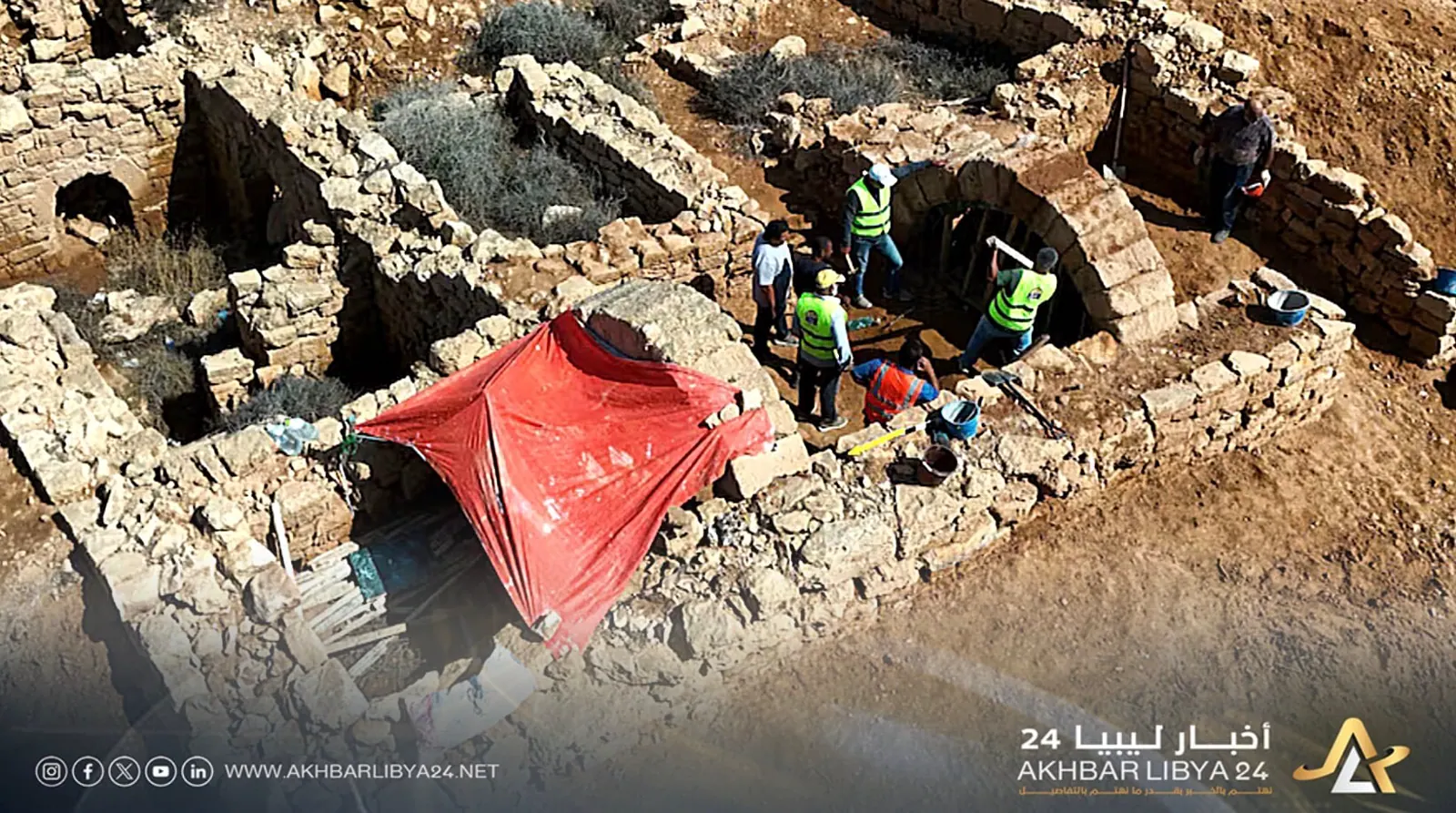
A team of researchers and experts from the Benghazi Antiquities Authority is working to restore the ancient Roman site of Qasr al-Ghailitha, located 15 kilometers west of Benghazi. The site, which dates back to the Roman era, specifically the 2nd century AD, features a defensive, administrative, and agricultural system that was integral to the city of Berenice.
The site includes ruins of forts, defensive lines, olive oil presses, and water cisterns, indicating its importance as an administrative and agricultural center. Current efforts focus on removing debris and vegetation that threaten the site's deterioration, as well as supporting walls and arches and preserving architectural elements exposed to erosion.
The restoration work involves not only on-site treatment but also scientific documentation to record changes to the site's structure and determine priorities for protection and restoration of damaged areas. According to Jalal al-Abidi, a researcher with the Benghazi Antiquities Authority, the team is currently working to restore a collapsed section of the second floor that had been damaged since the 1970s or 1980s.
The restoration process is complex and requires significant expertise, particularly when dealing with large stone blocks and interconnected arches. Al-Abidi emphasizes that this task represents a rare technical challenge due to its need for precise knowledge of the original elements and how to reassemble them without damaging the remaining historical structure.
The project's vision extends beyond saving the site, aiming to transform Qasr al-Ghailitha into a tourist destination and part of Benghazi's cultural and tourist map. The site's defensive, agricultural, and administrative elements provide potential for inclusion in the local heritage map, especially if conservation efforts are coupled with a comprehensive program for rehabilitation and promotion.
The experience of Qasr al-Ghailitha highlights the importance of moving from limited individual efforts to an institutional vision that provides necessary funding, equipment, and expertise to ensure continued protection and minimize losses that may become more difficult to address over time.
The site holds a story that transcends the age of its buildings, a story of a city, society, and successive cultural transformations. Therefore, there are calls to spotlight Qasr al-Ghailitha and other archaeological sites in eastern Libya, and provide the resources necessary to protect and re-present them as part of the country's cultural identity and a potential future tourism resource.
Key points
- The team working on the Qasr al-Ghailitha site aims to restore and protect the ancient Roman ruins.
- The site holds significant historical and cultural importance as a defensive, administrative, and agricultural center from the Roman era.
- The restoration efforts require a comprehensive approach, including scientific documentation, on-site treatment, and long-term protection and funding.