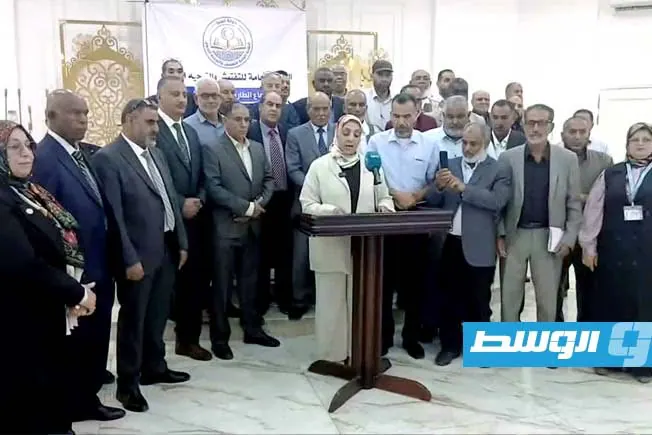
The Libyan Educational Inspectors' Union has announced that it will be suspending its fieldwork until its demands for better working conditions and financial benefits are met. The union's demands include the implementation of a decision to grant a distinction allowance and fuel allowance to educational inspectors, as well as the resolution of the status of retired inspectors and the payment of their financial dues. This decision was made during a meeting between the union's general committee and its subsidiary unions on October 6, 2026.
The union's demands also include the approval of health insurance for educational inspectors and their families, as well as for all institutions and sectors. Additionally, the union is calling for the independence of the Educational Inspection and Guidance Department, which it wants to be a standalone, autonomous entity with clear powers and a direct link to the country's top authorities. The union's leaders have emphasized that their demands are legitimate and that they will continue to push for their rights to be recognized.
The Educational Inspectors' Union has expressed its support for a recent meeting of professional unions aimed at restoring the dignity and status of educational inspectors. The union's leaders have also emphasized that they are committed to working towards finding solutions to the challenges facing the education sector in Libya. The country's education system has faced numerous challenges in recent years, including a shortage of qualified teachers and inspectors.
The suspension of fieldwork by the Educational Inspectors' Union is likely to have a significant impact on the education sector in Libya. Educational inspectors play a crucial role in monitoring and evaluating the quality of education in the country, and their absence could lead to a decline in educational standards. The union's demands have been supported by some educators and experts, who argue that better working conditions and financial benefits are essential for improving the quality of education.
The Libyan government has not yet responded to the Educational Inspectors' Union's demands. However, the union's leaders have emphasized that they are willing to engage in dialogue with the government and other stakeholders to find solutions to the challenges facing the education sector. The union's demands are part of a broader effort to improve the working conditions and benefits of educators and inspectors in Libya.
The Educational Inspectors' Union has a long history of advocating for the rights of educational inspectors in Libya. The union was established to promote the interests of its members and to work towards improving the education sector in the country. The union's leaders have emphasized that they are committed to working towards finding solutions to the challenges facing the education sector and to promoting the rights of educators and inspectors.
The future of the education sector in Libya remains uncertain, with many challenges still to be addressed. The Educational Inspectors' Union's demands for better working conditions and financial benefits are just one part of a broader effort to improve the sector. The union's leaders have emphasized that they will continue to push for their rights to be recognized and for the education sector to be improved.
Key points
- The Libyan Educational Inspectors' Union has announced that it will be suspending its fieldwork until its demands for better working conditions and financial benefits are met.
- The union's demands include the implementation of a decision to grant a distinction allowance and fuel allowance to educational inspectors, as well as the resolution of the status of retired inspectors and the payment of their financial dues.
- The union's leaders have emphasized that their demands are legitimate and that they will continue to push for their rights to be recognized.