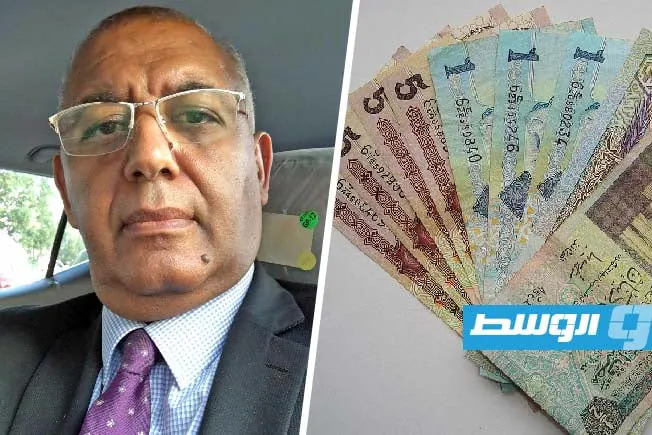
Libyan economic expert Mohamed Ahmed has cautioned against calls to float the Libyan dinar as a solution to the exchange rate crisis. He believes that success in floating the currency requires a market capable of discovering the price, along with monetary and fiscal institutions and policies that allow the exchange rate to reflect the real economic situation. Ahmed emphasized that the current situation in Libya does not meet these conditions.
Ahmed pointed out that the idea of floating the dinar seems like a simple solution to the difference between the official and parallel market exchange rates. However, it ignores the fact that the exchange rate is not just a number determined by supply and demand. He stressed that a market capable of determining the exchange rate needs reliable economic, financial, and monetary information, trustworthy financial institutions, and clear rules for credit, investment, and transfers.
According to Ahmed, these conditions are not met in Libya today, making it impossible to transfer the decision to determine the value of the dinar from the Central Bank of Libya to the market. He highlighted the financial factor as an important part of explaining the developments in the dinar's exchange rate, particularly in light of the effects of years of declining oil prices and reduced production.
Ahmed noted that the International Monetary Fund has previously indicated that the Central Bank of Libya needs additional monetary tools to proactively manage liquidity. He also mentioned that the Fund recommended developing an effective monetary policy framework and a clear monetary policy rate that can serve as a reference for pricing credit.
The economist emphasized that floating the exchange rate does not cancel out the role of the Central Bank but changes its nature. In a flexible exchange rate system, the bank needs to manage liquidity, influence credit, maintain confidence, and manage reserves, as well as intervene in the foreign exchange market when fluctuations become disorderly.
Ahmed warned that calling for floating the dinar in the current situation is premature. He believes that the priority is to build the necessary institutions, markets, and tools first, so that floating the currency becomes a natural result of the development of the monetary system, rather than a substitute for it.
Ahmed concluded that building the necessary system for floating the dinar takes time and that transitioning an economy suffering from institutional division, a parallel exchange market, and weak monetary policy tools to a stable floating system cannot be done by simply issuing an administrative decision.
Key points
- Libyan economic expert Mohamed Ahmed warns that floating the dinar could turn the parallel market into an official reference for its price.
- Ahmed emphasizes that the current situation in Libya does not meet the conditions for successfully floating the currency.
- The economist believes that building the necessary institutions, markets, and tools is a prerequisite for floating the dinar.