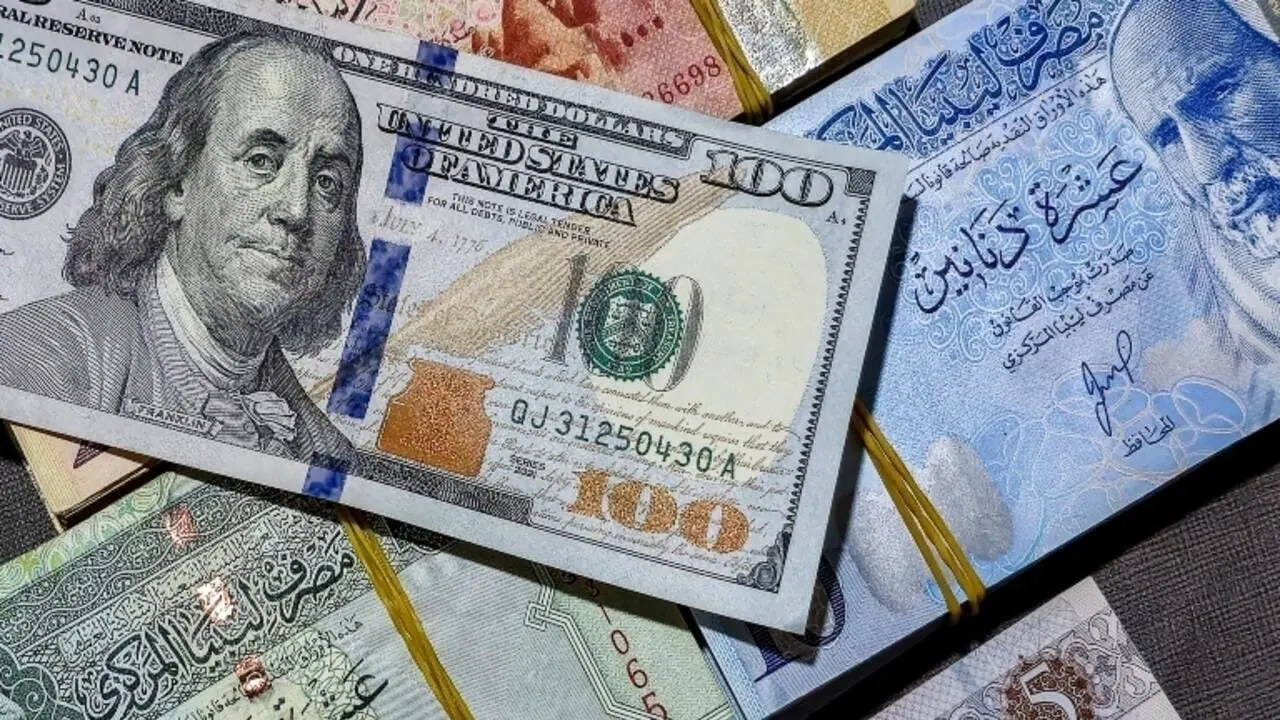
The Libyan dinar has depreciated significantly in the parallel market, with the US dollar reaching 9.71 dinars for cash transactions and 9.88 dinars for checks and bank transfers. This marks a notable increase in the value of the dollar against the dinar. The current exchange rates reflect a challenging economic situation in Libya. Economic instability and fluctuations in the parallel market have been a concern for Libyans.
According to a statement released by the Central Bank of Libya, the country has recorded a foreign exchange deficit of approximately $4.9 billion during the first eight months of the year. This deficit arises from a difference between total revenues of $15.2 billion from oil and royalties and total expenditures and liabilities of $20.1 billion. The central bank has managed to cover this shortfall through returns on its investments.
The Central Bank of Libya reported that its total foreign assets stood at $96 billion as of the end of August. The bank's foreign exchange deficit was partially financed through its investments. A significant portion of the deficit was covered by the bank's own resources. This helped maintain stability in the financial system.
A breakdown of foreign exchange usage reveals that $2.77 billion was allocated through the Central Bank to fund public entities, including the National Oil Corporation, the General Electricity Company, and the Medical Supply Device. An additional $17 billion was channelled through commercial banks. This includes $9 billion for documentary credits, $6 billion for personal purposes, and $2 billion for remittances.
The current economic situation in Libya is complex, with significant challenges in managing foreign exchange. The country's reliance on oil revenues and the impact of fluctuations in the parallel market have contributed to the economic instability. The Central Bank's efforts to manage the deficit and maintain stability are crucial in addressing these challenges.
The depreciation of the Libyan dinar has implications for the country's economy and its citizens. A weaker dinar can lead to higher prices for imported goods, affecting the purchasing power of Libyans. The situation requires careful management by the Central Bank and the government to mitigate the effects of the economic instability.
The Central Bank of Libya continues to play a critical role in managing the country's economy. Its efforts to cover the foreign exchange deficit and maintain stability in the financial system are essential in addressing the current economic challenges. The bank's actions will be closely watched by Libyans and international observers alike.
Key points
- The US dollar has reached 9.71 dinars for cash transactions and 9.88 dinars for checks and bank transfers in the parallel market.
- The Central Bank of Libya has recorded a foreign exchange deficit of approximately $4.9 billion during the first eight months of the year.
- The country's total foreign assets stood at $96 billion as of the end of August.