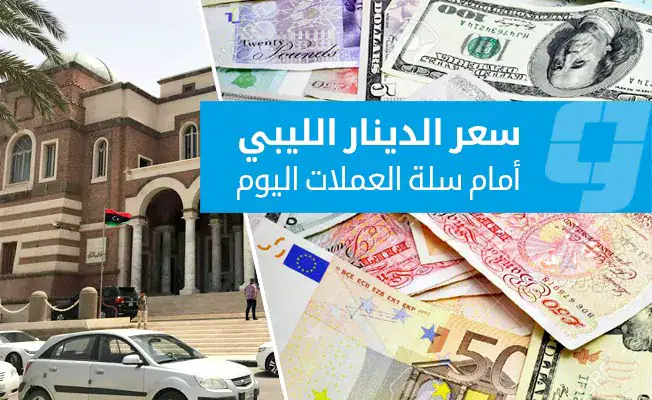
On Thursday, October 29, 2026, the exchange rate of the US dollar against the Libyan dinar in the official market remained stable at 6.43 dinars, the same rate recorded on Wednesday. The European currency, the euro, saw a slight increase to 7.16 dinars from 7.15 dinars on the previous day. Meanwhile, the British pound sterling held steady at 8.55 dinars, as reported by the Central Bank of Libya.
The exchange rates of Arab currencies against the Libyan dinar also showed some stability. The Saudi riyal remained unchanged at 1.71 dinars, while the United Arab Emirates dirham stayed at 1.75 dinars. However, the Tunisian dinar experienced a minor decrease to 2.13 dinars from 2.14 dinars. The Turkish lira and the Chinese yuan maintained their previous rates, with the lira at 0.12 dinars and the yuan at 0.96 dinars.
In the parallel market, the US dollar saw a slight decline against the Libyan dinar on Wednesday, October 28, 2026, closing at 9.90 dinars compared to 9.92 dinars on Tuesday. The euro and the British pound sterling remained stable at 11.02 dinars and 12.95 dinars, respectively, for the second consecutive day. These rates were reported by traders and social media pages focused on the parallel market.
The price of broken 18-karat gold increased to 955 dinars per gram, up from 945 dinars on the previous day. The Turkish lira and the Tunisian dinar continued to trade steadily in the parallel market, with the lira at 0.18 dinars and the Tunisian dinar at 2.60 dinars.
The Central Bank of Libya's stability in exchange rates is a positive indicator for the country's economy. The bank's management of the official market rates helps maintain a balance between the official and parallel markets. Libya's economic stability is crucial for its recovery and growth.
The exchange rates in both the official and parallel markets reflect the dynamics of Libya's economy. The country's reliance on imports and its foreign exchange needs play a significant role in determining these rates. The Central Bank's decisions on interest rates and monetary policy also impact the exchange rates.
Libya's economic challenges, including inflation and a decline in foreign exchange reserves, affect the exchange rates. The country's efforts to stabilize its economy and improve its financial situation are essential for maintaining stable exchange rates. The international community's support and investment in Libya's economy can also contribute to its stability.
Key points
- The Libyan dinar's exchange rates against major currencies remained stable in the official market on Thursday, October 29, 2026.
- The parallel market rates showed a slight decline in the US dollar and stability in the euro and British pound sterling.
- The price of gold increased, while the Turkish lira and Tunisian dinar maintained their steady rates in the parallel market.


