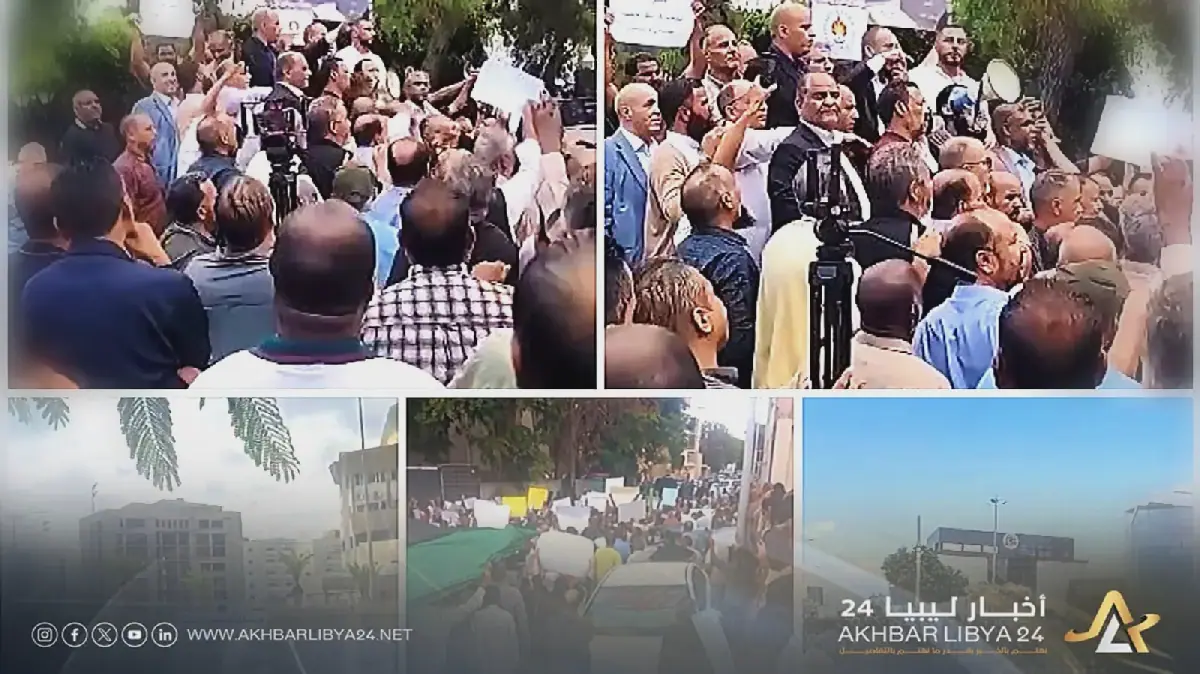
Member of the Libyan State Council, Fawzia Krawan, has expressed concerns over the growing protests and sit-ins across Libya. She emphasized that these demonstrations, led by teachers and other sectors, are no longer solely about professional demands for better salaries and living conditions. Instead, they reflect a deeper crisis related to the lack of justice, equality, and the prevalence of corruption and cronyism.
Krawan stated that the current protests represent a cry against injustice and an imbalance in rights and duties. Many citizens feel there is an unfair distribution of privileges and opportunities among state employees. The fact that teachers have resorted to abandoning classrooms and staging sit-ins to demand their rights indicates a malfunction that goes beyond the education sector. It reveals a crisis in the state's ability to do justice to groups that bear primary responsibility for building society and shaping the future of generations.
The recurrence of protests in various sectors indicates a widening gap of trust between citizens and state institutions. This is particularly due to the persistence of salary and benefit disparities and the lack of connection between some opportunities and criteria of efficiency and merit. Many Libyans face difficulties in providing basic life necessities. Krawan stressed that the real danger lies not in the escalation of popular demands but in citizens becoming convinced that their rights can only be obtained through protest.
Krawan pointed out that addressing the crisis does not involve ignoring the protests or making temporary decisions. It requires real reform of the salary and benefits system, achieving equality among employees in various sectors, and holding those involved in corruption accountable. She also emphasized the need to end the policy of exceptions and favors. This approach is necessary to restore trust and ensure that the rights of all citizens are fairly considered.
The situation is further complicated by the fact that many Libyans feel their voices are not heard unless they take to the streets. This sentiment is fueled by the persistence of corruption and the lack of tangible reforms. As a result, protests are likely to continue unless there is a significant shift in how the government addresses these issues.
Krawan warned that if the situation continues, the current protests by teachers could escalate into broader public outrage. She questioned whether there is a will to address the root causes of the crisis before it worsens. Krawan emphasized that justice is not a factional demand but a fundamental pillar for the stability of the state and the preservation of its dignity and that of its citizens.
The Libyan government faces a critical challenge in addressing these grievances. The persistence of protests across various sectors indicates a deep-seated dissatisfaction among the population. If left unaddressed, these issues could lead to further instability and potentially threaten the state's ability to maintain order and provide for its citizens.
Key points
- The protests reflect a deeper crisis related to the lack of justice, equality, and the prevalence of corruption and cronyism in Libya.