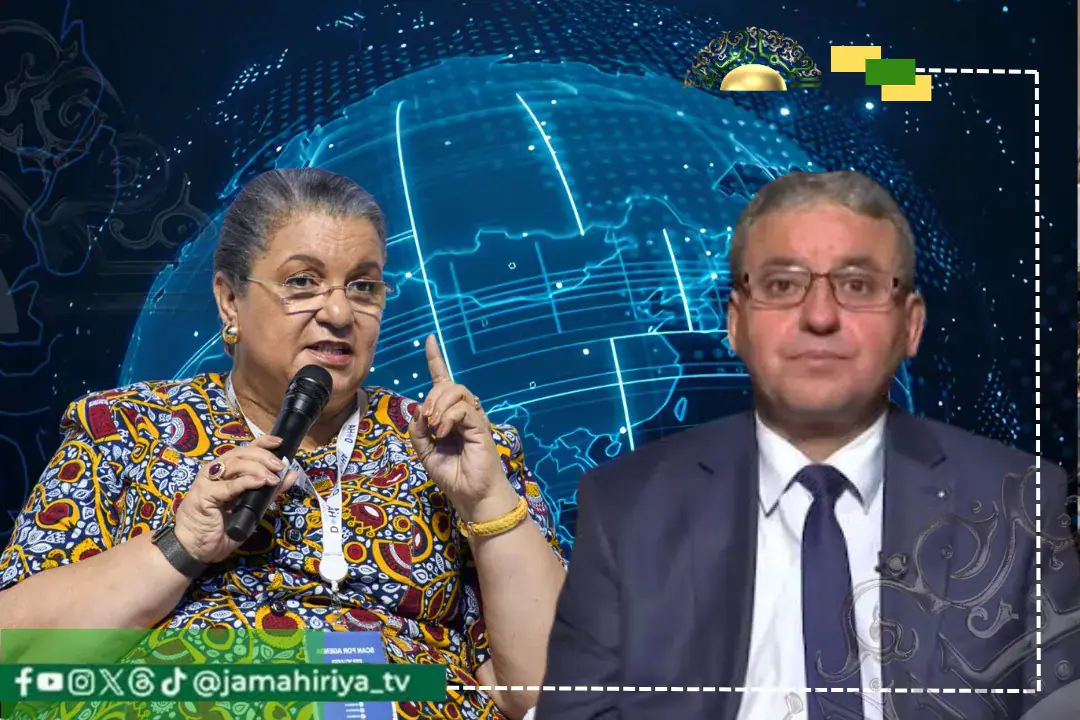
Libyan political analyst Elias Baruni has called for a shift in the approach of UN envoy Hana Titi, urging her to move beyond dialogue and focus on achieving tangible results. Baruni stated that evaluating Titi's performance should not be based solely on the number of meetings she holds, but rather on her ability to translate dialogue into clear commitments that help end the country's political and institutional divisions.
Baruni noted that the UN envoy does not possess direct leverage or executive powers to impose consensus on the Libyan House of Representatives and State Council. Her role primarily involves mediation, facilitating dialogue, and bridging differences. However, he emphasized that the UN has various political and diplomatic tools at its disposal to pressure parties obstructing progress, including through the Security Council and potential international sanctions.
The analyst highlighted that Libya's crisis extends beyond disputes over the constitutional framework or electoral laws, involving a deeper struggle for power, legitimacy, influence, resources, and control of sovereign institutions. He pointed out a disconnect between the stated positions of some political institutions and their actual practices, with some entities professing support for elections while being reluctant to make concessions that might lead to their exit from the political scene.
Baruni identified several key issues that continue to hinder progress, including disagreements over candidacy requirements, the powers of institutions, the formation of the executive authority, and the lack of guarantees regarding the acceptance of election results. He attributed these challenges to a limited willingness to conclude the transitional period. The analyst stressed that genuine consensus requires not only the signing of agreements but also the acceptance of fair rules, respect for the will of voters, and peaceful transfer of power.
Looking ahead to the potential extension of the UN mission, Baruni urged Titi to focus on managing outcomes rather than just facilitating dialogue. He proposed that this could involve establishing a clear, time-bound roadmap, broadening political and societal participation, addressing the executive and institutional divide, and insulating public finances and sovereign institutions from political interference. He also emphasized the need for mechanisms to hold accountable parties that obstruct reconciliation efforts.
Baruni highlighted the importance of international unity in addressing the Libyan crisis, suggesting that external interventions often have conflicting effects. He advocated for a solution that is driven by national will rather than imposed from abroad. According to Baruni, the success of the UN mission should be measured not by the continuation of negotiations or the generation of new initiatives, but by the resolution of the crisis's root causes and the creation of conditions for free and fair elections.
Ultimately, Baruni argued that Libya does not require an extension of the crisis under UN auspices but rather a serious process that concludes successive transitional phases and restores legitimacy to institutions through the ballot box. He emphasized that the goal should be to facilitate a peaceful transfer of power and ensure that the country's future is determined by its people, rather than being dictated by external factors or prolonged negotiations.
Key points
- Baruni calls for a shift in UN envoy Hana Titi's approach from dialogue to achieving concrete results.
- The analyst emphasizes the need for a clear, time-bound roadmap to address Libya's crisis.
- Baruni stresses the importance of international unity and a solution driven by national will.