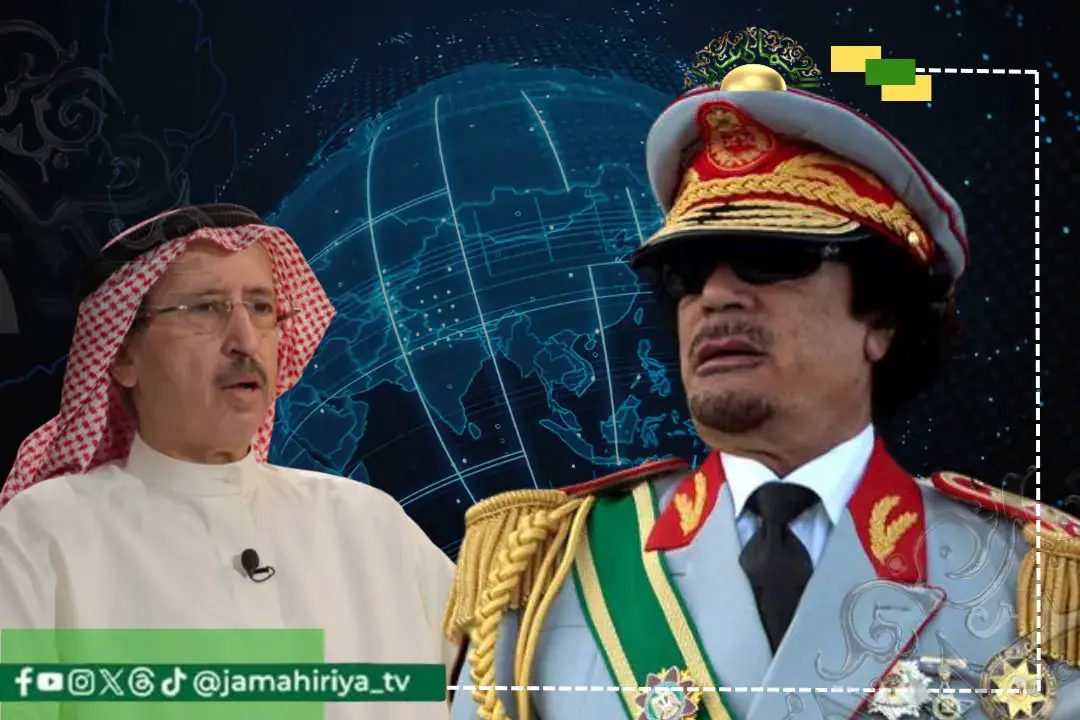
On November 2, 2026, Libyan activist Ahmed Bouhreiba strongly responded to comments made by former Kuwaiti Minister of Information Sami Al-Nisf regarding Libya and the late leader Muammar Gaddafi. Bouhreiba accused Al-Nisf's statements of containing historical inaccuracies and attempts to distort Libya's history and its former leadership. He made these remarks in a post on Facebook.
Bouhreiba specifically refuted Al-Nisf's claim that Gaddafi was a British creation, describing it as a fabricated accusation that overlooks Britain's role in establishing and supporting the Libyan monarchy. In contrast, Bouhreiba highlighted the role of the 1969 revolution in ending foreign military presence in Libya. This revolution, led by Gaddafi, had a profound impact on the country's history.
Bouhreiba also criticized Al-Nisf's assertion that Gaddafi harmed Arab unity. Instead, he accused Gulf countries of participating in interventions that contributed to the destruction of Arab states and undermining their stability. This criticism reflects a broader context of regional dynamics and the complexities of Arab unity.
In his defense of Gaddafi's legacy, Bouhreiba emphasized Libya's role in Africa, particularly in supporting liberation and independence movements. He argued that this was a key aspect of Libya's foreign policy under Gaddafi. Bouhreiba rejected the notion that Gaddafi should be held responsible for African and regional crises.
Bouhreiba questioned the reliability of personal accounts cited by Al-Nisf to criticize living conditions in Libya during Gaddafi's rule. He argued that such individual testimonies are insufficient for assessing the overall situation. Bouhreiba also defended the Great Man-Made River project, describing it as a viable initiative that provided water for Libyan cities and agricultural areas.
The issue of Palestine was another point of contention, with Bouhreiba noting that Gaddafi's opposition to normalization and his stance against Israeli peace agreements were significant factors in the disagreement with critics of his regime. This highlights the complexities of Gaddafi's foreign policy and his stance on key regional issues.
Bouhreiba concluded by emphasizing the need to counter attempts to distort Libya's history. He called for the use of historical documents, testimonies, and facts to challenge narratives that target Libya and its former leadership. This appeal reflects a broader effort to preserve historical accuracy and national heritage.
Key points
- - Bouhreiba refutes Al-Nisf's claims about Gaddafi being a British creation. - He defends Libya's role in Africa under Gaddafi's leadership. - Bouhreiba calls for using historical facts to counter narratives distorting Libya's history.