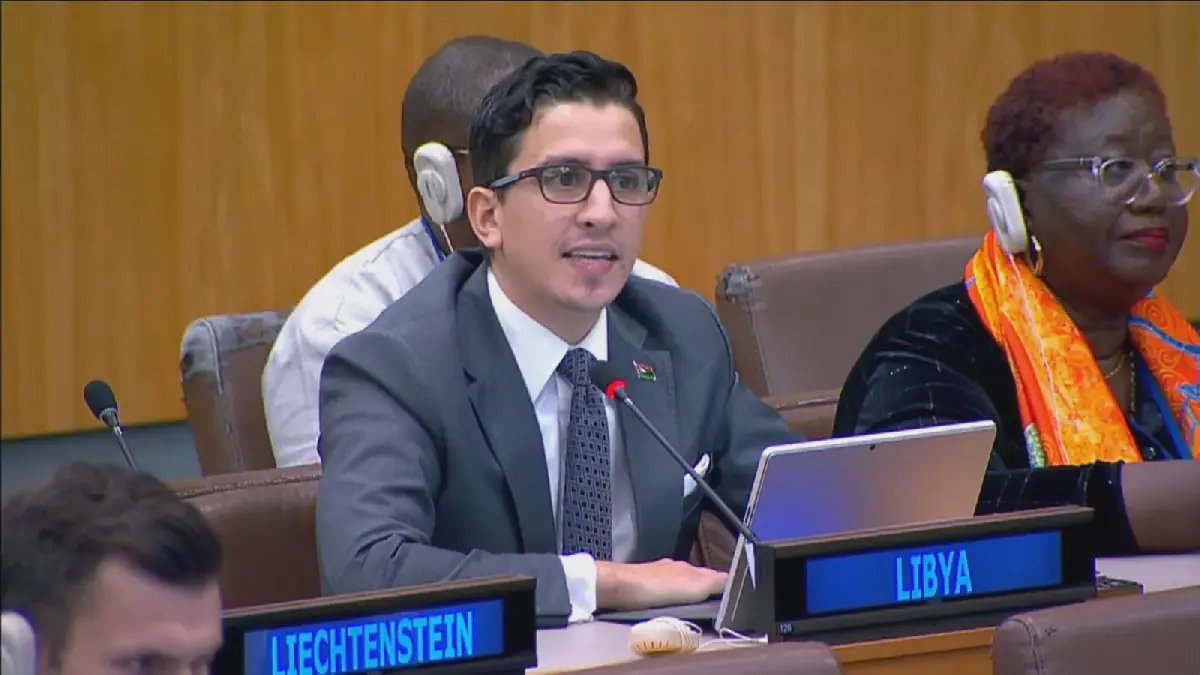
Libya's permanent representative to the United Nations, Mohamed Bousnina, has called for a stronger role for the UN in promoting reliable and unbiased information. He warned of increasing disinformation and eroding trust between nations and peoples. Bousnina emphasized that reform and restructuring efforts should not compromise linguistic diversity, inclusivity, and geographic balance. His remarks were made during the 81st session of the UN General Assembly.
Bousnina's statement highlighted Libya's vulnerability to disinformation campaigns that target national unity and reconciliation efforts. He also pointed out distorted narratives on migration and stereotypical portrayals linking Libya to terrorism. The Libyan representative urged the UN to provide accurate and balanced coverage that respects national sovereignty and is based on facts. This appeal comes as Libya navigates complex challenges to its stability and international reputation.
The Libyan delegation stressed the need for responsible and ethical use of artificial intelligence in media work. They advocated for human oversight and verification of content accuracy in all official languages. Additionally, they called for enhanced international cooperation to bridge the digital divide. These recommendations aim to promote more reliable and equitable information dissemination.
The Libyan representative also emphasized the importance of achieving full parity between the six official UN languages, including Arabic. He requested expanded issuance of daily press releases in all languages and stronger partnerships with national media, universities, and civil society organizations. These measures are intended to enhance the UN's communication effectiveness and inclusivity.
In a related context, Libya condemned the targeting of journalists in Gaza and Lebanon. The Libyan delegation demanded accountability for perpetrators of these crimes and rejected disinformation campaigns against the UN Relief and Works Agency for Palestine Refugees (UNRWA) and its staff. They emphasized that accurately conveying the Palestinian narrative is a moral and legal responsibility.
Bousnina's address to the UN's Fourth Committee came during discussions on media-related issues. His statement reflected Libya's concerns about the impact of disinformation on national and international levels. The Libyan representative's call for UN reform and enhanced media cooperation underscored the complexities of global communication in the digital age.
The issue of disinformation and media ethics remains a pressing concern for nations worldwide. Libya's experience highlights the challenges of maintaining national unity and a positive international image amid widespread misinformation. The UN's role in promoting fact-based reporting and countering disinformation is seen as crucial in addressing these challenges.
Key points
- Libya's UN representative calls for stronger UN role in promoting reliable information
- Libya condemns targeting of journalists in Gaza and Lebanon
- Libyan delegation advocates for responsible use of artificial intelligence in media work