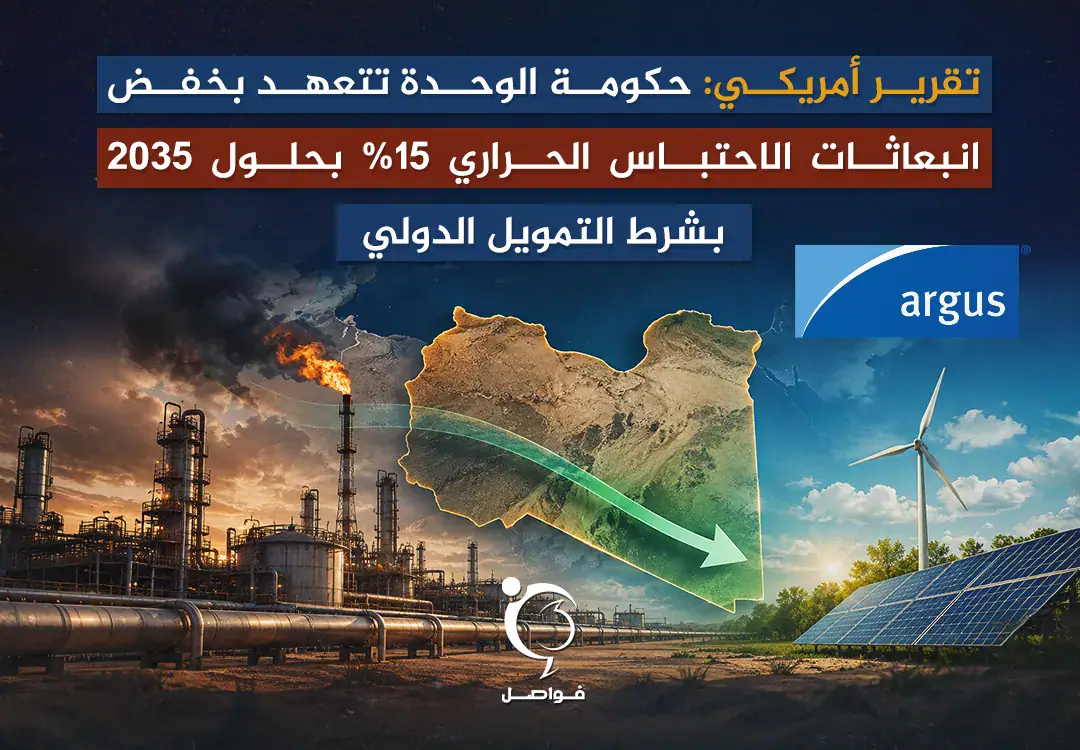
Libya's Government of National Unity has committed to reducing greenhouse gas emissions by 15% by 2035, compared to 2023 levels, contingent upon receiving necessary international funding. This pledge is part of Libya's first nationally determined contribution to combat climate change under the Paris Agreement. The plan, which covers the period from 2026 to 2035, aims to decrease emissions through projects focused on recovering flared gas and improving energy generation efficiency.
According to a report by the American website Argus, Libya's national climate plan estimates that a total of $29.6 billion in funding is required to achieve its targets, with the energy sector accounting for approximately $28 billion of this amount. The plan anticipates that 31% of the funding will come from domestic sources. In 2023, Libya's emissions totaled 97.3 million tons of carbon dioxide equivalent, with the energy sector, encompassing oil, gas, electricity, and transportation, responsible for around 88% of these emissions.
The Libyan government's pledge to reduce emissions is conditional on securing international financing. Without this funding, the country's emissions are projected to increase by 20% by 2035 compared to 2023 levels. In contrast, under current policies and circumstances, emissions are expected to rise by around 35%. The Libyan government is seeking support to implement its climate plan and mitigate the impacts of climate change.
The Paris Agreement, which Libya has committed to, aims to limit global warming to well below 2°C and pursue efforts to limit it to 1.5°C above pre-industrial levels. Libya's nationally determined contribution is a crucial step towards achieving this goal. The country's commitment to reducing emissions demonstrates its recognition of the urgent need to address climate change.
The energy sector plays a significant role in Libya's emissions, with oil and gas production being major contributors. The government's plan to recover flared gas and improve energy efficiency aims to reduce emissions from this sector. However, the implementation of these projects is contingent upon securing international funding.
Climate change poses significant challenges to Libya, including rising temperatures, changing precipitation patterns, and increased frequency of extreme weather events. The country's Nationally Determined Contribution is a critical step towards addressing these challenges and promoting sustainable development.
Libya's commitment to reducing greenhouse gas emissions is a positive step towards addressing climate change. The international community's support will be crucial in helping the country achieve its targets and promoting sustainable development.
Key points
- Libya's government has pledged to reduce greenhouse gas emissions by 15% by 2035, pending international funding.
- The country's national climate plan requires $29.6 billion in funding, with the energy sector accounting for $28 billion.
- Without international financing, Libya's emissions are projected to increase by 20% by 2035.