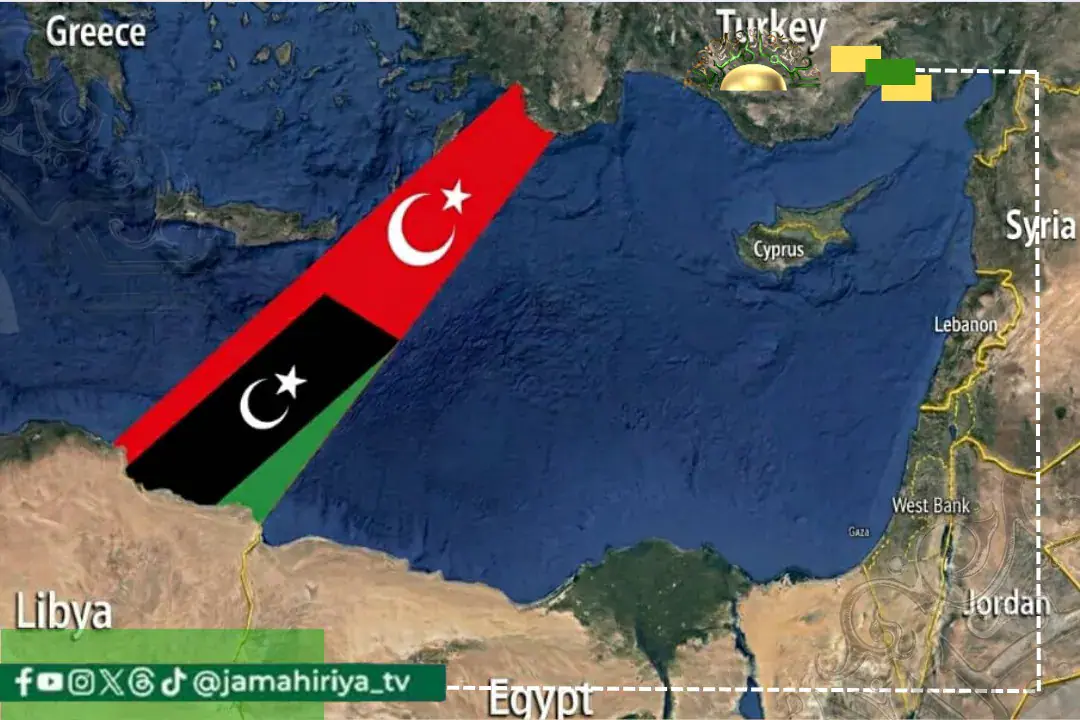
The recent approval of a maritime agreement between Libya and Turkey by the Libyan House of Representatives has sparked interest in the country's oil exploration sector. According to a report by the Arab newspaper, the agreement could lead to expanded cooperation in oil and gas exploration, enhancing Turkey's presence in Libya's energy sector. The deal has significant economic and strategic implications, going beyond maritime border disputes in the Eastern Mediterranean.
The agreement is expected to provide Turkey with access to Libya's unexplored oil and gas reserves. Data from the Anadolu Agency suggests that around 70% of Libya's land and maritime areas have not undergone comprehensive seismic surveys or detailed exploration. This has led to estimates that the country's total oil resources could reach 90 billion barrels, compared to confirmed reserves of 48.4 billion barrels.
Cooperation between Libya and Turkey in the energy sector predates the maritime agreement. In October 2022, the two countries signed a memorandum of understanding in the field of hydrocarbons, aiming to encourage joint projects in exploration, development, and production. This was followed by another agreement in June 2025 between the Libyan National Oil Corporation and the Turkish Petroleum Corporation to conduct geological and geophysical studies in four maritime areas.
The Turkish company, in partnership with Repsol and MOL, secured exploration rights in two Libyan areas, one onshore and one offshore, during a licensing round in February 2026. The agreement has sparked concerns from neighboring countries, with Greece rejecting the deal, citing concerns over its maritime rights and the agreement's compatibility with international maritime law.
Egypt and Cyprus have also expressed opposition to the agreement, with Cairo stating that the memorandum has no legal effect on its maritime borders. The agreement's implementation may lead to new tensions, particularly given ongoing Greek projects to explore gas reserves south of the island of Crete and Egypt's insistence on its 2020 maritime border agreement with Greece.
The success of the Libya-Turkey cooperation in the energy sector depends on the transparency of licensing and contracts, as well as the clear management of resources. The agreement's impact on the region remains uncertain, with concerns over potential conflicts and the need for Libya to manage its energy resources effectively.
The maritime agreement between Libya and Turkey has significant implications for the region's energy landscape. With the potential to unlock substantial oil reserves, the agreement may pave the way for increased cooperation between the two countries. However, concerns over maritime borders and regional tensions must be addressed to ensure the agreement's success.
Key points
- The Libya-Turkey maritime agreement may provide access to 90 billion barrels of oil reserves.
- The agreement has sparked opposition from neighboring countries, including Greece, Egypt, and Cyprus.
- The success of the agreement depends on transparency in licensing and contracts, as well as effective resource management.