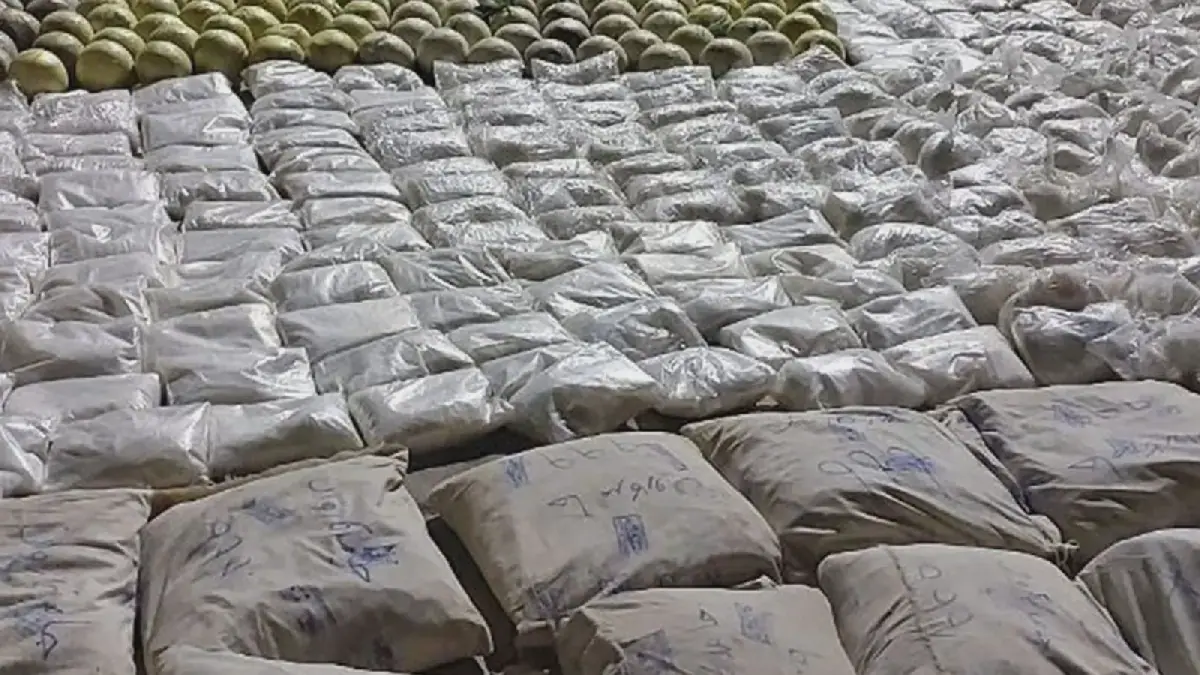
Libyan authorities have been connected to a string of significant cocaine seizures in 2026. Six shipments of cocaine have been intercepted across multiple countries, with four of them originating from Latin America. The methods used to conceal these large quantities of cocaine have varied, including hiding it within electrical generators, disassembled drilling equipment, banana containers, and industrial equipment.
The most recent seizure occurred on November 9, when Colombian authorities discovered 358 kilograms of cocaine hidden inside two electrical generators at the Port of Cartagena. The shipment, which originated in Panama, was reportedly destined for the Libyan capital, Tripoli. This seizure is just the latest in a series of busts that have taken place this year, highlighting the growing concern over cocaine trafficking through Libya.
In July, Bolivian authorities seized 123 kilograms of cocaine hidden within parts of a disassembled drilling rig, which was set to be exported to Libya via Chile. A month later, Ecuadorian police thwarted an attempt to smuggle around 525 kilograms of cocaine inside a banana container bound for Libya. Additionally, in June, Maltese customs officials confiscated 113 kilograms of cocaine concealed within industrial equipment imported from Costa Rica, which was awaiting re-export to Libya.
One of the largest seizures was made by Spanish authorities on May 1, when they intercepted the ship "Arconian" in the Atlantic Ocean, carrying 30 tons and 215 kilograms of cocaine. The vessel, which had sailed from Sierra Leone, was headed to Benghazi, Libya. However, investigations revealed that the plan was to transfer the cocaine to speedboats in the open sea, which would then transport it to Europe.
The trafficking routes have not been limited to sea routes, as evidenced by a May seizure in Niger, where authorities confiscated approximately 268 kilograms of cocaine on a truck that had traversed several West African countries. Libya was believed to be the likely destination, with the cocaine being transported across the Sahara Desert.
This is not an isolated issue, as in March 2024, the Libyan Attorney General's office announced the seizure of 128 kilograms of cocaine that had arrived in the port city of Benghazi from Ecuador, with plans to transport it to the city of Bayda.
According to a report by the United Nations Office on Drugs and Crime, Libya has become a significant transit point for drugs heading to regional markets, including Europe and the Middle East. A study by the Global Initiative Against Transnational Organized Crime also noted that land trafficking routes across the African Sahel region continue to be used to smuggle cocaine into Libya.
Key points
- Six cocaine shipments linked to Libya were seized in 2026.
- The cocaine seizures involved various concealment methods and multiple countries.
- Libya's role as a transit point for cocaine trafficking has been highlighted by international authorities.
Reporting sources
- خلال 2026.. ضبط 6 شحنات كوكايين مرتبطة بليبيا بينها 4 من أمريكا اللاتينية · Libya Al Ahrar TV