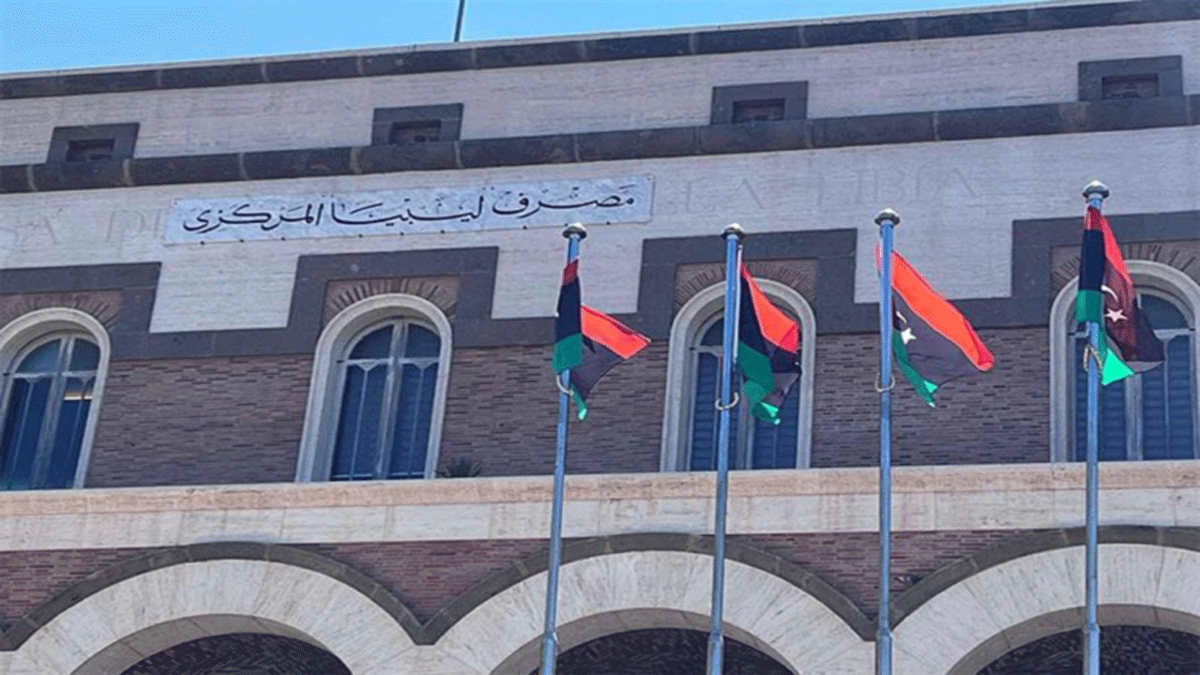
The Central Bank of Libya (CBL) has announced that the volume of electronic transactions in the country reached approximately 865 billion Libyan dinars (LYD) as of September 2026. This figure was revealed during a meeting focused on liquidity, foreign exchange, the expansion of digital payments, and the protection of banking systems against cyber risks. The CBL has been actively promoting electronic transactions as part of its efforts to modernize the country's financial sector.
The 865 billion dinars in electronic transactions represent a significant increase from the 764.9 billion dinars reported for the period between January 1 and August 31, 2026. However, the CBL has not provided a detailed breakdown of the transactions, making it difficult to assess the actual adoption rate of digital payments among the population. The central bank has highlighted that the figure measures the total value of transactions processed, not the number of users or the decline in cash usage.
A breakdown of electronic transactions for the period between January and July 2026 shows that instant payment services LYPay and OnePay accounted for 252 billion dinars, while mobile banking applications accounted for 209 billion dinars. The RTGS (Real-Time Gross Settlement) system, which enables interbank transactions, accounted for 143 billion dinars. Transactions using cards at point-of-sale terminals reached 33 billion dinars, with over 270,000 terminals in use.
The CBL has also reported that electronic wallets accounted for 650 million dinars in transactions during the same period. While the central bank has made efforts to promote digital payments, it has not provided a separate figure for online commerce transactions. The CBL has been working on activating an e-commerce platform, but the impact of this initiative on electronic transactions is yet to be seen.
The growth in electronic transactions highlights the need for robust technical infrastructure and cybersecurity measures to protect against potential risks. As the volume of digital transactions increases, the CBL will need to monitor the adoption rate of digital payments, the number of active users, and the decline in cash usage to assess the effectiveness of its efforts.
To accurately assess the impact of electronic transactions on the Libyan economy, it is essential to track key indicators such as the number of users, frequency of transactions, and average transaction value. The CBL will also need to ensure that its efforts to promote digital payments are aligned with the country's overall economic goals, including reducing poverty and promoting financial inclusion.
The increasing trend towards digital payments in Libya is expected to continue, driven by the growing adoption of mobile banking and instant payment services. As the country's financial sector continues to evolve, the CBL will play a critical role in shaping the future of digital payments and ensuring that the benefits of financial inclusion are extended to all segments of the population.
Key points
- The Central Bank of Libya reports 865 billion dinars in electronic transactions as of September 2026.
- Instant payment services and mobile banking applications account for the bulk of electronic transactions in Libya.
- The growth in electronic transactions highlights the need for robust technical infrastructure and cybersecurity measures in Libya.