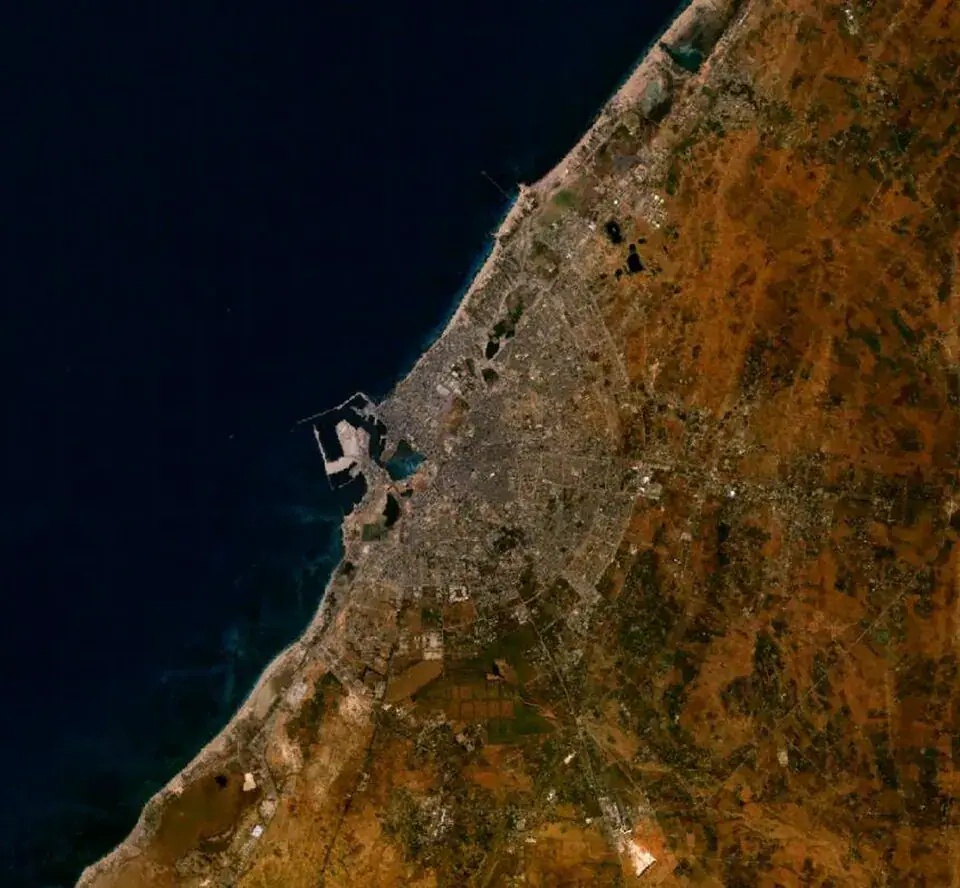
On November 22, 2026, reports emerged of attacks on Russian vessels in and off Benghazi, drawing Libya into the Russia-Ukraine conflict. Ukrainian President Volodymyr Zelensky claimed that Ukraine had sunk a Russian naval vessel and struck a cargo ship allegedly carrying military equipment. The full extent of the damage and the cargo ship's reported military function require independent verification. This incident raises questions about who determines the security risks that foreign military partnerships create on Libyan territory.
Libya's vulnerability to external conflicts is rooted in its institutional fragmentation. The October 2020 ceasefire agreement, negotiated by the UN-facilitated 5+5 Joint Military Commission, established a framework for ending nationwide hostilities but did not restore unified national authority. The Tripoli-based Government of National Unity, established in 2021, operates alongside competing eastern institutions, while Khalifa Haftar's military establishment exercises considerable influence over eastern and southern Libya.
The division of authority in Libya has led to competing foreign military relationships, which can expose the country to conflicts that its institutions have not collectively chosen to enter. Russia's relationship with Haftar exemplifies this issue. After the Benghazi incident, eastern Libyan authorities acknowledged the presence of a Russian naval vessel and said it had stopped for supplies under a cooperation arrangement. Such partnerships can bring local authorities military assistance, economic opportunities, and political support, but their costs can extend beyond those who negotiated them.
The incident highlights the challenges of Libya's divided authority and its implications for national security. Libyan actors pursue their own interests and exercise agency in negotiating international partnerships, but separate arrangements can reinforce competing centers of authority rather than contributing to a coherent national security policy. The country's international legal sovereignty remains intact, but its capacity to exercise that sovereignty is uneven.
The Ukraine-Russia conflict has sparked a dispute over Libya's involvement and the legitimacy of foreign military activity within its sovereign territory. Ukrainian Foreign Minister Andrii Sybiha defended the operation by invoking Article 51 of the United Nations Charter. In contrast, Tripoli rejected Libya's involvement in the conflict and objected to foreign military activity within its territory. This raises two distinct legal questions: whether the vessels qualified as military objectives and whether Libya's sovereignty was violated.
The Benghazi incident underscores the need for a unified Libyan authority to manage its security and foreign relationships effectively. Until then, the country's vulnerability to external conflicts will persist. The international community, including the UN, has a role to play in supporting Libya's efforts to establish a coherent national security policy and restore unified national authority.
The intersection of European conflicts and African security dilemmas is a pressing concern. As the Russia-Ukraine war continues to expand, its impact on African societies, including Libya, will require careful consideration. The country's experience serves as a reminder that national authority and institutional fragmentation can have far-reaching consequences for regional and global security.
Key points
- Libya's institutional fragmentation has left it vulnerable to external conflicts, including the Russia-Ukraine war.
- The country's divided authority has led to competing foreign military relationships, which can expose it to conflicts that its institutions have not collectively chosen to enter.
- A unified Libyan authority is necessary to manage its security and foreign relationships effectively and mitigate the risks associated with external conflicts.