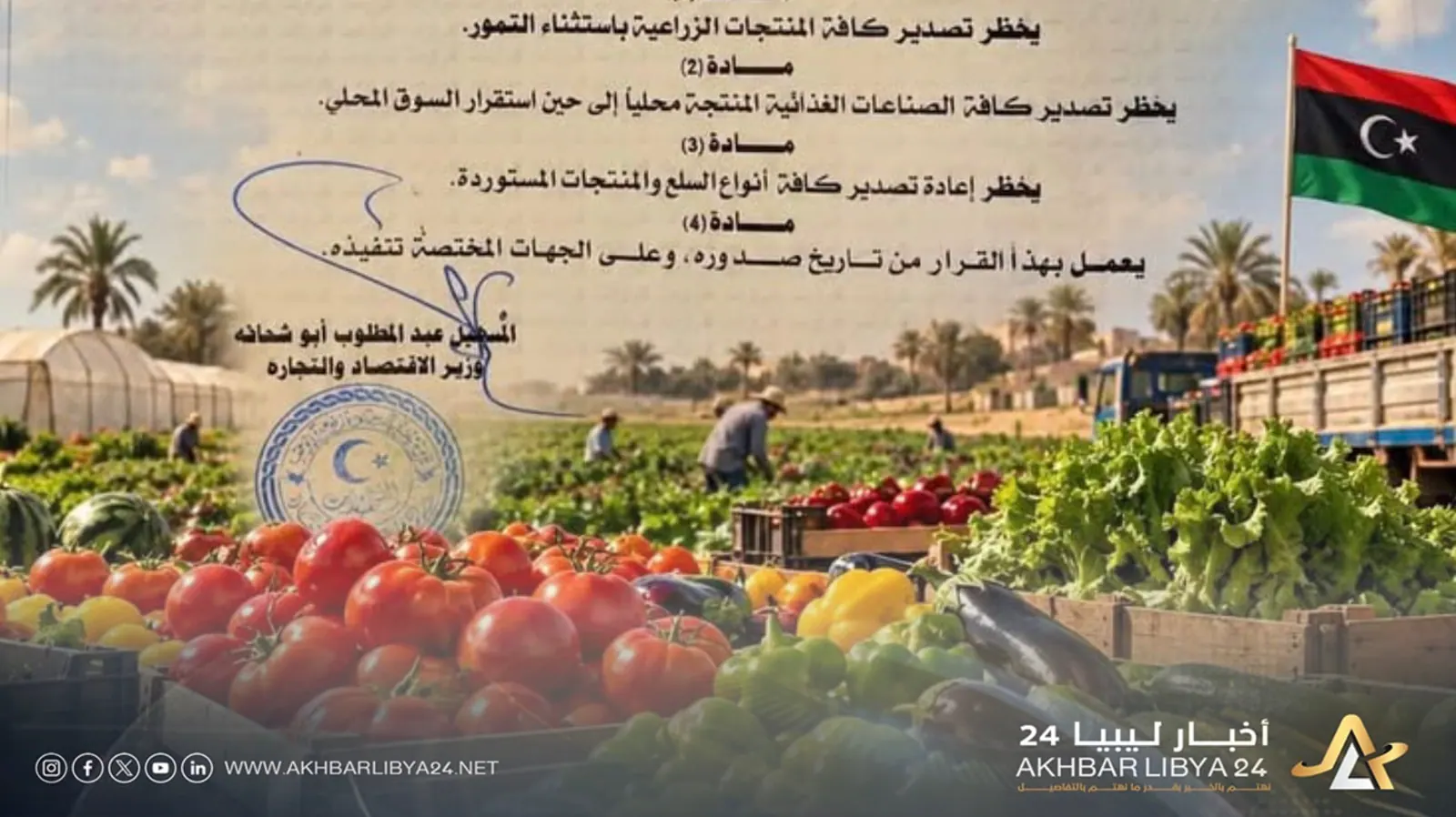
A heated debate has erupted in Libya over the safety of the country's vegetables, with concerns about pesticide residues and a recent ban on exports sparking widespread controversy. The issue has raised questions about the government's handling of the sector and the impact on farmers and agricultural companies. The controversy began with warnings about pesticide residues in Libyan vegetables, which some described as carcinogenic.
Dr. Manal Abu Umaid, a member of the Structured Dialogue Committee, has criticized the government's approach to the issue, accusing them of inconsistency and exaggeration. She argued that the initial warnings about pesticide residues and the subsequent ban on exports were not based on scientific evidence and have caused significant harm to farmers and agricultural companies.
Abu Umaid questioned the logic behind the export ban, asking why the government would allow Libyan vegetables to be sold in Tunisia but not in other countries. She also expressed concerns about the impact of the ban on farmers and agricultural companies, who face significant losses as a result of the restrictions. The ban has also raised questions about the government's commitment to protecting the health of Libyan citizens.
The controversy has highlighted the challenges facing Libya's agricultural sector, which is a significant source of income for many Libyans. The sector is vulnerable to disruptions in the supply chain, and the export ban has exacerbated these challenges. Farmers and agricultural companies are facing significant losses, and some may be forced to reduce their operations or shut down altogether.
Abu Umaid has called for a more scientific approach to addressing concerns about pesticide residues, rather than relying on general warnings and bans. She emphasized the need for clear and transparent testing and analysis to determine the safety of Libyan vegetables. The government must balance the need to protect public health with the need to support the agricultural sector and protect the livelihoods of farmers and agricultural companies.
The controversy has also raised questions about the government's communication strategy and its handling of the issue. Abu Umaid accused the government of using scare tactics and making unsubstantiated claims about the safety of Libyan vegetables. The government must provide clear and accurate information to the public and ensure that any decisions are based on scientific evidence.
The Libyan government faces a difficult task in balancing the need to protect public health with the need to support the agricultural sector. The controversy has highlighted the need for a more nuanced approach to addressing concerns about food safety, one that takes into account the complexities of the agricultural sector and the needs of farmers and consumers.
Key points
- The Libyan government's ban on vegetable exports has sparked controversy and raised concerns about the impact on farmers and agricultural companies.
- Dr. Manal Abu Umaid has criticized the government's approach to the issue, accusing them of inconsistency and exaggeration.
- The controversy has highlighted the need for a more scientific approach to addressing concerns about pesticide residues and food safety.