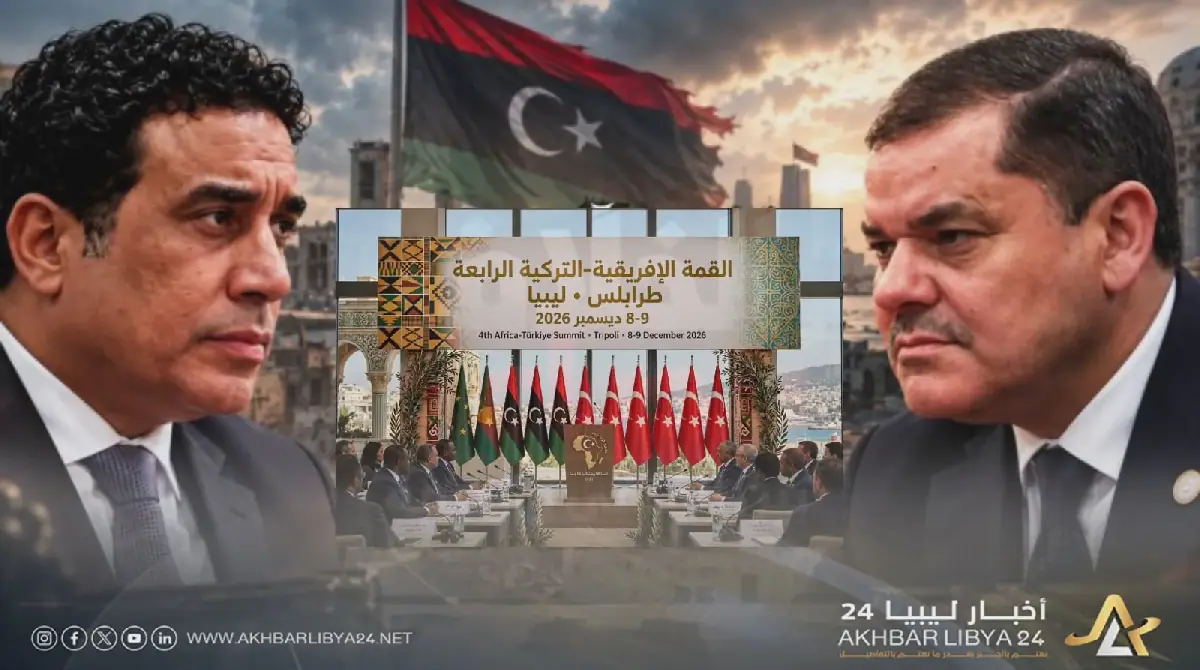
The postponement of the African-Turkish summit, set to take place in Tripoli on December 8-9, 2026, has raised concerns about Libya's ability to host high-profile events. The decision to delay the summit was made by Mohamed al-Menfi, head of the Presidential Council, citing the need for more time to prepare and ensure a strong African participation. However, the move has been met with skepticism by some Libyan officials and analysts, who see it as a reflection of the country's ongoing power struggle.
The postponement has sparked a heated debate about the motivations behind the decision and its potential impact on Libya's fragile political landscape. Some have suggested that the move may be linked to a power struggle between al-Menfi and Prime Minister Abdul Hamid al-Dbeibah, with some speculating that the two may have differing visions for the country's future. Others have raised concerns about the potential consequences of the postponement, including the possibility that the event may be relocated to another city or country.
The African-Turkish summit was seen as an opportunity for Libya to showcase its ability to host high-profile events and attract international attention. The event was also expected to provide a platform for Libyan leaders to engage with their African and Turkish counterparts on issues of mutual interest. However, with the postponement, there are concerns that the event may not take place at all, or that it may be significantly scaled back.
Libyan analysts and officials have expressed concerns about the potential consequences of the postponement, including the impact on the country's reputation and its ability to attract foreign investment. Some have also raised concerns about the potential for further instability and conflict, given the country's complex and often contentious political landscape. There are also concerns that the postponement may be used as a pretext to delay or cancel the event altogether.
Despite the challenges, some analysts believe that the postponement may provide an opportunity for Libya to regroup and reassess its priorities. They argue that the country's leaders must work together to address the country's many challenges and find a way forward that works for all Libyans. This will require a sustained effort to build trust and consensus, as well as a commitment to finding solutions that benefit the country as a whole.
The postponement of the African-Turkish summit has also raised questions about the role of external actors in Libya's affairs. Some have suggested that international pressure may be brought to bear on Libyan leaders to resolve their differences and find a way forward. Others have raised concerns about the potential for external interference, given the country's strategic location and natural resources.
In conclusion, the postponement of the African-Turkish summit has highlighted the complex and often contentious nature of Libya's politics. The country's leaders must work together to address the many challenges facing the country and find a way forward that works for all Libyans. This will require a sustained effort to build trust and consensus, as well as a commitment to finding solutions that benefit the country as a whole.
Key points
- The postponement of the African-Turkish summit has sparked concerns about Libya's ability to navigate its complex political landscape.
- The move has been seen as a reflection of the country's ongoing power struggle, with some speculating that the decision may be linked to a rivalry between al-Menfi and al-Dbeibah.
- The postponement has raised concerns about the potential consequences for Libya's reputation and its ability to attract foreign investment.