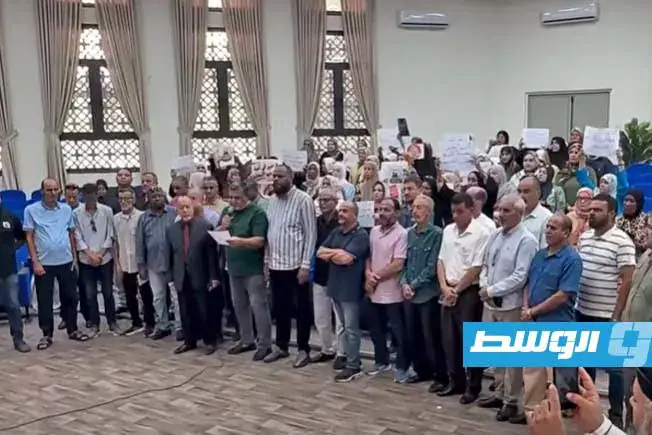
The General Teachers' Union in Libya has stated that summons and pressure tactics will not resolve the crisis of the ongoing teachers' strike. In a statement, the union emphasized that addressing the crisis requires responding to legitimate demands and fulfilling commitments. The union was reacting to reports that some monitors, union leaders, and members of the teachers' movement had been summoned by security agencies for questioning and forced to call off the strike.
The union stressed that the decision to continue or end the strike lies solely with the teachers themselves. They pointed out that teachers have been subjected to humiliation and have had their rights ignored for far too long. The union made it clear that teachers will no longer tolerate disrespect or the erosion of their rights. According to the union, teachers took to the streets only after feeling marginalized, ignored, and after numerous broken promises.
The General Teachers' Union announced that they will persist with the strike and comprehensive absence from work until their legitimate demands are met and implemented in reality. The union's demands include an increase in salaries to ensure a decent standard of living, implementation of a unified salary scale, payment of owed financial differences, and settlement of overdue financial entitlements to teachers on contracts that have been pending for years.
Key demands of the union also include comprehensive health insurance. The strike and sit-in protests are part of a broader movement by Libyan teachers seeking better working conditions and respect for their profession. The situation reflects deep-seated issues within Libya's education sector, where teachers feel undervalued and overworked.
On a related note, the Libyan Ministry of Education under the Government of National Unity announced a two-week delay in the start of the academic year. This decision may be linked to the ongoing strike and efforts to find a resolution. The strike has caused significant disruptions to the education system in Libya, affecting thousands of students.
The international community and local stakeholders are closely watching the developments, hoping for a swift resolution that addresses the teachers' concerns. Libya's education sector has faced numerous challenges in recent years, including underfunding, infrastructure issues, and now, the pressing concerns of the teachers' union.
The Libyan government faces increasing pressure to address the grievances of the teachers' union and find a solution to the crisis. With the academic year delayed, there is a growing sense of urgency to resolve the situation. All parties involved are working towards a resolution that would allow students to return to their classrooms and for the education system to stabilize.
Key points
- The strike may have broader implications for Libya's education system and the government's ability to address social and economic grievances.