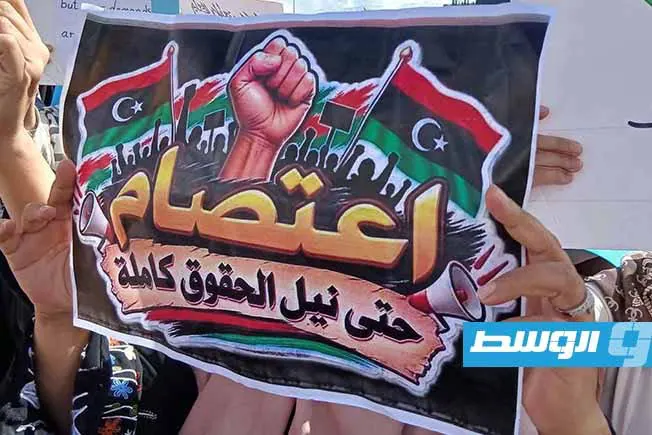
The Libyan Teachers' Movement has announced that it will continue its general strike and sit-in protests in educational institutions until all its demands are fully met. In a statement on Facebook, the movement rejected a meeting held with Prime Minister Abdulhamid Dabaiba, citing that any agreement or outcome must comprehensively address teachers' rights. The movement emphasized that their demands are indivisible and cannot be postponed or compromised.
The Teachers' Movement outlined several key demands, including the payment of all outstanding financial differences to teachers, implementation of allowances and benefits, and the initiation of a health insurance scheme. They also called for the issuance of a law to protect teachers and guarantee their rights, as well as a fair and comprehensive review of teachers' financial and administrative situations. The movement stressed that it will not accept any agreement that does not include clear and binding solutions to these demands.
Earlier, Prime Minister Dabaiba announced the resumption of the educational process starting Wednesday, following a meeting with the General Libyan Teachers' Union. He emphasized the importance of ensuring students' right to education and guaranteeing the regularity of schooling. Dabaiba stated that his government is committed to achieving justice in salaries, improving the conditions of state employees, and enhancing social protection for them.
The teachers' strike began on September 13, coinciding with the start of the academic year, with protests and sit-ins in front of schools and government buildings in Tripoli. The strike was later escalated to a full-scale strike covering government schools across the country. This comes as Dabaiba adopted a unified salary scale for all employees in the public sector, which is expected to be implemented.
The Teachers' Movement has urged teachers to continue their unity and organize peaceful protests in front of relevant authorities and institutions to express their demands. They emphasized that the stage of promises is over and that concrete implementation of their demands is now required. The movement reiterated its commitment to its stance under the slogan: "No agreement without rights, no promises without implementation."
The strike has caused significant disruptions to the educational process in Libya, with students and parents bearing the brunt of the impact. The situation remains tense as the teachers' movement and the government engage in negotiations to resolve the crisis. The outcome of these talks will likely determine the course of the strike and the future of education in Libya.
The Libyan government faces mounting pressure to address the teachers' demands and find a resolution to the ongoing strike. With the educational process severely disrupted, there is a growing need for a comprehensive solution that addresses the concerns of both the teachers and the government. The situation will continue to be closely monitored as developments unfold.
Key points
- The Libyan Teachers' Movement will continue its strike until all its demands are met.
- The movement's demands include payment of outstanding financial differences and implementation of health insurance for teachers.
- Prime Minister Dabaiba has announced the resumption of the educational process, but the strike continues.