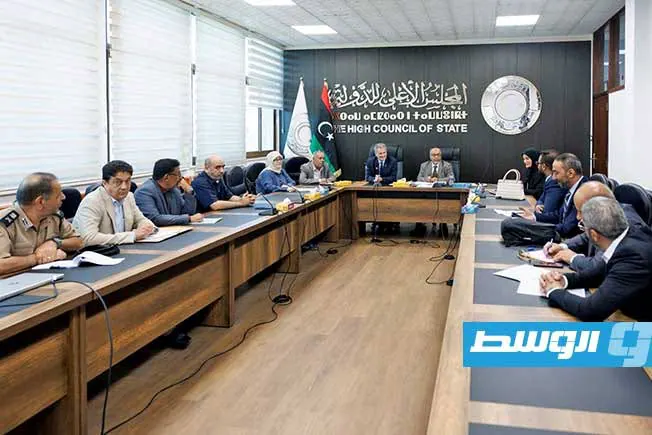
The Libyan State Council's committee tasked with preparing a draft law on labor regulation held a meeting at the council's headquarters in Tripoli on September 30, 2026. The meeting was attended by representatives from various government ministries and agencies, including the Ministries of Labor, Foreign Affairs, Interior, and Health, as well as the Passport and Citizenship Authority and the Central Bank of Libya. The committee reviewed the initial draft of the law, which aims to regulate labor in Libya.
The meeting was chaired by Omar Abshish, head of the committee overseeing the preparation of the project, and was a follow-up to a previous meeting held on September 20, 2026. The committee discussed the draft law's articles, with the goal of finalizing the document and presenting it to the relevant authorities. The law is expected to have a significant impact on the Libyan labor market, which has faced challenges in recent years due to the country's instability.
The draft law was previously presented to consultants and representatives from the Ministries of Labor and Foreign Affairs, who provided feedback and suggestions. The committee also sought input from other government agencies, including the Interior Ministry and the Passport and Citizenship Authority, to ensure that the law is comprehensive and effective. The law's provisions are expected to address issues related to labor rights, employment, and worker protections.
During the meeting, committee members discussed the need for a comprehensive law that regulates labor in Libya and addresses the challenges faced by workers and employers. They also emphasized the importance of ensuring that the law is consistent with international labor standards and Libyan laws and regulations. The committee aims to finalize the draft law and present it to the State Council for approval.
The meeting concluded with a request from participating agencies for more time to provide written comments and suggestions on the draft law's articles. The committee will review the feedback and incorporate it into the final version of the law. Once finalized, the law will be submitted to the relevant authorities for approval and implementation. The law's passage is expected to have a positive impact on Libya's labor market and economy.
The State Council's efforts to regulate labor in Libya are part of a broader effort to stabilize the country's economy and improve the business environment. The council has been working to address various economic challenges, including the need to create jobs and stimulate economic growth. The labor regulation law is expected to be an important step in this direction.
The Libyan government has been working to improve the country's business environment and attract foreign investment. The passage of the labor regulation law is expected to be an important step in this direction, as it will provide a framework for employers and workers to operate within. The law's implementation will also help to promote fair labor practices and protect workers' rights.
Key points
- The Libyan State Council reviews draft law on labor regulation with government participation.