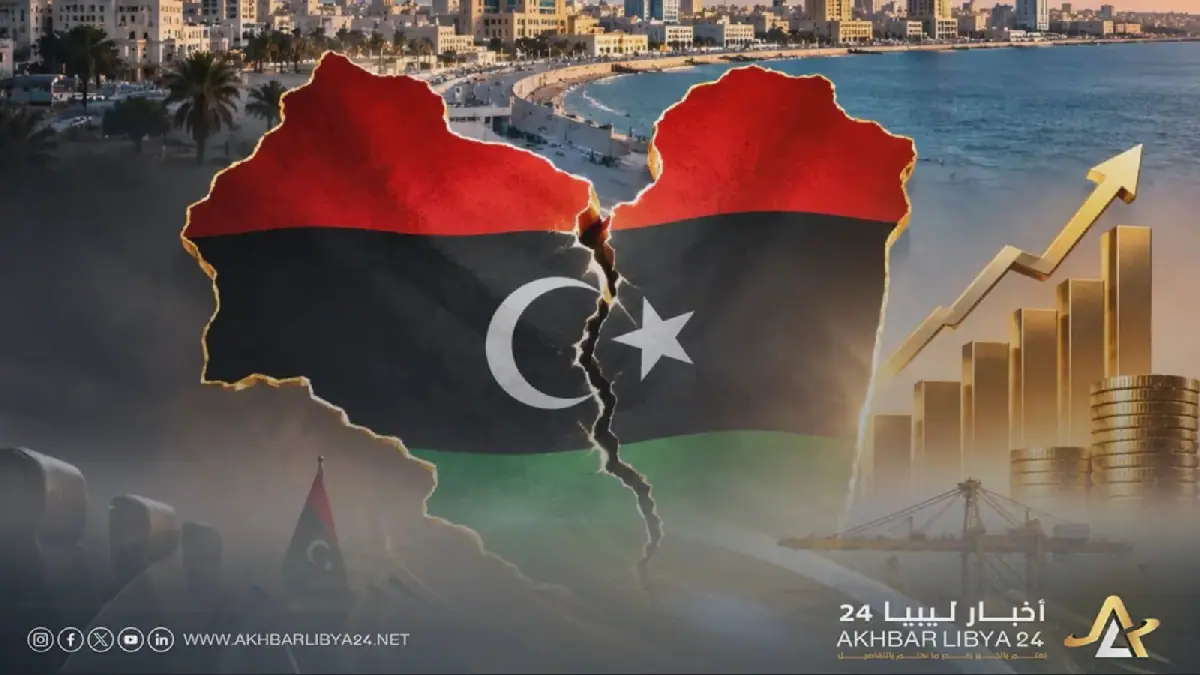
The recent breach at the Benghazi port has raised concerns about Libya's ability to protect its maritime borders and vital facilities. This incident has sparked questions about the country's capacity to maintain its sovereignty and safeguard its territorial waters from activities that may be linked to international conflicts. Osman's warning highlights the risks associated with the intersection of international and regional interests with Libya's ongoing political and institutional divisions.
The Libyan state's crisis is deeply rooted in its institutional divisions and the absence of a unified national authority capable of managing sovereign affairs cohesively. The breach at the Benghazi port is linked to Libya's structural crisis, characterized by institutional fragmentation, multiple decision-making centers, and the lack of a unified national authority. This situation weakens the state's ability to address external threats in accordance with a single national strategy.
Protecting Libya's ports begins with maritime surveillance and early warning systems, according to Osman's proposed measures. These measures include developing maritime surveillance and early warning capabilities, enhancing coast guard efficiency, securing ports and vital facilities, and establishing clear regulations for foreign military vessels entering Libyan ports. Given Libya's strategic location on the southern Mediterranean coast, a robust surveillance system is essential for monitoring maritime movements and addressing unauthorized activities.
Osman's call for unified military and security institutions is crucial for the success of these measures. He emphasizes that technical and procedural solutions will not achieve their objectives if the entities responsible for their implementation remain divided among competing authorities. The need for a unified approach is particularly pressing given the threats posed by militias and armed groups to national decision-making and the ability of official institutions to enforce the law.
In a letter to the House of Representatives, Osman's addressed the crisis of representation within the High Council of State. He highlighted the need for fair representation of electoral districts and their branches, in line with the initiative to activate Article 12 of the Additional Provisions to the Political Agreement. This move aims to address the ongoing issues of exclusion and ensure that the rights of all members are respected.
Osman's message to the House of Representatives underscores the importance of legitimacy and representation in Libya's institutions. He warned that any new arrangements should not perpetuate exclusion under different guises and should be based on the principles of fair representation and the rule of law. This stance is not about achieving personal gain or favoring one political group over another but about upholding the rights of all electoral districts and their representatives.
The crisis within the High Council of State, led by Mohamed Takala, has raised concerns about trust and adherence to internal regulations. Osman's criticisms focus on the need for the Council to operate based on the will of its members and in accordance with its internal rules, rather than the authority of an individual. This situation highlights the challenges of building political consensus in Libya while institutional disputes over internal rules and leadership powers persist.
Key points
- Libya's sovereignty is threatened by breaches at its ports and institutional chaos.
- Unified military and security institutions are crucial for protecting Libya's maritime borders.
- Fair representation and legitimacy in Libya's institutions are essential for building a sustainable political consensus.