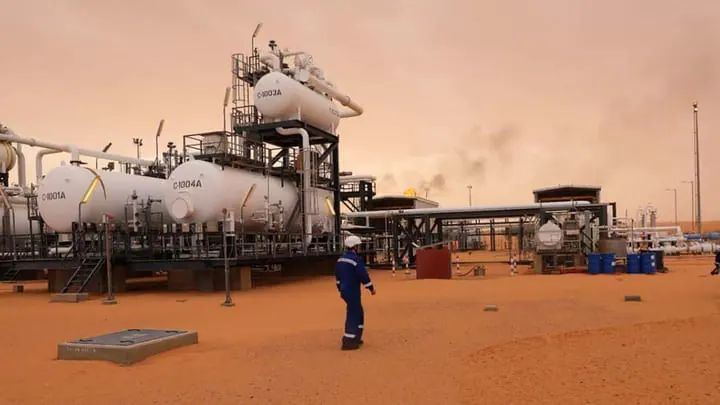
Production at Libya's Sharara oil field has declined significantly following the closure of valve number 7 on the crude oil transfer line to the Zawiya port. According to engineers at the field, production has dropped by approximately 200,000 barrels per day, reaching a current output of 100,000 to 105,000 barrels per day. The Sharara field, operated by Akakus Oil Operations, is a key contributor to Libya's oil production.
The closure of valve number 7 was carried out by an armed group on Monday, resulting in increased pressure on the pipeline and a substantial reduction in production. The National Oil Corporation (NOC) reported that the closure prevented technical teams from accessing the area, despite ongoing communication with the Southwestern Petroleum Facilities Guard. The NOC expressed concerns about the potential consequences of continued closure.
The NOC warned that prolonged closure of the valve could lead to a complete halt in production at the Sharara field, disrupting transportation and export operations. The corporation also cautioned that such disruptions could impact the Zawiya refinery, state revenues, and the overall oil transportation system. The situation remains a pressing concern for Libya's oil industry.
Engineers at the Sharara field confirmed the production decline to Reuters, highlighting the significance of the valve closure. The field's output had been stable prior to the incident, but the sudden drop has raised concerns about the field's operational stability. The incident has sparked fears about potential shortages and economic repercussions.
The NOC has urged for immediate action to resolve the situation, emphasizing the importance of maintaining oil production and export operations. The corporation plays a vital role in Libya's economy, and disruptions to its operations have far-reaching consequences. The international community is monitoring the situation closely.
The decline in production at Sharara has significant implications for Libya's oil industry, which has faced numerous challenges in recent years. The country's oil production has been impacted by various factors, including conflict, instability, and infrastructure disruptions. The NOC continues to work towards maintaining stable production levels.
The situation at Sharara remains uncertain, with concerns about potential escalation and further disruptions. The NOC and relevant authorities are working to address the issue and restore production to normal levels. The incident highlights the complexities and challenges facing Libya's oil industry.
Key points
- Production at Libya's Sharara oil field has dropped by 200,000 barrels per day following the closure of valve number 7.
- The closure of valve number 7 was carried out by an armed group, resulting in increased pressure on the pipeline and a substantial reduction in production.
- The National Oil Corporation has warned that prolonged closure of the valve could lead to a complete halt in production at the Sharara field.