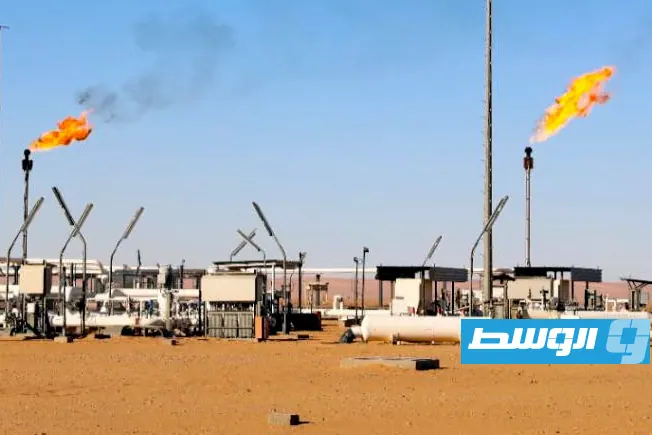
The Sharara oil field in Libya has partially reduced its production, according to a statement by Masoud Suleiman, head of the National Oil Corporation (NOC). The reason for the reduction was not specified. The field, located in southwestern Libya, is one of the country's largest oil producers.
According to engineers working at the field, production has decreased by around 200,000 barrels per day, bringing current output to between 100,000 and 105,000 barrels per day. The Sharara field has a production capacity of approximately 300,000 barrels per day but has experienced frequent disruptions in recent years due to protests, political disputes, and technical issues.
Libya's oil production has faced repeated interruptions since the 2011 uprising that overthrew Muammar Gaddafi. The country's oil fields have been affected by various factors, including protests, pipeline closures, and technical problems. The Sharara field's production reduction adds to the challenges faced by Libya's oil industry.
The NOC is working to address the issues affecting the Sharara field and restore production to its full capacity. The corporation is also exploring ways to increase production and improve the overall efficiency of Libya's oil industry. However, the current production reduction at the Sharara field is likely to impact Libya's oil exports and revenue.
The reduction in production at the Sharara field has raised concerns about the impact on Libya's economy, which is heavily reliant on oil exports. The country's economy has faced significant challenges in recent years due to the ongoing conflict and instability. The NOC's efforts to restore production and increase output are crucial to supporting Libya's economic recovery.
The Sharara field's production reduction also highlights the need for Libya to diversify its economy and reduce its dependence on oil exports. The country has significant potential for growth in other sectors, including agriculture, tourism, and manufacturing. However, these sectors require investment and support to develop and contribute to the country's economic growth.
The international community is closely monitoring the situation in Libya, particularly with regards to the country's oil production and exports. The European Union, in particular, is interested in maintaining a stable supply of oil from Libya, given the country's significance as a supplier of crude oil to European markets.
Key points
- The Sharara oil field's production reduction is likely to impact Libya's oil exports and revenue.
- Libya's oil industry faces repeated interruptions due to various factors, including protests, pipeline closures, and technical problems.
- The country's economy is heavily reliant on oil exports, highlighting the need for diversification and growth in other sectors.