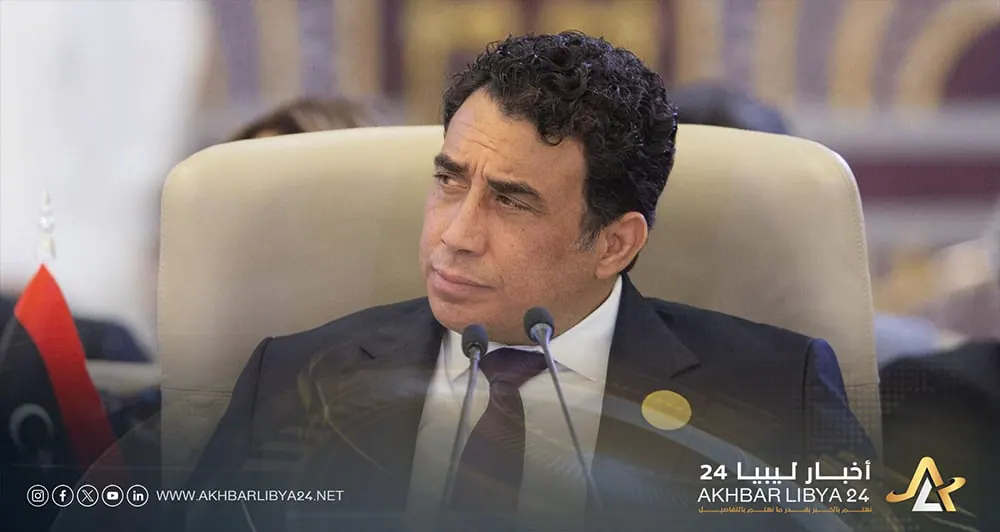
Libyan Presidential Council head Mohamed al-Menfi addressed the 81st session of the UN General Assembly in New York, emphasizing that Libya no longer requires crisis management but rather a political will to end the crisis. He stressed that the path to building a state begins with returning to the people through elections, referendums, and constitutional and legal mechanisms. Al-Menfi's statement highlights the need for a shift from temporary arrangements to a more sustainable and democratic approach.
Al-Menfi reiterated that the Libyan people are the source of legitimacy, and that any temporary deals or fragile settlements cannot replace the will of the Libyan people. He emphasized that elections are a crucial mechanism for achieving this goal, allowing the Libyan people to choose their leaders and institutions. By doing so, al-Menfi aims to restore the country's democratic process and pave the way for a more stable and secure future.
In a bid to promote national reconciliation and stability, al-Menfi announced the launch of a national committee for reconciliation and confidence-building. This committee aims to prevent conflicts, contain escalation, and support national reconciliation. By doing so, al-Menfi hopes to create a more conducive environment for the electoral process and promote a culture of dialogue and cooperation.
Al-Menfi also emphasized the importance of national sovereignty, stressing that Libya will not accept external interference or diktats. He made it clear that Libya seeks partnerships with other countries based on mutual respect and cooperation, rather than external influence or control. This stance reflects Libya's desire to maintain its independence and sovereignty in the face of international pressures and interests.
The Libyan Presidential Council head also highlighted the need for a strong state that can impose the law and ensure accountability. He emphasized that no one is above the law and that the country's institutions must be stronger than individuals or groups. Al-Menfi's statement underscores the importance of establishing a robust and effective state that can maintain law and order, while also protecting the rights of its citizens.
Al-Menfi also touched on the issue of corruption, emphasizing that it poses a significant threat to the country's stability and security. He called for the promotion of transparency and accountability, stressing that those who engage in corrupt practices must be held accountable. By doing so, al-Menfi aims to promote a culture of integrity and good governance, essential for Libya's long-term stability and prosperity.
In conclusion, al-Menfi's address to the UN General Assembly reflects Libya's aspirations for a more stable, secure, and democratic future. His emphasis on elections, national sovereignty, and accountability highlights the country's commitment to democratic principles and its desire for a more prominent role on the international stage. As Libya continues to navigate its complex transition, al-Menfi's statement serves as a roadmap for the country's future, emphasizing the need for a strong state, democratic institutions, and a commitment to the rule of law.
Key points
- Mohamed al-Menfi urges Libyan and international stakeholders to prioritize elections and national sovereignty.
- The Libyan Presidential Council head announces the launch of a national committee for reconciliation and confidence-building.
- Al-Menfi emphasizes that Libya seeks partnerships based on mutual respect and cooperation, rather than external influence or control.