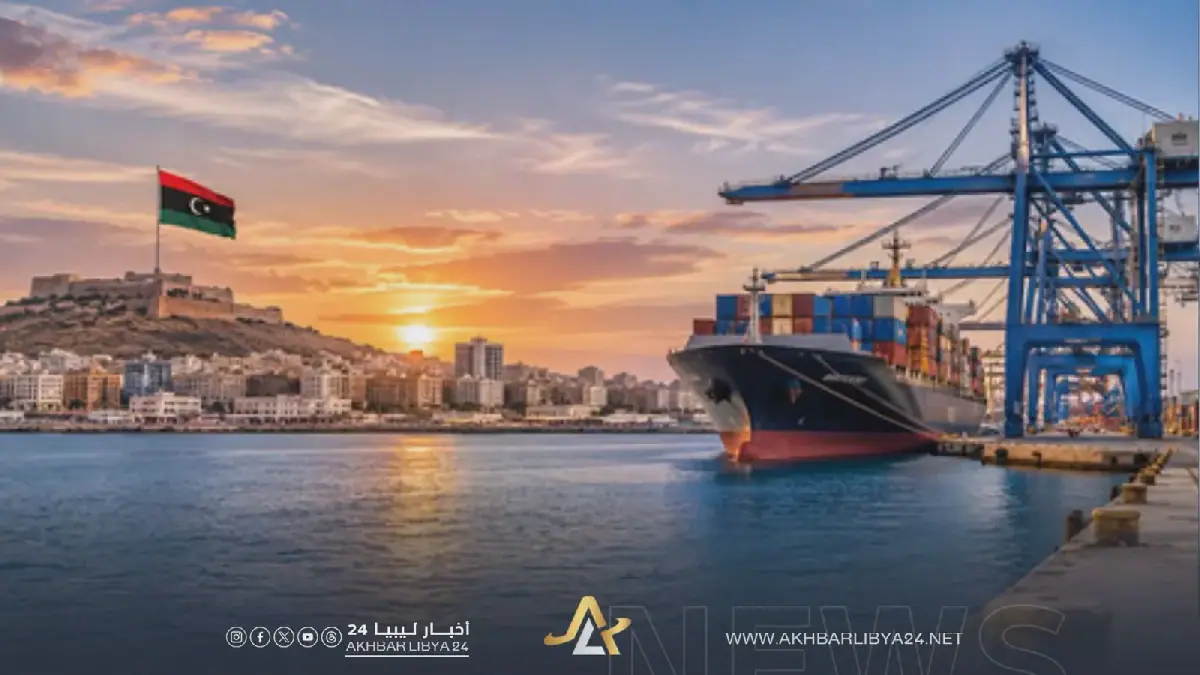
Libya's ports have become a prized location in the competition for influence in the Mediterranean and Africa. The country's ports are no longer just economic facilities for trade and shipping but have taken on greater importance in the calculations of international powers. Russia, China, Egypt and Italy are all seeking to expand their presence in Libya and capitalize on its strategic location linking southern Europe to northern Africa.
The port of Tobruk has drawn particular attention from Russia. According to reports, Moscow is looking to develop the port, which would enhance its maritime presence in the Mediterranean and provide an additional location in its efforts to expand its influence in the region. Tobruk's location on Libya's eastern coast and proximity to shipping lanes make it a valuable asset.
In contrast, the port of Misrata has emerged as a promising logistical and industrial hub. Foreign companies are competing for investment opportunities and partnerships to develop the port, which would boost its capacity to handle trade, transportation and related services. The port's significance extends beyond its role in Libya's domestic trade, as it is part of a network connecting Libya to external markets.
Italy is working to strengthen its economic presence in Libya by expanding commercial partnerships and logistics projects. The two countries have strong economic and geographical ties, and Libya is crucial for trade across the Mediterranean. China, meanwhile, continues to enhance its relations in infrastructure and energy, seeking to expand its economic presence in African and Mediterranean markets.
The international competition for Libya's ports reflects the country's growing importance in regional and global calculations. Each power is seeking to expand its presence and capitalize on Libya's strategic location. The development of these ports could open up new opportunities for Libya's economic growth, increase its attractiveness to investors and improve its position in regional and international supply chains.
Libya's location on the southern coast of the Mediterranean and its proximity to European markets make its ports highly valuable. The ports could become part of larger calculations related to international trade routes, shipping and logistics. As such, the country's ports have become a key file in which economic and strategic interests intersect.
The future of Libya's ports is tied to the ability of Libyan institutions to manage opportunities and balance attracting investment with preserving national interests and sovereignty. The international competition for control of the ports has highlighted the importance of Libya in regional and global calculations.
Key points
- The port of Tobruk has drawn particular attention from Russia.
- The port of Misrata has emerged as a promising logistical and industrial hub.
- Libya's location on the southern coast of the Mediterranean and its proximity to European markets make its ports highly valuable.