Libyan experts have cautioned that the country's ongoing political strife is hindering the investigation into a destructive cell accused of targeting critical infrastructure. The cell, allegedly responsible for a series of attacks on oil and power facilities in western Libya, has sparked concerns about the country's security and stability. According to experts, the investigation is being impacted by the country's deepening political divisions, which are making it challenging to establish a unified narrative on the events.
The Libyan government has announced that it will not negotiate with any party regarding the destructive cell, and that it will disclose the investigation's findings to the public once completed. The government has described the attacks as a "wide-scale sabotage plan" that targeted the country's infrastructure and energy sources. The attacks have resulted in significant losses, including the destruction of fuel tanks and the shutdown of a power plant.
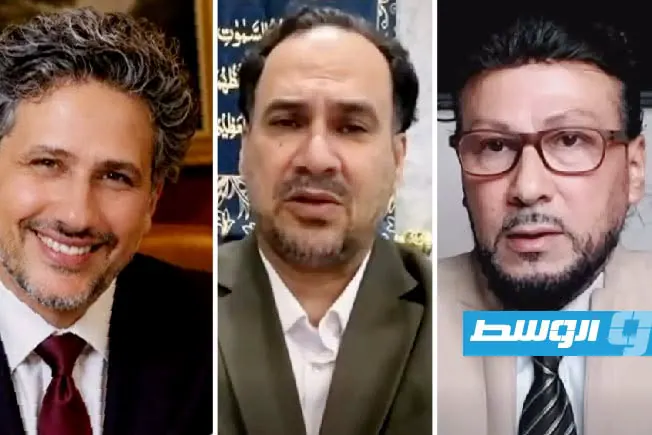
Experts have warned that the investigation should not be politicized, and that accusations against specific individuals or groups should be avoided until concrete evidence is presented. They have also highlighted the need for a strong and centralized security apparatus to address the country's security challenges. According to Abdelbasit Al-Qad, a researcher in national security, the investigation into the destructive cell lacks clear and publicly announced results.
The Libyan government has requested technical support from the International Criminal Court (ICC) in investigating the destructive cell. This move has been seen as a reflection of the challenges facing Libya's security institutions and the need for external assistance. However, experts have cautioned that the involvement of external actors could also have political implications and potentially complicate the investigation.
Faisal Bourayeqa, a researcher in national security, has emphasized the need for caution in handling information related to the destructive cell. He has warned that premature accusations or leaks could compromise the investigation and impact the country's security. Bourayeqa has also highlighted the risk of external interference in Libya's security affairs, which could exacerbate the country's instability.
Mohamed Ali Al-Bouri, a professor of international law at the University of Benghazi, has noted that the investigation into the destructive cell is still in its early stages. He has suggested that the request for ICC support is motivated by a desire to exert political pressure on rival factions and to demonstrate that the file may be transferred to an international level.
The investigation into the destructive cell has significant implications for Libya's political and security landscape. Experts have warned that the country's ongoing instability could impact the implementation of the 4+4 agreement, which aims to unify the country's institutions. The situation remains complex, with multiple factions and interests at play, and the outcome of the investigation is likely to have far-reaching consequences for Libya's future.
Key points
- The investigation into the destructive cell is being hindered by Libya's ongoing political divisions.
- The Libyan government has requested technical support from the International Criminal Court (ICC) in investigating the destructive cell.
- Experts have warned that the investigation should not be politicized, and that accusations against specific individuals or groups should be avoided until concrete evidence is presented.