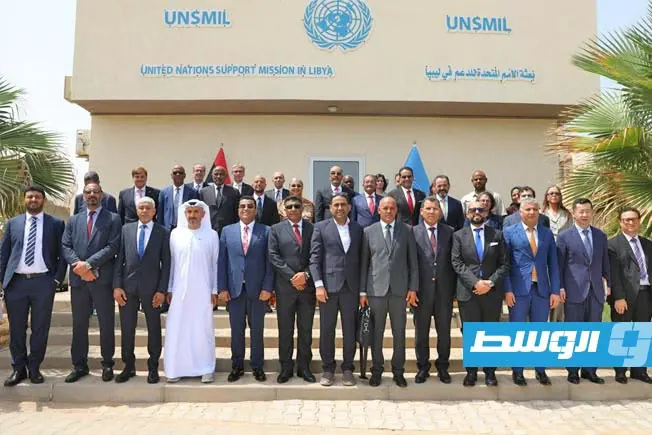
Libya's ongoing political stalemate has raised concerns among analysts and international observers. The 4+4 committee, which was formed to address the country's long-standing political crisis, recently produced an agreement under UN auspices. However, the agreement has not garnered unanimous support from all parties, despite its potential to push the political settlement forward and pave the way for parliamentary and presidential elections.
Analysts have warned of the repercussions of continued delays in Libya's political process. The impasse between the House of Representatives and the High Council of State over the 4+4 committee's outcomes may prompt the UN mission to explore alternative paths to complete its roadmap and facilitate elections. The UN mission's mandate includes supporting the implementation of the agreement, which focuses on completing the constitutional framework and electoral laws, as well as reorganizing the National High Commission for Elections.
According to Wissam Abdul Kabir, a political analyst, the UN mission has several options at its disposal before escalating the matter to the UN Security Council. The current deadline for adopting the 4+4 committee's outcomes is the end of September, leaving the mission with a window of opportunity to maneuver. Abdul Kabir emphasized that the UN mission's role is crucial in supporting the implementation of the agreement, which includes the formation of a unified executive authority and national institutions.
The international community has expressed support for the UN mission's efforts to facilitate a peaceful resolution to Libya's crisis. However, analysts argue that a lasting solution requires a unified Libyan stance and a commitment to implementing the agreed-upon roadmap. The formation of a unified government and the reunification of national institutions are critical components of this process.
Some observers suggest that the UN mission may need to expand its dialogue to include other stakeholders beyond the House of Representatives and the High Council of State. This could involve engaging with political parties, civil society organizations, and influential actors on the ground. The goal is to create a more inclusive process that reflects the diverse interests and aspirations of the Libyan people.
The issue of electoral participation and the formation of a unified government are critical aspects of Libya's transition. Analysts propose that a clear mechanism for forming a unified government should be established, free from political horse-trading. This could involve allowing candidates for prime minister to present their programs and timelines, enabling the selection of the executive authority based on merit rather than apportionment of positions.
The international community is closely monitoring developments in Libya, with some countries expressing concerns over the delayed electoral process. The UN mission's efforts to facilitate a peaceful resolution to the crisis are ongoing, with a focus on supporting the implementation of the 4+4 committee's outcomes and paving the way for elections.
Key points
- The delayed implementation of the 4+4 committee's outcomes has raised concerns over the feasibility of holding elections in Libya.
- The UN mission is exploring alternative paths to complete its roadmap and facilitate elections.
- The formation of a unified government and the reunification of national institutions are critical components of Libya's transition.