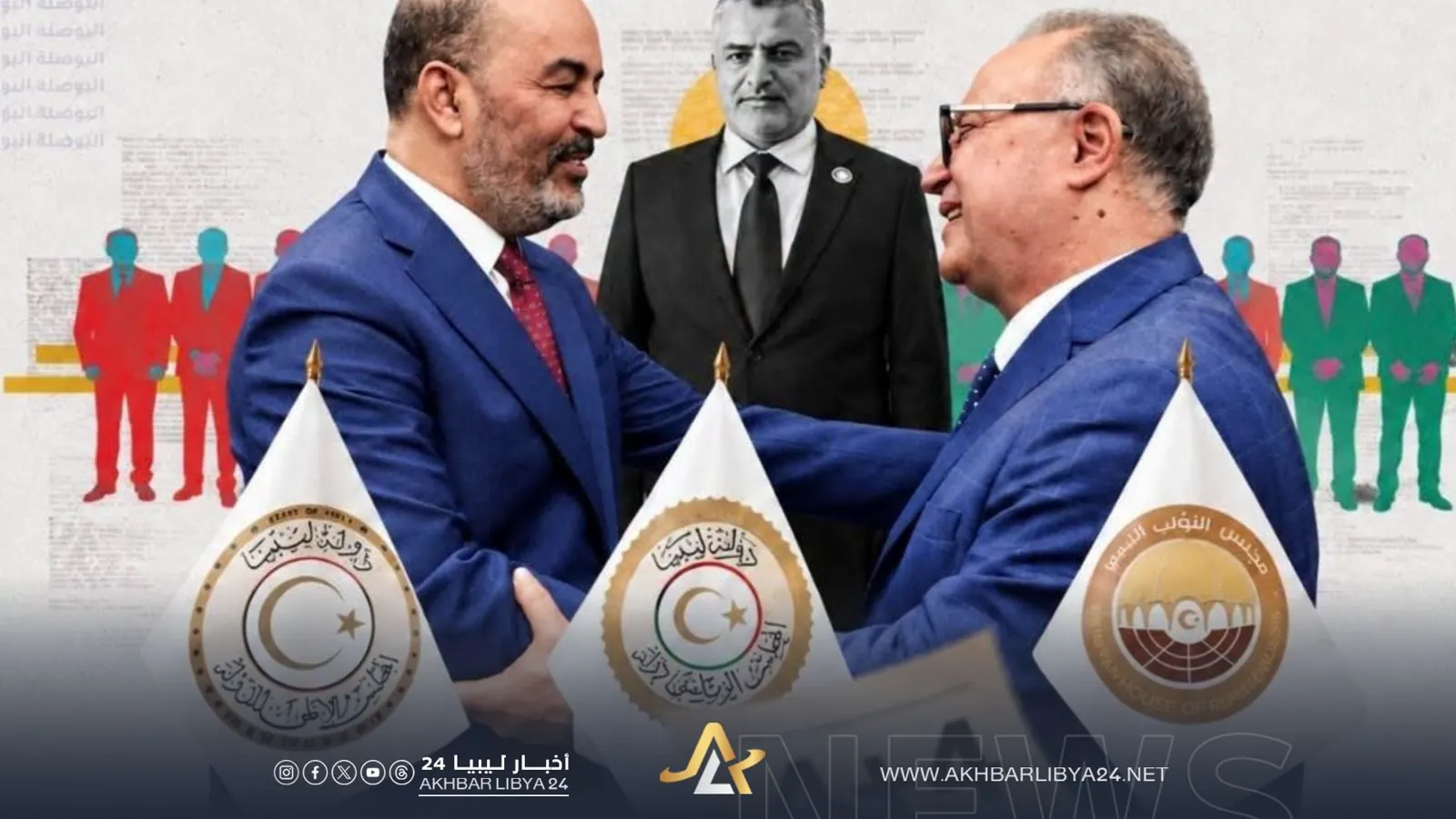
The Libyan political scene is experiencing significant shifts as Musa Al-Koni, a member of the Presidential Council, recently visited Benghazi, a city that has become a focal point in the country's political transformations. This move, which included a number of members of the High Council of State, has been seen as a step that could lead to new political alliances. The visit comes at a time when Libya is navigating a complex political landscape, with various factions and institutions holding different views on the country's transition.
The political process in Libya is at a critical juncture, with Al-Koni's movements causing ripples in the political scene. The visit to Benghazi, where he met with the Speaker of the House of Representatives, Aguila Saleh, is being viewed as a significant development. This move is seen as an attempt to build bridges and find common ground among the various factions in the country. The fact that Al-Koni was accompanied by members of the High Council of State adds weight to the significance of this visit.
The backdrop to Al-Koni's visit is the ongoing debate about the "4+4" agreement, which has been met with resistance from some quarters. The agreement, which aims to provide a framework for the country's transition, has been rejected by the High Council of State, which instead advocates for the "6+6" committee. This disagreement highlights the deep-seated divisions within Libya's political institutions and the challenges of achieving a consensus on the country's future.
The international community is also playing a role in Libya's transition, with the United Nations warning of potential sanctions against those who obstruct the political process. The US has been supportive of the UN's efforts, and there are indications that the international community is coalescing around the "4+4" agreement as a potential pathway forward. This external pressure could influence the calculations of Libyan political actors and encourage them to find common ground.
Al-Koni's approach to politics is seen as pragmatic, and his willingness to engage with various factions has been noted. His visit to Benghazi and his meeting with Saleh are being seen as indicative of his efforts to build bridges and find common ground. However, it remains to be seen whether this approach will lead to significant breakthroughs or simply represent a series of individual initiatives.
The success of Al-Koni's efforts and the "4+4" agreement in advancing Libya's transition will depend on the ability of Libyan political actors to find common ground and work towards a shared goal. The country's transition has been hampered by deep-seated divisions and a lack of trust among the various factions. However, with the right approach and a bit of luck, it may be possible to overcome these challenges and make progress towards a more stable and democratic Libya.
As Libya navigates this critical juncture, the international community will be watching closely. The UN's efforts to support the country's transition, coupled with the US's backing, could provide a much-needed boost to the process. However, ultimately, it is up to Libyan political actors to seize the initiative and work towards a shared vision for the country's future. The coming weeks and months will be crucial in determining the course of Libya's transition.
Key points
- Musa Al-Koni's visit to Benghazi has sparked new alliances and raised questions about Libya's transition.
- The "4+4" agreement has been met with resistance from some quarters, while the international community is coalescing around it as a potential pathway forward.
- The success of Libya's transition will depend on the ability of Libyan political actors to find common ground and work towards a shared goal.