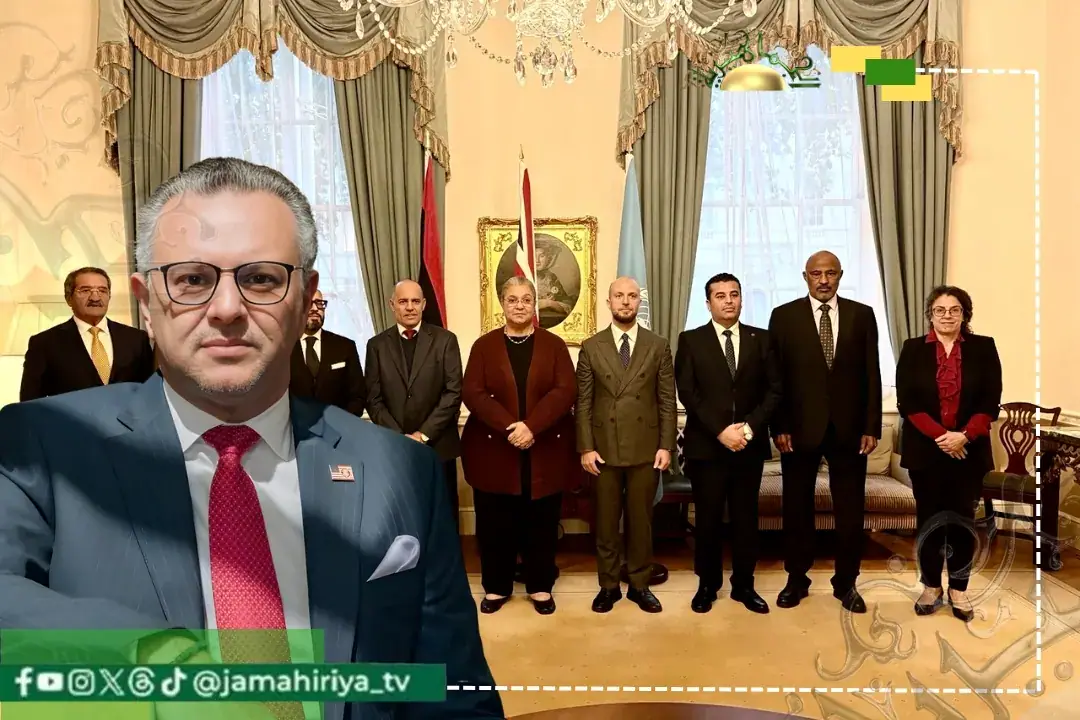
A recent meeting of Libya's 4+4 committee in London, facilitated by the United Nations Mission, has highlighted the growing international interest in the country's political future. The gathering comes as the UN mission's mandate is set to expire on October 31, 2026. According to former diplomat Faraj Zuwar, the meeting reflects international efforts to establish a new political arrangement in Libya. The committee consists of representatives from the eastern and western regions, which has raised questions about its representativeness.
The London meeting is seen as an attempt by the UK to maintain the UN's role in managing Libya's political process. As the penholder on the Libyan file in the UN Security Council, the UK is keen to keep the UN involved. This move comes amid direct US involvement, with a US initiative led by Masood Pulus, advisor to US President Donald Trump, aiming to broker an understanding between the dominant forces in the east and west. The initiative proposes a transitional executive authority for two years.
The future of Libya's political process is closely tied to the differences between the US, Britain, and European countries, as well as the positions of Russia and China on the role of the UN mission and the next phase. The competition for influence in Libya is driven by the country's energy sector and its strategic location near European markets. European countries are also interested in Libya due to concerns about irregular migration, human trafficking, and security in the Mediterranean.
The UK and European countries have significant interests in Libya, particularly in addressing issues related to migration, human trafficking, and illicit activities. These interests are in addition to the country's energy sector and its location in the Mediterranean. Former diplomat Faraj Zuwar has expressed concerns that imposing a political arrangement that ignores local divisions and security conditions could lead to renewed conflict.
The international community's involvement in Libya's political process has raised concerns about the potential for external influence to exacerbate existing divisions. The 4+4 committee's composition has been questioned, with some arguing that it does not adequately represent Libya's diverse political, social, and military landscape. The committee's representatives are primarily affiliated with the existing centers of power in the east and west.
The US initiative, led by Masood Pulus, aims to find a middle ground between the main forces in Libya's east and west. However, the proposal for a transitional executive authority has not been universally welcomed. Some have expressed concerns that it may not address the underlying issues driving the conflict. The international community's role in Libya's political process is likely to remain significant in the coming months.
As the UN mission's mandate approaches its expiration date, the international community faces a critical period in determining Libya's future. The country's energy sector and strategic location make it an important player in regional and global affairs. The challenge for external actors is to support a political process that is inclusive, representative, and sustainable, while avoiding actions that could exacerbate existing divisions or lead to renewed conflict.
Key points
- The London meeting of the 4+4 committee highlights growing international interest in Libya's political future.
- The UK and US have differing approaches to Libya's political process, with the UK seeking to maintain the UN's role and the US pushing for a transitional executive authority.
- The international community's involvement in Libya's political process must be carefully managed to avoid exacerbating existing divisions or leading to renewed conflict.