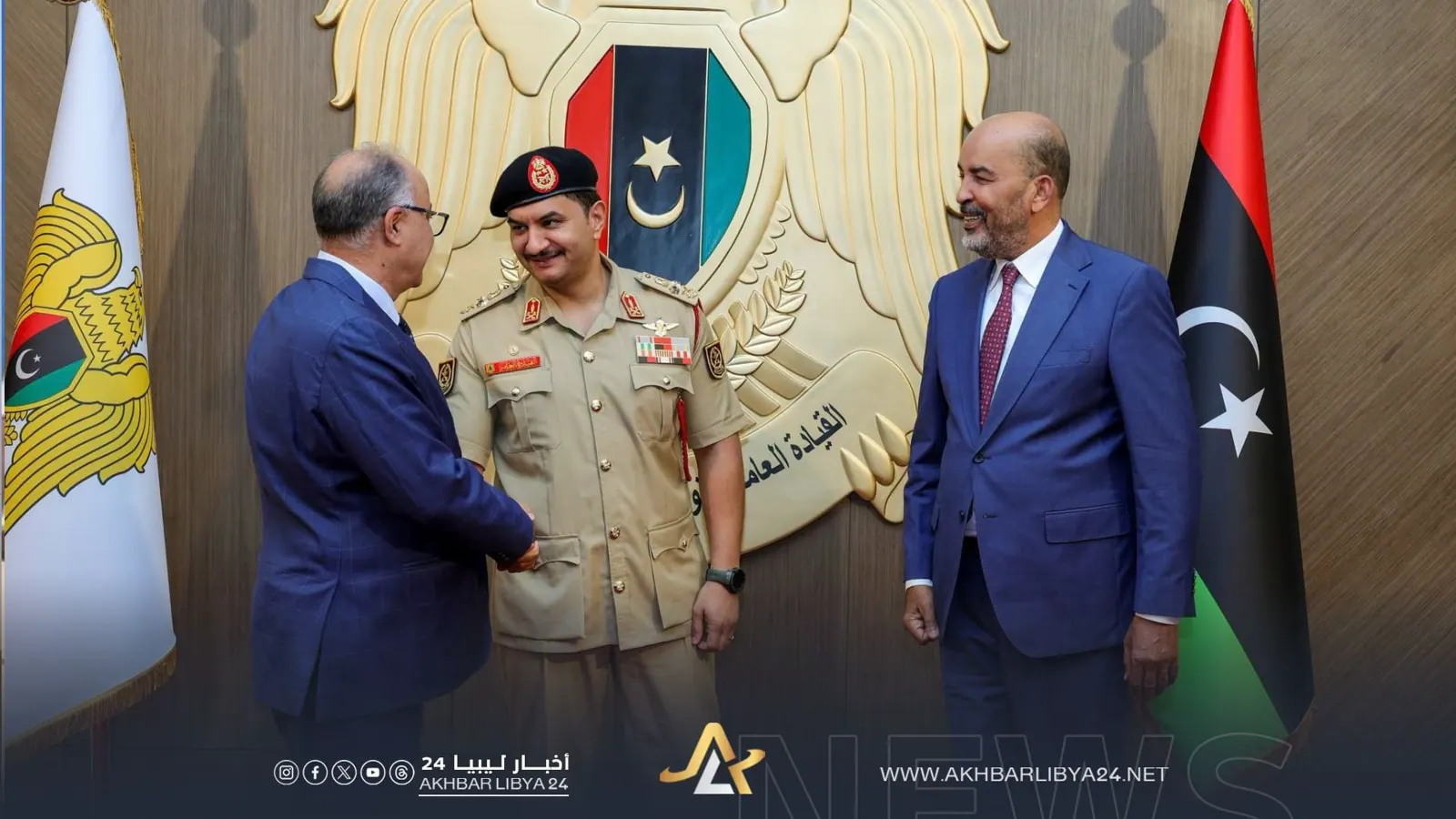
Libyan presidential council member Musa Al-Koni has stressed the importance of unifying the country's military and political institutions. He believes the 4+4 agreement, which aims to bring together various stakeholders, presents an opportunity for Libya to overcome its crisis and end the division. Al-Koni made these remarks during a meeting with Field Marshal Khalifa Haftar's deputy, Sadam Khalifa Haftar. The discussions focused on bringing together different Libyan factions and building a unified military institution.
Al-Koni's meeting with Sadam Haftar aimed to bridge the gap between Libyan parties and work towards a unified military institution. He emphasized that the state cannot perform its duties fully without a unified army. According to Al-Koni, Sadam Haftar has expressed willingness to engage with the western region and supports the 4+4 agreement. This agreement is seen as a crucial step towards resolving existing political differences.
The 4+4 agreement has garnered support from various parties, with Al-Koni describing it as a vital path to addressing Libya's political disputes. He also welcomed the election of Saleh Abdul Nabi as the head of the House of Representatives. Al-Koni believes this move is essential in unifying institutions and achieving the electoral process. He expects Abdul Nabi to play a significant role in overcoming obstacles to implementing the agreement.
However, Al-Koni criticized the stance of Presidential Council head Mohamed Al-Menfi regarding the agreement. He stated that attempts to obstruct or reject the agreement will not affect its implementation. Al-Koni described Al-Menfi's role in representing Libya externally as protocol-based. He also called for changes within the Presidential Council, accusing it of failing to perform its duties and focusing on maintaining power.
Al-Koni's comments come amid ongoing efforts to bring together Libyan parties and create conditions for electoral processes and unification of state institutions. He emphasized the need for a single government to bear responsibilities and address crises resulting from political division. Al-Koni asserted that there is no alternative to political consensus to end the crisis and achieve stability.
The situation in Libya remains complex, with various factions holding different views on the 4+4 agreement. Al-Koni revealed that the State Council rejects the agreement, while some of its members support it. He believes those who benefit from obstructing the agreement are those who want the current situation to persist.
As Libya continues to navigate its complex political landscape, Al-Koni's statements highlight the pressing need for unity and change. The country requires a unified institution to ensure stability and end the ongoing crisis.
Key points
- - Musa Al-Koni emphasizes the need for unified Libyan institutions and an end to the country's crisis through the 4+4 agreement. - Al-Koni criticizes Presidential Council head Mohamed Al-Menfi's stance on the agreement and calls for changes within the council. - The 4+4 agreement aims to bring together various stakeholders and presents an opportunity for Libya to overcome its crisis and end division.