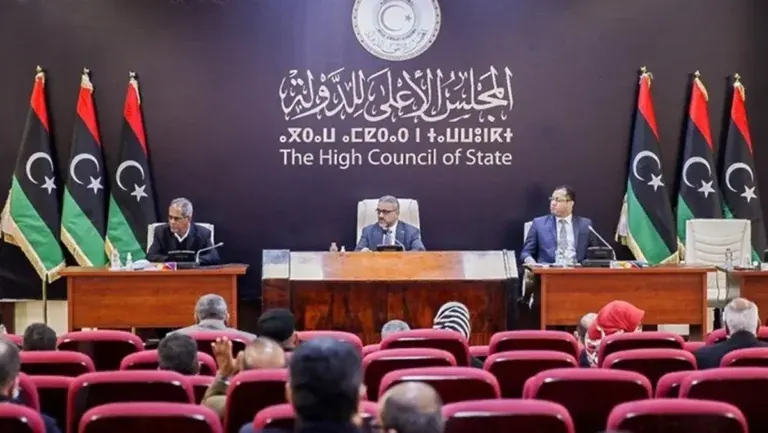
Libya's High Council of State has rejected UN envoy Hanna Tetteh's interpretation of its position on the proposed "4+4" agreement. The council stated that Tetteh's description does not accurately reflect its official stance on the political understandings being discussed. This development has deepened the country's political deadlock.
The "4+4" agreement is part of broader negotiations on political understandings among key Libyan actors. The High Council of State emphasized that Libyan institutions' roles should be properly reflected and respected in the political frameworks. The council also stressed the importance of reaching a genuine consensus on contentious issues to pave the way for a comprehensive solution to the crisis.
The disagreement highlights a significant challenge facing the United Nations Support Mission in Libya. The mission's efforts to facilitate a political settlement rely on maintaining the confidence of Libyan parties and ensuring that negotiations yield tangible measures to bridge the institutional divide. The dispute also underscores ongoing tensions over the country's political trajectory and the means to move forward on the stalled transition.
The debate coincides with ongoing disagreements about the modalities needed to conduct elections and unify Libya's fractured state institutions. If these issues are not resolved, the political process may stall due to debates about representation, authority, and the legitimacy of proposed decisions. The UN mission faces a diplomatic problem in navigating these complex issues.
The new dispute raises questions about the ability of Libyan factions to reach political understandings and whether those understandings can be broadly accepted and translated into an enforceable roadmap. While disagreements about institutional positions may seem procedural, they can reveal underlying differences about political representation and the conditions for a settlement.
Diplomatic efforts may lead to further rounds of talks without addressing the differences that have kept Libya's political crisis unresolved. Unless both sides agree on the proposed arrangements and their implementation, the negotiations may not yield a lasting solution. The UN mission must navigate these challenges to help achieve a political settlement.
The ongoing political deadlock in Libya has significant implications for the country's future. The international community is closely watching the developments, and the UN mission is under pressure to facilitate a peaceful resolution. The Libyan parties must work together to find a mutually acceptable solution to the crisis.
Key points
- The High Council of State rejects UN envoy Hanna Tetteh's interpretation of its stance on the proposed "4+4" agreement.
- The disagreement highlights a significant challenge facing the United Nations Support Mission in Libya.
- The ongoing political deadlock in Libya has significant implications for the country's future.