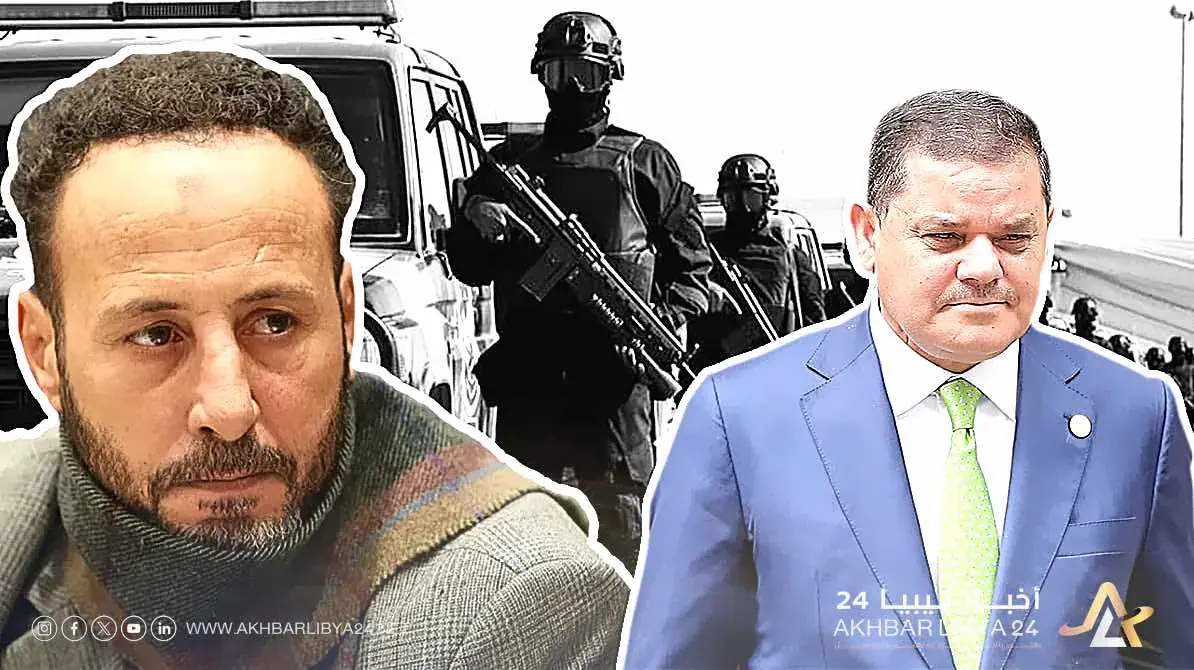
Libya's political landscape has become increasingly fragmented, with the country's institutions and executive power facing a legitimacy test. The recent failure of a parliamentary session in the city of Az-Zintan has highlighted the depth of the crisis. The session was cancelled due to security concerns and alleged threats from local armed groups. This development has raised concerns about the ability of the country's institutions to function effectively.
The crisis is not limited to a simple disagreement over competencies or powers, but has become a broader political struggle between the legislative and executive branches. The conflict has become linked to the future of the transitional phase and the legitimacy of the existing institutions. The country's transitional government has been unable to overcome the divisions and unify its institutions, despite the passage of years since the last elections.
According to Abd al-Mun'im al-Arifi, a member of the House of Representatives, the conflict with the government of Abdul Hamid al-Dabaiba has gone beyond a simple disagreement over powers and has become a broader political struggle. Al-Arifi cited the House of Representatives' decision to withdraw confidence from the government as a key turning point in the crisis. The government was formed under the Geneva agreement and initially received the confidence of the parliament.
The crisis has also raised concerns about the role of armed groups in Libyan politics. Some analysts have warned that the continued interference of armed groups in the country's institutions could undermine the transition to democracy. The country's transitional government has been accused of being unable to assert its authority and protect its institutions from the influence of armed groups.
The failure of the parliamentary session in Az-Zintan has also highlighted the divisions within the country's political elite. Some members of the House of Representatives have accused the government of Abdul Hamid al-Dabaiba of obstructing the session. However, others have pointed to the complex security situation in the country and the influence of local armed groups as factors contributing to the crisis.
The crisis has significant implications for the country's economy and social stability. The continued divisions and lack of a unified government have weakened the country's financial and administrative systems. The country's budget and salary structures are also under threat, with some analysts warning that the crisis could have severe consequences for the country's economic stability.
The international community has expressed concern about the crisis in Libya and has called for a peaceful resolution. The United States has been actively engaged in efforts to resolve the crisis, with the US presidential envoy for Libya, Richard Norland, recently visiting the country. However, a lasting solution to the crisis will require a concerted effort from the country's political elite and a commitment to finding a peaceful and inclusive solution.
Key points
- The crisis in Libya has significant implications for the country's economy and social stability.
- The continued divisions and lack of a unified government have weakened the country's financial and administrative systems.
- The international community has expressed concern about the crisis in Libya and has called for a peaceful resolution.