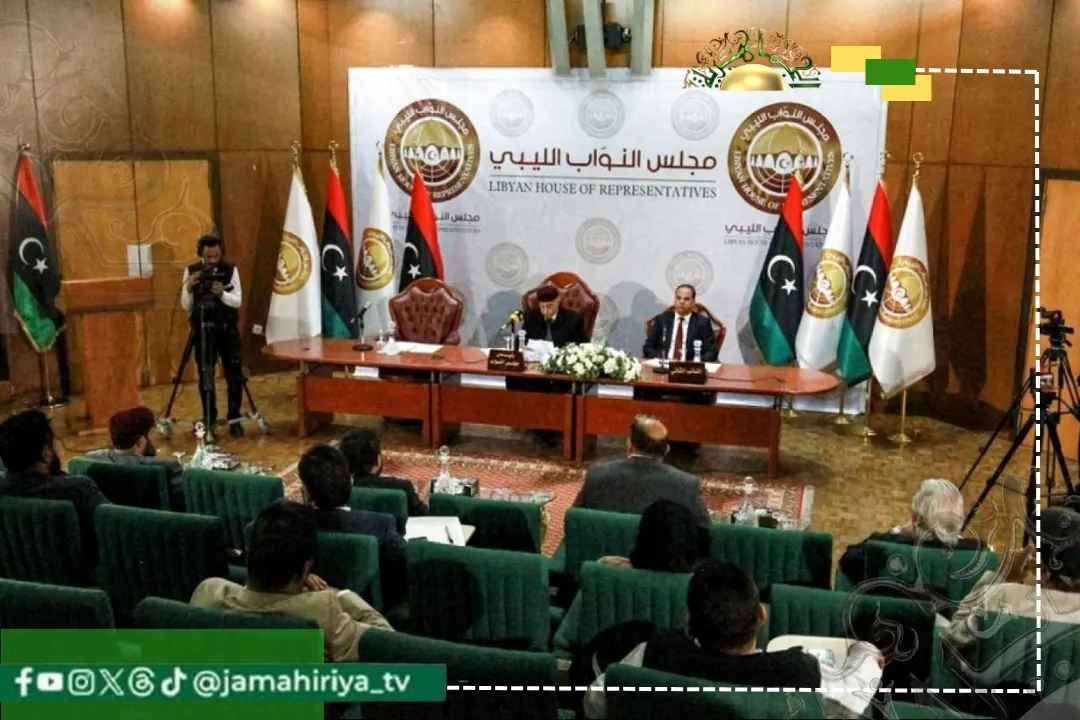
Libya's House of Representatives is embroiled in internal power struggles that threaten the position of its leader, Aguila Saleh. According to reports from Aljamahiriya TV, a session was held in Benghazi on Monday, where a majority of lawmakers voted to amend the council's internal regulations. The vote, which was attended by over 100 lawmakers, saw 98 votes in favor of the amendments. This development has raised questions about the future of Saleh's leadership.
The session was led by Massoud Dome, the second deputy speaker of the House of Representatives. The amendments aim to reorganize the council's structure and working methods. However, some lawmakers have denied that the move is aimed at directly removing Saleh from his position. Instead, they claim that the goal is to reform the council's internal regulations and organization. Despite this, the developments have brought attention to the issue of Saleh's continued leadership.
Tensions within the council have been escalating, with 86 lawmakers previously announcing that they had achieved the necessary quorum to hold a session in Benghazi. They claimed that they were prevented from entering the council's premises and expressed readiness to take steps to reorganize the leadership. The dispute has now extended beyond procedural issues and internal regulations, with some lawmakers pushing for changes to the council's leadership.
The developments have significant implications for Libya's political landscape. The country has been grappling with ongoing political divisions, including disagreements over the "4+4" agreement and the "6+6" track. The role of the House of Representatives in any future political settlement remains uncertain. The council's session scheduled for Tuesday is expected to shed light on the future of Saleh's leadership and the direction of the council.
The meeting between Massoud Dome and Khalifa Haftar, a prominent Libyan figure, has also raised questions about external influences on the council's internal dynamics. Haftar's meeting with Dome has sparked speculation about the role of external actors in Libya's politics. The situation remains fluid, with many stakeholders watching closely to see how the power struggles within the council will unfold.
The internal power struggles within the House of Representatives have significant implications for Libya's political stability. The council plays a crucial role in shaping the country's future, and any instability within the institution could have far-reaching consequences. As the situation continues to evolve, it remains to be seen how the council will navigate its internal divisions and what impact this will have on Libya's political landscape.
The session scheduled for Tuesday is expected to be a critical moment in the power struggle within the council. It remains to be seen whether the amendments to the internal regulations will be implemented and what implications this will have for Saleh's leadership. One thing is certain, however: the outcome will have significant implications for Libya's future.
Key points
- - Libya's House of Representatives is facing internal power struggles over its internal regulations and leadership. - The council's leader, Aguila Saleh, faces uncertainty over his position amid the power struggles. - The situation has significant implications for Libya's political stability and future.