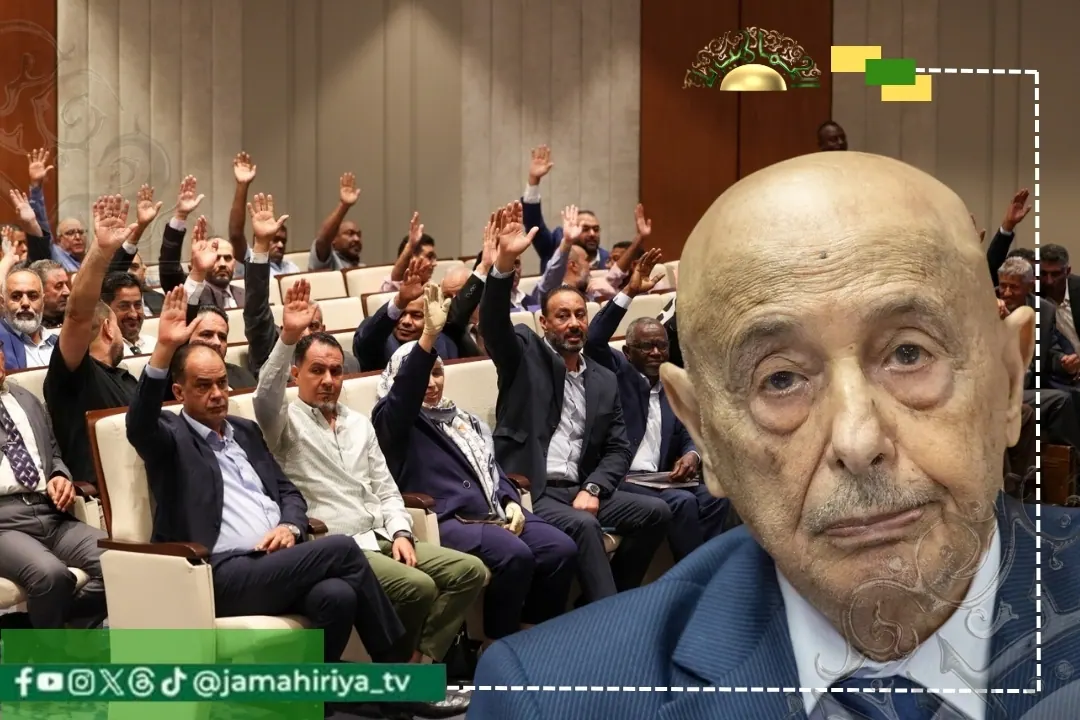
The Libyan parliament's internal conflict has escalated into a critical phase following a vote to oust its long-standing speaker, Aguila Saleh. According to a report by the Emirati news site, Errem News, the rift within the council has shifted from demands for internal reform to overt moves to reorganize the leadership and end Saleh's tenure, which began in 2014. This development has led to speculation about the future of Libya's legislative body.
The Errem News report outlined three primary scenarios for resolving the crisis. The first scenario involves electing a new leadership, which gained momentum after a session on October 5, where a vote was held to initiate a new term for the council's leadership. This move effectively froze the current leadership until a new speaker is elected. The second scenario entails a compromise that would allow Saleh to remain, possibly through a negotiated agreement that could involve amending the internal regulations and setting a term limit for the speaker without immediately disqualifying Saleh.
The third and most contentious scenario involves a potential split within the parliament. If a faction of lawmakers proceeds to elect a new leadership, while Saleh continues to convene sessions under his authority, Libya could be faced with two rival presiding bodies for the parliament. This situation echoes the institutional divide that previously plagued the country for years. The unfolding events indicate a critical juncture for Libya's legislative process.
On a recent development, the Libyan parliament convened a session in Benghazi, led by the second deputy, Massoud Dome, on Monday. This session occurred in the absence of Saleh and was attended by 102 lawmakers, 98 of whom voted in favor of adopting a new 12-month term for the council's leadership. This new term is set to expire automatically at the end of the period. The changes also emphasized that the outgoing leadership cannot hinder or delay the election of a new leadership or extend its term.
Furthermore, the new adjustments made during the session underscored that in the event the current leadership fails to call for the election of a new leadership, the council will convene by law once the quorum is met, under the leadership of the oldest member. This process will continue until a new leadership is elected. Concurrently, Massoud Dome announced the suspension of the current parliamentary leadership's activities until a session is held, led by the oldest member, to elect a new speaker.
The recent developments reflect a critical phase in Libya's ongoing struggle for political stability. The country has been grappling with various forms of division and conflict, and the situation within the parliament is of particular concern. The international community and Libyan citizens alike are closely watching the unfolding events, hoping for a peaceful and stable resolution that will pave the way for effective governance.
As Libya navigates this challenging period, the role of the international community and regional actors will be crucial in supporting a peaceful resolution. The situation demands a concerted effort to ensure that Libya's political institutions are strengthened and that the country can move towards a more stable and democratic future. The path forward remains uncertain, but it is clear that a peaceful and inclusive solution is essential for Libya's progress.