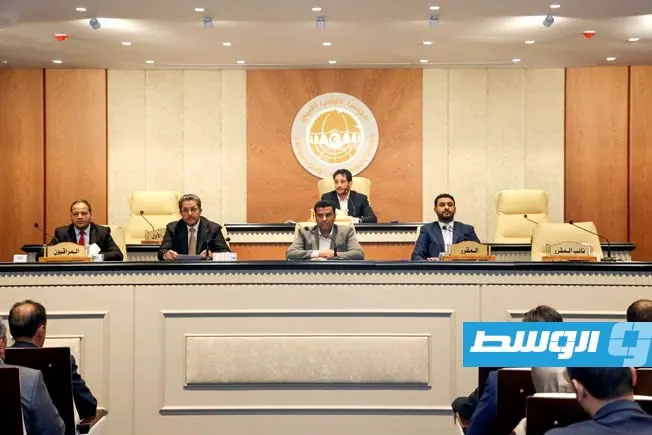
Libya's parliament, the House of Representatives, is facing a leadership crisis after a group of lawmakers elected a new leadership, ousting longtime leader Aqila Saleh. The move has sparked a heated debate among lawmakers, with some supporting the change and others rejecting it. The new leadership, headed by Abdulnabi Al-Abidi, was elected in a session held in Benghazi on October 5, 2026.
The crisis began when a group of lawmakers, backed by Field Marshal Khalifa Haftar and his deputy, Sadam Haftar, voted to replace Saleh with Al-Abidi. Saleh had been in power since August 2014. The move has been met with resistance from some lawmakers, who argue that the session was not official and that the election was not legitimate. Ali Abuzriba, a lawmaker from the city of Zawiya, has called for a new session to be held in Tripoli to reconsider the leadership change.
The international community is watching the developments closely, with the UN Mission in Libya expressing its commitment to working with the new leadership to support the country's transition to stability. The mission's statement comes amid concerns that the crisis could derail the country's progress towards elections and stability. The US and other international partners have urged all parties to work towards a peaceful resolution to the crisis.
Field Marshal Haftar has expressed his support for the new leadership, saying that the change is a step towards building a more stable and unified Libya. Haftar's deputy, Sadam, also welcomed the change, saying that it would help to strengthen the country's institutions and promote stability. However, some lawmakers have expressed concerns that the change could lead to further divisions and instability.
The crisis has also highlighted the divisions within the country's power structures. The Presidential Council, which is responsible for overseeing the country's transition, has been divided on the issue, with some members supporting the new leadership and others rejecting it. The council's chairman, Mohamed Al-Menfi, has called for a peaceful resolution to the crisis and urged all parties to work towards a unified solution.
The new leadership has vowed to work towards promoting stability and unity in the country. Abdulnabi Al-Abidi, the new chairman of the House of Representatives, has said that his priority is to promote national reconciliation and to work towards building a more stable and unified Libya. He has also called for all parties to work together to promote the country's interests and to support the transition to stability.
The country's transitional government has also weighed in on the crisis, with Prime Minister Osama Hamad expressing his support for the new leadership. Hamad has said that the change is a step towards promoting stability and unity in the country and has urged all parties to work together to support the transition. The international community is watching closely to see how the situation unfolds and whether the country can make progress towards stability and elections.
Key points
- The crisis has sparked a heated debate among lawmakers, with some supporting the change and others rejecting it.
- The international community is watching the developments closely, with the UN Mission in Libya expressing its commitment to working with the new leadership.
- The crisis has highlighted the divisions within the country's power structures, including the Presidential Council.