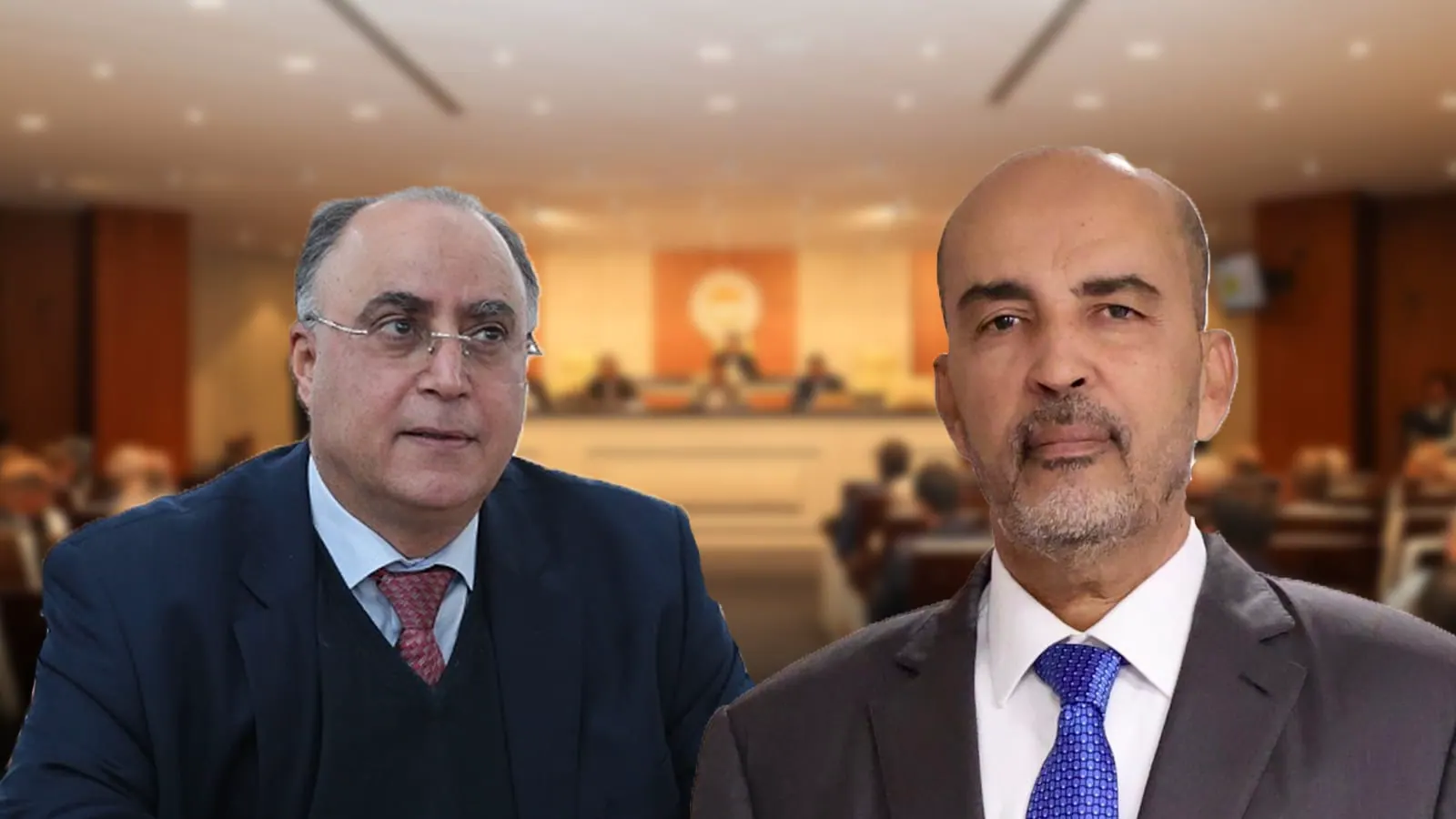
Libya's House of Representatives has elected a new leadership, with Al-Salahin Abd al-Nabi taking over as chairman, succeeding Aqila Saleh. According to parliamentary sources, Abd al-Nabi was elected unopposed after his rival, Idris al-Magrabi, withdrew from the race. The election also saw Tariq al-Ashtar and Misha'an Duma elected as first and second deputies, respectively.
The new chairman was congratulated by Mousa Al-Koni, a member of the Presidential Council, who emphasized the need for continued coordination and consultation. This development comes after the parliament's spokesperson, Abdullah Bleyhq, announced that the house had voted to amend its internal regulations in a session chaired by Duma and attended by 102 lawmakers.
The amended regulations introduce a parliamentary term system and limit the term of the leadership body to 12 months from the date of election. The regulations also state that the term of the House of Representatives' leadership expires after 12 months without automatic extension. Furthermore, the parliament decided that failure to hold an election on time would not lead to an automatic extension of the leadership body's term.
According to Bleyhq, the new regulations prevent the outgoing leadership body from hindering the election of a new leadership or postponing the convening of the parliament. He added that the parliament would convene by force of law to elect a new leadership if the outgoing leadership failed to call a session. The developments are seen as a significant step towards institutional reform and strengthening the parliament's internal mechanisms.
However, there was some controversy surrounding the election, with Saleh, the outgoing chairman, calling for a formal session to be held in Benghazi to discuss two key issues: amendments to Law No. 4 of 2014 and the inclusion of draft laws prepared by the 4+4 committee in the constitutional declaration. The law in question governs the internal regulations and framework of the parliament.
In a statement, Fawzi al-Nuwairi, the first deputy chairman of the House of Representatives, stressed that he respects the right of lawmakers to demand reform and development of the parliament, provided that this is done in accordance with the law and internal regulations. He warned of the dangers of division within the legislative institution, citing its impact on Libya's sovereignty, security, and citizens' livelihoods.
The election of the new leadership is seen as a crucial step towards overcoming the challenges facing Libya's institutions and promoting stability in the country. The developments also highlight the ongoing efforts to strengthen the parliament's role and effectiveness in addressing the country's pressing issues. The international community has been closely watching the developments in Libya, hoping for progress towards stability and prosperity.
Key points
- Al-Salahin Abd al-Nabi was elected as the new chairman of Libya's House of Representatives.
- The new leadership was elected after amendments to the parliament's internal regulations were introduced.
- The developments aim to promote institutional reform and strengthen the parliament's role in Libya.